


A garment factory group operating three production sites across southern China needed the same boucle fabric for coats, jackets, and skirt programs running in parallel at each location. Each site had been sourcing boucle independently from local yarn suppliers, and the result was visible texture inconsistency across the collection. A coat body from Site A did not match the collar fabric from Site B. The sourcing director needed one boucle specification that all three factories could reproduce identically. This boucle fabric garment factory case study traces how a single yarn specification and centralized quality protocol solved the consistency problem.
Fursone’s Wenzhou facility, running 300+ looms with ISO-certified quality control, served as the single production source. The case illustrates a principle that applies to any multi-factory operation: fabric consistency starts at the yarn level, not the weaving level. When three factories weave the same boucle yarn from the same spinning source under the same quality protocol, the fabric matches. When they weave yarn from different spinners, no amount of weaving skill can produce a consistent surface.

The Challenge: Three Factories, Three Textures
The garment group operated three factories, each producing different garment categories from the same boucle tweed fabric. Site A produced coats, Site B produced jackets, and Site C produced skirts and dresses. The design team had approved a single fabric swatch at the collection planning stage, but each factory sourced its own boucle yarn from local suppliers to manage lead times and freight costs.
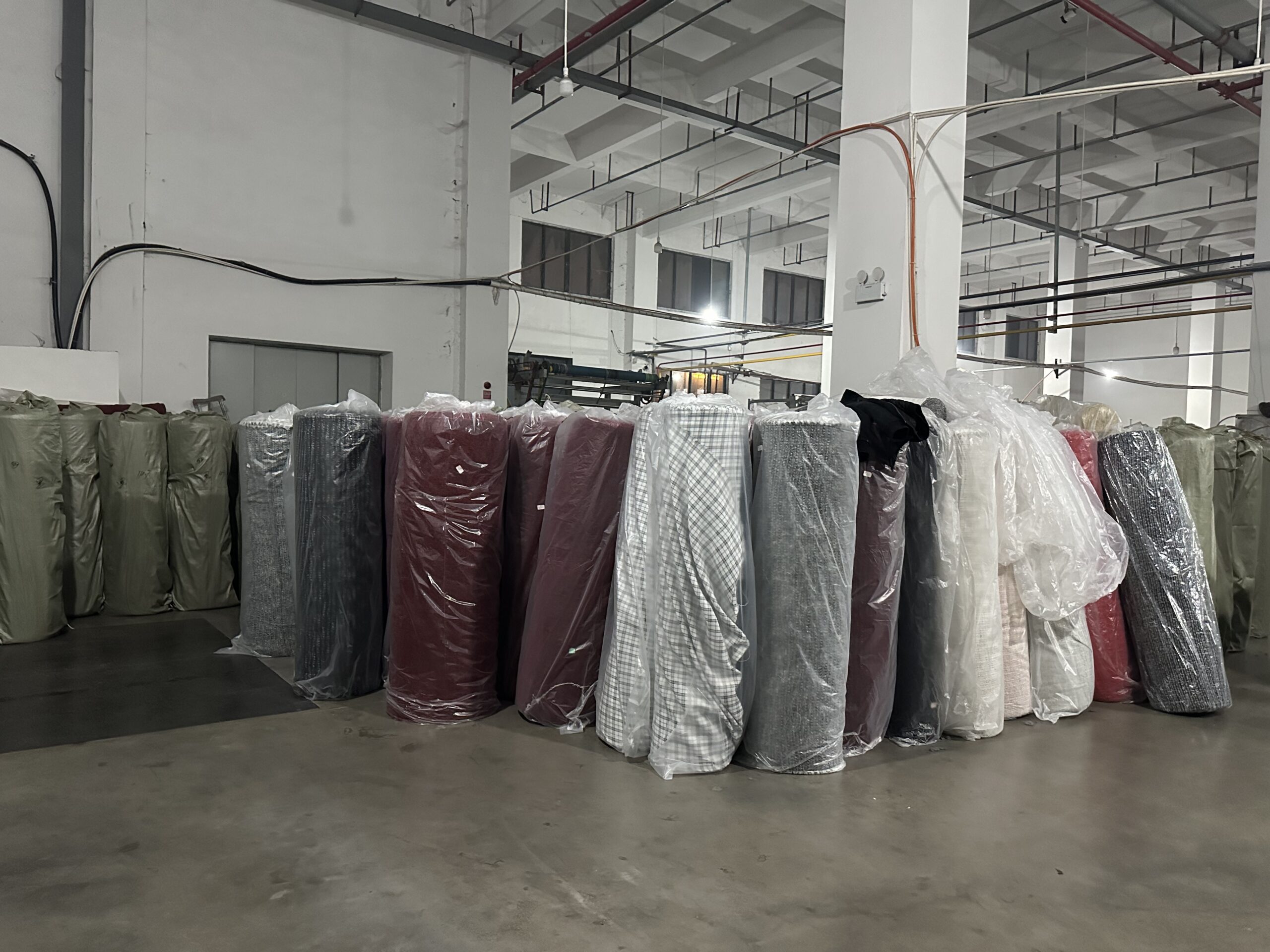
The texture differences emerged at the fitting stage. A coat from Site A had large, loose loops with a soft hand feel. A jacket from Site B had tighter, smaller loops with a firmer surface. The skirt from Site C showed irregular loop distribution with visible bare sections. The design team had approved one fabric, but the three factories delivered three different textures because the yarn specifications, overfeed ratios, and binder twist levels varied across the three local spinning suppliers.
Garment factory QC teams flagged the inconsistency during fitting, but the root cause took two weeks to diagnose. Each factory’s yarn supplier used different wool blends for the effect yarn, different core yarn materials, and different spinning frame settings. The weaving parameters at each factory were not the problem; the yarn entering each factory was fundamentally different.
The Solution: Single Yarn Specification, Single Source

The sourcing director made three decisions that resolved the consistency problem. First, all three factories would source boucle yarn from a single spinning mill, eliminating the multi-supplier variation. Second, the yarn specification was locked at the overfeed ratio, twist direction, binder type, and effect yarn count level. Third, all weaving would be centralized at Fursone’s Wenzhou facility, where 300+ looms operated under ISO-certified quality control with standardized tension settings and inspection protocols.
Centralizing weaving at a single mill rather than distributing it across three factories offered several advantages. The factory operations at Fursone provided consistent shed geometry, reed pressure, and let-off tension across all looms assigned to the order. The same QC team inspected every roll against the same approved standard, using ISO grade 3-4 pilling as the minimum acceptance threshold. Fabric that passed inspection shipped to the three garment factories as cut-ready rolls.
The yarn specification included the following locked parameters:
| Parameter | Specification | Why It Matters |
|---|---|---|
| Core yarn | Cotton, fixed count | Carries weaving tension consistently |
| Effect yarn | Wool blend, fixed composition | Determines loop character and hand feel |
| Overfeed ratio | Locked to match approved swatch | Controls loop size and frequency |
| Binder twist | Fixed turns per meter | Secures loops against migration during weaving |
| Twist direction | Z/S opposing combination | Prevents yarn curl and fabric skew |
Need consistent boucle fabric across multiple production sites? Fursone’s 300+ loom facility produces to a single specification with ISO-certified QC. 100m stock rolls for sampling, 300m custom MOQ with 7-day turnaround.
Implementation and Sampling
The sampling phase compressed what had been a multi-week process into 7 days. Fursone’s sampling team produced a 100-meter stock roll matching the approved swatch, allowing each of the three garment factories to receive a physical sample simultaneously. The three factory managers and the design team compared the Fursone sample against the original approved swatch and against each other’s previous production. The match was confirmed on the first sampling round.
Once the sample was approved, the 300-metre custom production order was placed. Fursone allocated looms to the order, loaded the locked yarn specification into the production planning system, and scheduled weaving. The ISO grade 3-4 pilling test was conducted on the first production roll to verify that the bulk fabric met the same quality threshold as the sample. The test report accompanied the shipment to all three factories.
Results and Measurable Outcomes
The centralized production approach produced three outcomes that the garment group had not achieved with distributed sourcing. First, fabric texture matched across all three sites. The coat, jacket, and skirt produced at three different factories now shared the same loop character, hand feel, and surface appearance. The fitting team confirmed that collar fabric from Site A matched body fabric from Site B without the texture mismatch that had previously caused rejection.

Second, rejection rates for texture-related defects dropped. Under the previous system, each factory’s QC team applied its own texture standard, leading to disputes about what constituted an acceptable match. With a single production source and a single QC team, the standard was consistent and the disputes disappeared.
Third, the reorder process simplified from three separate purchase orders to one. The garment group’s sourcing team placed a single order with Fursone specifying the locked yarn specification, and the mill allocated production across its 300+ loom configuration. Reorder lead time shortened because the specification was on file and the sampling phase was eliminated for repeat orders.
Lessons for Multi-Factory Sourcing
Three lessons emerged from this case that apply to any garment group sourcing fancy yarn fabric across multiple production sites.

Specify at the yarn level, not the fabric level. A fabric specification that says “boucle tweed, 380 GSM, wool blend” is not specific enough to guarantee consistency. The specification must include yarn-level parameters: core material and count, effect yarn composition and count, overfeed ratio, binder type and twist, and twist direction. Without these parameters, each spinning mill interprets “boucle” according to its own default settings, producing different loop characters.
Centralize weaving when consistency is critical. Even with identical yarn, different weaving facilities produce slightly different fabric due to variations in loom type, tension calibration, and operator technique. For collections where fabric must match across garments, centralizing weaving at a single mill with standardized QC eliminates this variable. Fursone’s 300+ loom configuration means that even large orders, like the 12-SU tweed line built from stock rolls, can be produced on the same loom type with the same settings.
Use a shared quality benchmark. ISO grade 3-4 pilling resistance served as the objective quality threshold that all three factories could agree on. Subjective texture assessments cause disputes; standardized test results do not. Every shipment should include a test report verifying that the fabric meets the agreed-upon standard.
Frequently Asked Questions
How do you standardize boucle fabric across multiple factories?
Standardize at the yarn level first: specify core material, effect yarn composition, overfeed ratio, binder twist, and twist direction. Source yarn from a single spinning mill. Then centralize weaving at one facility with standardized QC protocols to eliminate loom-to-loom variation.
Why does boucle fabric look different from different suppliers?
Boucle texture depends on yarn-level parameters, primarily the overfeed ratio and effect yarn count. Different spinning mills use different default settings, producing different loop sizes and distributions. Without a locked yarn specification, each mill produces its own interpretation of “boucle.”
What quality standard should boucle fabric meet?
ISO grade 3-4 pilling resistance is the recommended minimum for boucle fabric in garment production. This standard verifies that the loop surface maintains integrity through standard abrasion testing. Request the test report with each shipment.
How long does boucle fabric sampling take?
Fursone offers 7-day sampling turnaround from specification lock, compared to the industry-standard 6-week process. The compressed timeline allows buyers to evaluate and approve samples within a single product development cycle.
Conclusion
Multi-factory fabric consistency is a yarn problem before it is a weaving problem. The garment group in this case study solved texture inconsistency not by adjusting loom settings at three sites, but by locking the yarn specification and centralizing production at a single ISO-certified mill. The result was matching fabric across coat, jacket, and skirt programs, reduced rejection rates, and a simplified reorder process.
For any garment group sourcing fancy yarn fabric across multiple sites, the action items are: specify yarn-level parameters, source from a single spinning mill, centralize weaving when consistency is critical, use ISO grade 3-4 pilling as the shared quality benchmark, and compress the sampling cycle to 7 days to iterate quickly. These steps prevent the texture mismatches that cause rejection at the fitting stage, when fixing the problem is expensive and delivery timelines are already tight.

Related Insights

Case Study: Startup Brand’s Two-Phase MOQ Strategy: Stock First, Custom Later
The most expensive mistake a startup fabric buyer makes is ordering custom fabric for a...
Case Study: Home Textile Brand Trials Tweed for Cushion Covers
When a home textile brand thinks about tweed, outdoor coats usually come to mind first....

Case Study: A Wholesaler’s First Custom Color, From Pantone to Production
How a fabric wholesaler turns a Pantone reference into a repeatable custom colour: light source,...