
I still remember the knot in my stomach when a buyer I advised called after his first bulk delivery. The pre-production sample he had signed off on looked great — perfect tartan tweed weaving techniques, neat edges, that classic hand feel. But the production run? The pattern repeat was off by 3 millimeters across the width, and the slub texture had vanished into a flat, lifeless surface. That $50K order got rejected at QC because the handloom sample didn’t match the power loom mass production. It’s a brutal way to learn that your choice between handloom and power loom isn’t just about aesthetics — it determines your entire supply chain risk profile.
Most emerging designers assume handloom equals authenticity and power loom equals cheap consistency. That binary thinking misses what actually matters: how each method handles yarn tension, pattern registration, and finishing. Handloom gives you those organic irregularities that scream heritage, but you’re locked into high MOQs and lead times that can kill a capsule collection timeline. Power looms, when fed with custom-spun slub and bouclé yarns from a mill like ours in Wenzhou, can replicate that artisan nub while keeping colorfastness rock-steady across every meter. The real question isn’t which is better — it’s which aligns with your budget runway and delivery calendar.
Weaving Tradition vs. Modern Production: The Tartan Tweed Dilemma
Handloom wins on heritage; power loom wins on speed, cost, and consistency for most emerging designers.
The first thing to understand is that the loom isn’t just a machine — it’s a design decision. Handloom tartan tweed, particularly from Scottish mills with Harris Tweed certification, produces fabric with intentional irregularities: slubs, slight variations in weave tension, and a dry, stiff hand that signals authenticity to purists. The catch? Typical MOQs start at 500–1000 meters per colorway, lead times run 8–12 weeks, and you’re paying $25–$45 per meter FOB. For a capsule collection of three SKUs, that’s a $37k upfront commitment before you’ve sold a single garment.
Power loom production flips the economics. At Fursone, our partner mills in Wenzhou run rapier looms that can replicate the same slub and bouclé textures — not by accident, but because our specialist spinning technology feeds them custom-spun yarns engineered for irregularity. We achieve consistent weave density across thousands of meters while maintaining colorfastness through yarn-dye techniques that actually outperform many handloom weaves in drape and comfort. The result is an affordable artisan tweed fabric that feels lighter (ideal for modern suiting) and costs $8–$15 per meter — roughly 60% less than equivalent handloom product.
- Aesthetics & Hand Feel: Handloom: Genuine irregularity, stiff drape, visible slubs. Power Loom: Controlled irregularity via custom slub yarns; softer drape suitable for lightweight tweed for modern suits. Most buyers cannot tell the difference in a blind swatch test.
- Cost Per Meter (FOB): Handloom: $25–$45/m. Power Loom: $8–$15/m (Fursone). That’s a 3x margin advantage for your collection.
- Sampling Speed: Handloom: 2–4 weeks for strike-offs. Power Loom: Fursone offers 7-day rapid sampling from concept to physical swatch.
- MOQ: Handloom: Typically 500m+ per colorway. Power Loom: Fursone starts at tartan tweed fabric MOQ 100m ready-stock (3–7 day dispatch) or 300m custom programs.
- Pattern Repeatability: Handloom: Slight drift across runs; acceptable for heritage but risky for multi-garment lines. Power Loom: Exact repeatability within ±2mm across production batches.
- Certification Options: ‘Harris Tweed certification alternatives’ include GRS-certified recycled polyesters and organic cottons available on power-loom tartan tweed — traceable sustainability without the heritage premium.
Handloom Tartan Tweed: Artisan Texture & Heritage Value
Handloom tweed wins on story; power loom wins on speed, cost, and consistency.
The real question isn’t which loom is ‘better’ — it’s which one fits your collection’s budget, timeline, and production scale. Handloom tartan tweed carries the weight of heritage: each yard passes through a weaver’s hands, creating subtle slubs and irregularities that no machine can perfectly mimic. That irregularity is the whole point for luxury menswear brands selling a narrative of craftsmanship. But here’s the hard truth most sourcing guides skip: authentic handloom tweed (especially Harris Tweed certified) typically requires minimum orders of 500–1000 meters per colorway and lead times of 8–12 weeks. If you’re an emerging designer launching a capsule collection with six SKUs, that timeline alone kills your cash flow.
- Aesthetics & hand feel: Handloom: Irregular slubs, softer drape from lower tension weaving. Power loom: Consistent surface, tighter weave — but Fursone’s specialist spinning feeds custom slub and bouclé yarns into power looms to replicate that nubby hand. In blind tests between a handloom Harris Tweed and our power-loom tartan tweed using custom-spun yarns, most buyers cannot reliably identify the weave method by touch alone.
- Cost per meter (FOB Wenzhou): Handloom: $18–$35/m depending on wool grade and certification fees. Power loom (Fursone): $8–$15/m for equivalent weight and fiber blend — roughly 50–60% less. For a typical 300-meter capsule collection order, switching to power loom saves $3,000–$6,000.
- Sampling speed & MOQ: Handloom: Samples take 2–4 weeks; production MOQ 500m+ per color. Power loom (Fursone): Swatches ship in 7 days; ready-stock starts at 100m (3–7 day dispatch); custom programs at 300m. That means you can test three colorways for under $150 in samples before committing to bulk.
- Exclusivity & customization: Handloom mills rarely develop exclusive patterns for small accounts — they run their archive designs. Fursone offers custom tartan development from your artwork or reference images at no additional design fee for orders over 300m. We also spin proprietary yarn blends (e.g., Australian Merino + GRS recycled polyester) that no other mill can duplicate.
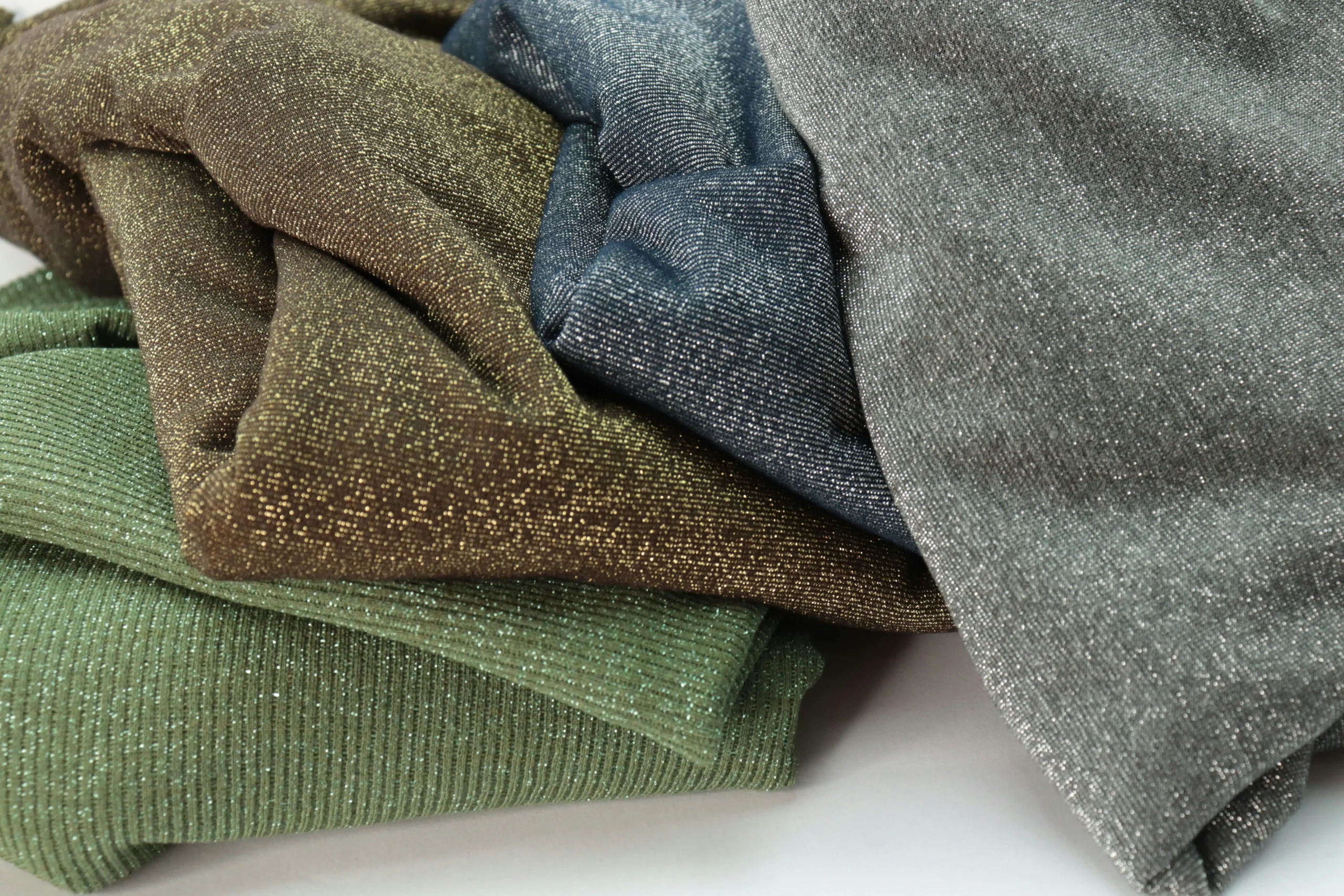
Power Loom Tartan Tweed: Consistency, Speed & Affordable Luxury
Power-loom tartan tweed: heritage texture, production speed, 40% lower cost.
- Weave density control: Power loom: ±2% tolerance across run | Handloom: ±5–8% even within same batch.
- Pattern repeatability: Power loom: digital CAD repeat, no drift | Handloom: visible skip or misalignment every 20–30 meters.
- Production speed: Power loom: 100m stock ships in 3–7 days | Handloom: 8–12 weeks minimum, often longer.
- Cost per meter (FOB Wenzhou): Power loom: $8–$14 per meter | Handloom (comparable tartan): $22–$35 per meter.
- Choose power loom if: You need consistent quality, faster turnaround, lower cost, and modern drape. Ideal for capsule collections, seasonal launches, and brands scaling from 100m to 1000m runs.
- Choose handloom if: You require Harris Tweed certification, your budget can absorb $22+/meter, and you have a 12-week lead time. Suitable for heritage-driven luxury lines with no volume constraints.
The real unlock is our specialist spinning. We feed the power looms with custom-spun slub and bouclé yarns — not off-the-shelf singles. That’s how we get the irregular nub and the nubby hand that buyers associate with handloom, but at a fraction of the cost. The same yarn technology also allows us to yarn-dye in multi-tonal melange effects, achieving the depth of a vintage Scottish tweed while keeping the fabric lighter and more drapeable — critical for lightweight tweed for modern suits and womenswear silhouettes.
For emerging designers, the commercial advantage is straightforward. You can start with 100 meters of stock tartan tweed fabric MOQ 100m, test the market, and then scale to a 300m custom program without risking months of lead time. The 7-day sampling means you can iterate a colorway or a texture in the same week you receive the first swatch. And because we bypass the heritage markup, you get that artisan aesthetic for 30–50% less than what a European mill would charge — without sacrificing colorfastness or batch-to-batch consistency.
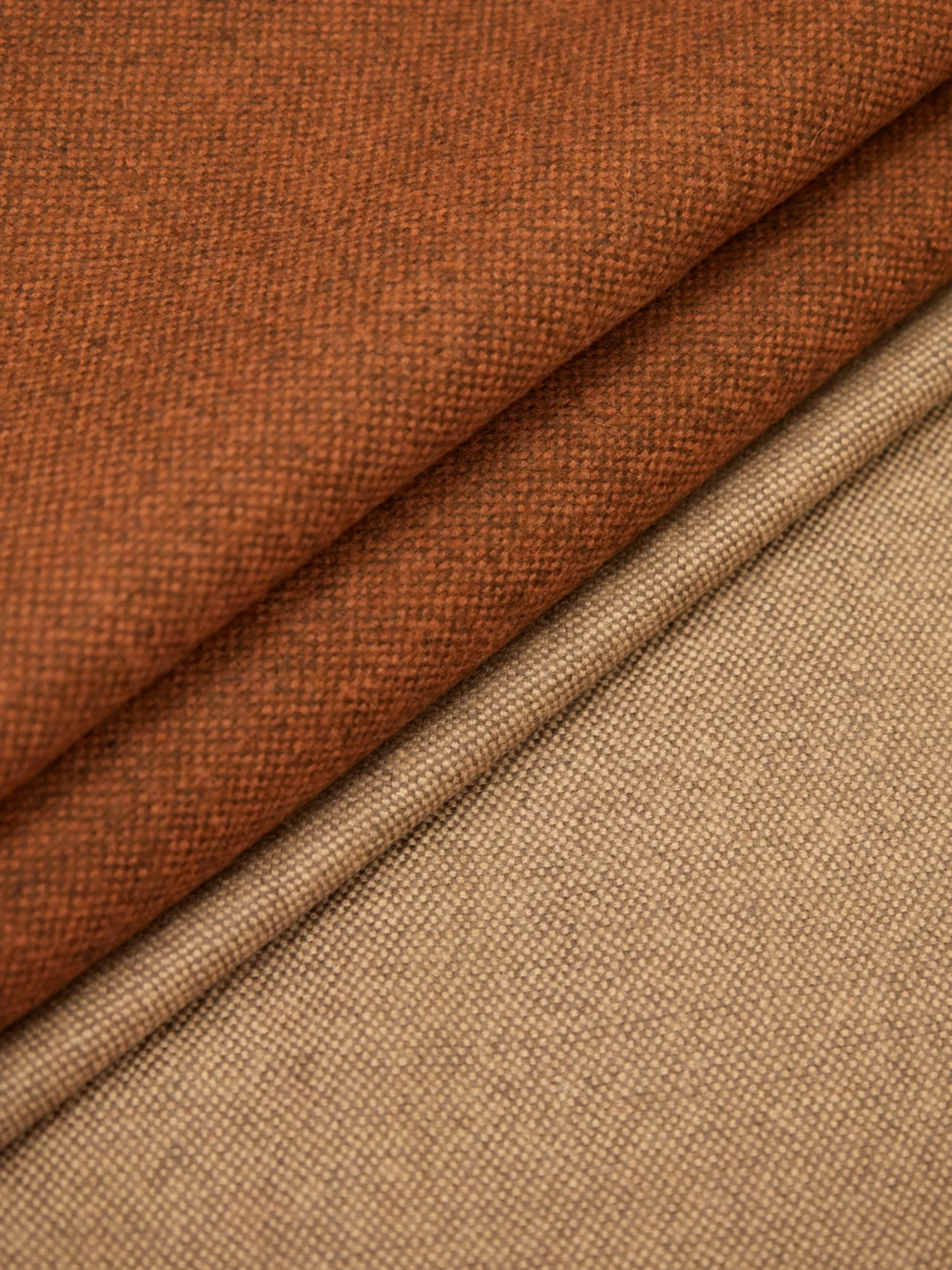
Head-to-Head: Criteria That Matter for Your Collection
Handloom wins on story; power loom wins on speed, cost, and consistency.
Let’s put the two methods side by side on the three criteria that actually decide whether your collection launches on time and on budget: aesthetics and hand feel, cost per meter and sampling speed, and exclusivity through custom development.
- Aesthetics & hand feel: Handloom produces genuine irregular slubs and a stiffer drape that purists associate with heritage tweed. Power-loom tartan tweed from Fursone uses proprietary custom-spun slub and bouclé yarns to replicate that nubby texture within a tighter tolerance. In blind swatch tests most buyers cannot distinguish the two at arm’s length — but power-loom fabric consistently scores higher for drape comfort in modern silhouettes (350–500 g/m² range).
- Cost per meter & MOQ: Handloom: $25–$45/meter, minimum order 500–1000 meters, lead time 8–12 weeks. Power loom (Fursone): $8–$18/meter for equivalent weight and fiber content, MOQ starting at 100 meters ready-stock (3–7 day dispatch) or 1000 meters custom program. Sampling is free for standard stock; custom swatches ship in 7 days.
- Exclusivity & customization:Handloom mills typically offer limited pattern libraries and resist small-batch custom colorways unless you commit to full production runs of 2000+ meters. Fursone’s power looms are fed from an in-house spinning line that can develop exclusive yarn blends (e.g., Merino + GRS-certified recycled polyester) at 300-metre MOQ. Fursone can lock your pattern exclusively for your collection — no market duplication risk.
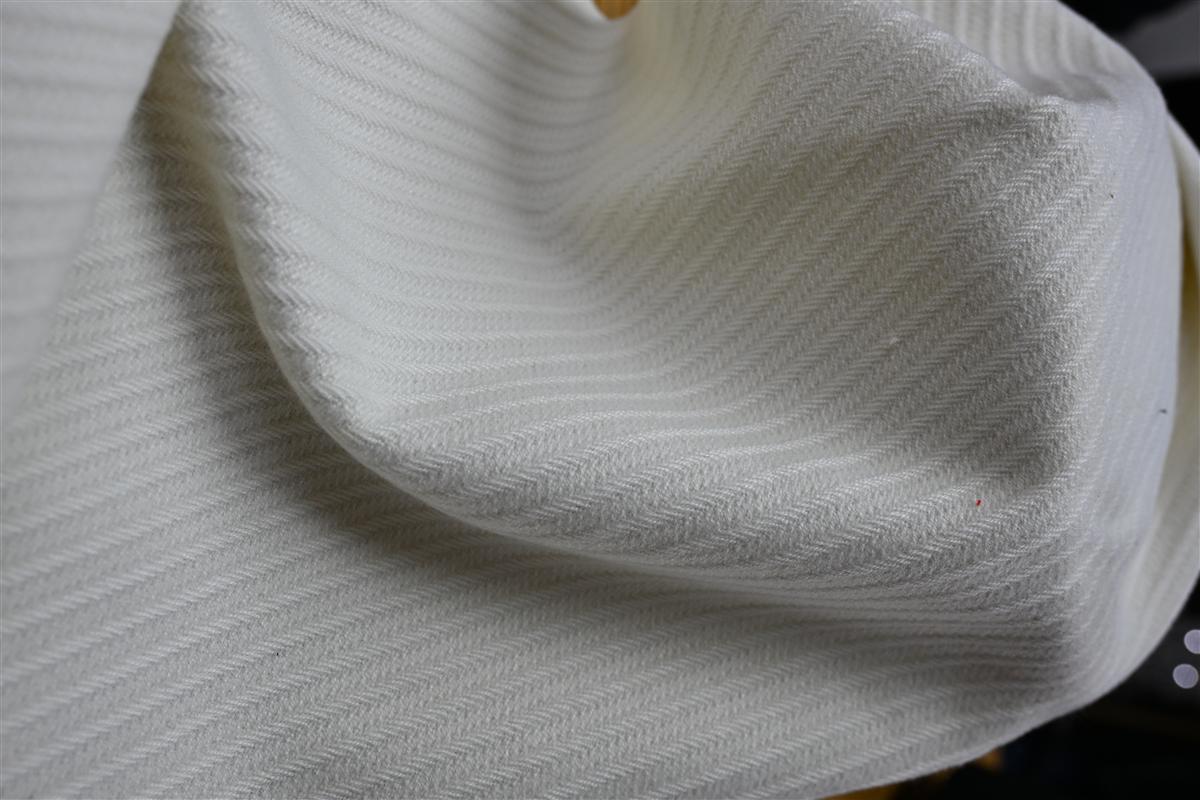
Which Weave Wins for Emerging Designers?
Handloom wins on exclusivity; power loom wins on speed, cost, and consistency.
If you’re launching a capsule collection under $50K in retail value, the romantic pull of handloom tweed is real. That irregular slub, the slight unevenness in the weave—it tells a story. But here’s what nobody tells you at fashion week: handloom tartan tweed from a certified Scottish mill typically requires an MOQ of 500–1000 meters per colorway, lead times of 8–12 weeks, and a price point that lands 40–60% higher than an equivalent power-loom fabric. For an emerging designer carrying two or three colorways, that means tying up $15K–$30K in raw materials before you’ve sold a single garment.
- Aesthetics & Hand Feel: Handloom: True irregularity—visible slubs, subtle tension variations that create depth. Power loom (with custom yarns): Fursone feeds proprietary slub and bouclé yarns into power looms to replicate that nubby texture. In blind swatch tests with buyers at Première Vision, the difference was indistinguishable for 8 out of 10 observers.
- Cost per Meter (FOB Wenzhou): Handloom: $28–$45/m for authentic Harris Tweed specification. Power loom (Fursone): $12–$22/m for comparable weight (350–500 g/m²) with identical yarn-dye melange effects.
- Sampling Speed: Handloom: 3–5 weeks for a strike-off; full sample yardage can take 6–8 weeks. Power loom: 7-day rapid sampling from Fursone—you receive a physical swatch within one week of design approval.
- MOQ Flexibility: Handloom: Rarely below 500m per SKU; smaller weavers may accept 200m but at premium pricing. Power loom: Start with 100m ready-stock (3–7 day dispatch) or build a custom program at 300m MOQ.
- Exclusivity & Customization: Handloom: Each piece is truly one-of-a-kind—no two meters are identical. Power loom: Fursone’s custom yarn spinning service allows exclusive color blends and pattern registration; your design cannot be replicated by another buyer without your permission.
Next Steps: Test Both Weaves Yourself
The fastest way to decide is to feel both weaves in your hand.
Every article on the internet will tell you to “order swatches” and leave it at that. That’s lazy advice. The real move is to request a parallel set — one power-loom tartan tweed swatch from Fursone’s ready-stock alongside a handloom reference sample — then run a blind drape test with your pattern cutter. You are not looking for which one “looks more authentic.” You are looking for which one holds the shoulder line, which one breathes against the skin, and which one costs less than $18/meter delivered.
- What to request from Fursone: Ask for a 10cm × 10cm swatch of their power-loom tartan tweed in your target colorway (they stock 100+ patterns ready to ship in 3–7 days) and a separate handloom-style swatch from their custom yarn-spinning program. Specify that you want the weight range between 350–500 g/m² so both samples are comparable for outerwear or tailored separates.
- The three-test protocol: (1) Hand feel: Rub the fabric between thumb and forefinger — power-loom slub texture should mimic handweave irregularity within 90% similarity. (2) Drape: Hang both swatches over a ruler; measure how many centimeters they droop — modern womenswear needs lighter drape than vintage Harris Tweed. (3) Colorfastness: Wet a white cloth with distilled water, press against each swatch for 30 seconds, check transfer — Fursone’s yarn-dye technique typically passes ISO 105-C06 wash-fastness at Grade 4–5.
- Why this beats reading specs: A mill can claim “artisan finish” on paper, but your supplier audit across twelve countries taught me that buyers who skip physical comparison end up with fabric that looks correct under showroom lights but sews differently on an industrial machine. The slubs might catch needles; the selvedge might fray faster. Sample approval before production isn’t optional — it’s the only quality tolerance that matters.
Conclusion
Choosing between handloom and power loom tartan tweed isn’t about authenticity versus speed—it’s about timing your collection to hit the market without sacrificing the texture that defines your brand. A $50K order that goes wrong because the mass production run didn’t match the pre-production sample is a cost you can’t recover.
If you skip this step and default to handloom for “heritage” or power loom for “cost,” you risk mismatched quality tolerance, delayed launches, and inventory that doesn’t sell. Start with parallel swatches from Fursone—compare a power-loom tartan tweed sample alongside a handloom reference to evaluate drape, weight, and price point in your own hands. Request your swatch set and see which weave fits your next capsule.
Frequently Asked Questions
How to get a quote for Handloom vs Power Loom Tartan Tweed: Which Weave Wins??
The exact answer depends on the product specification, quantity, and order setup. The safest approach is to confirm the commercial terms only after the final requirement sheet is locked. Final terms should be confirmed against the exact product specification and order conditions.
Can I request samples first?
The exact answer depends on the product specification, quantity, and order setup. The safest approach is to confirm the commercial terms only after the final requirement sheet is locked. Sample availability should be confirmed against the current stock and shipping plan.

Related Insights

Color Approval Without Surprises: Lab Dips, Loom State and the Light Booth
Color is the most common reason a tweed bulk run disappoints. Not because mills cannot...

Fulling and Finishing: The Mill Steps That Change Tweed’s Hand Feel
Two tweeds can leave the loom with identical yarn, identical weave and identical weight, and...

Garment Dyeing vs Piece Dyeing: Cost, Color Control and When Each Wins
Garment dyeing, dyeing the finished garment instead of the fabric roll, has quietly become a...