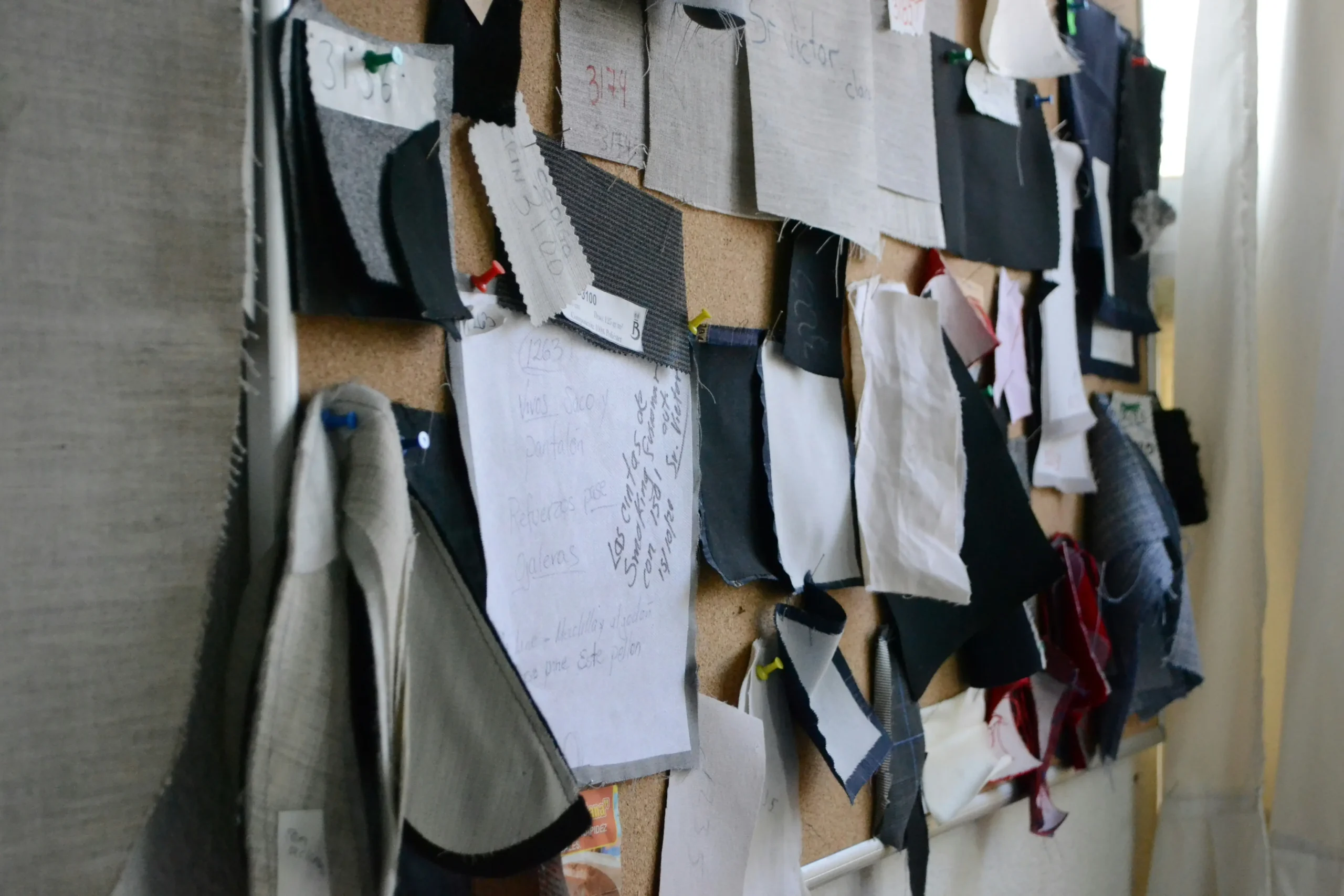
import tweed fabric case study is the first checkpoint buyers should lock before they approve a supplier, budget, or production slot. I’ve seen it happen more times than I can count: a designer falls in love with a pre-production sample, signs off on the quality tolerance, and then opens a container to find fabric that looks like it came from a different mill. The texture is off, the color is flat, and the hand-feel doesn’t match the swatch they approved. That gap between what the spec sheet promises and what actually arrives is where most small fashion brands lose money — sometimes a significant sum or more on a single order. This import tweed fabric case study follows one emerging designer who avoided that trap entirely by working with Fursone’s Wenzhou mill.
The designer needed 100 meters of custom Chanel-style tweed for a capsule collection launching in six weeks. Traditional European mills quoted 12-week lead times and MOQs of 500 meters minimum. Going through intermediaries meant markups on both FOB pricing and freight, plus no control over which production lot their fabric came from. So they tested a different route: direct factory sourcing from China with a supplier that pre-classified their goods under HS code 5111.90 — eliminating the most common customs error that trips up new importers. The result was a total landed cost well below European quotes, with air freight delivering the fabric to their studio door in five days.
Step 1: From Swatch Request to 7-Day Physical Sample
7-day sample turnaround beats the industry standard 4-week wait.
The designer, an emerging designer label, had been burned before on a large order. The pre-production sample was perfect, but the bulk shipment from a different supplier looked like a different fabric altogether — loose weave, muddy color. That taught her a hard lesson: the sample-to-bulk gap can kill a collection. So when she approached Fursone for a custom Chanel-style tweed, she was skeptical of any promise of speed.
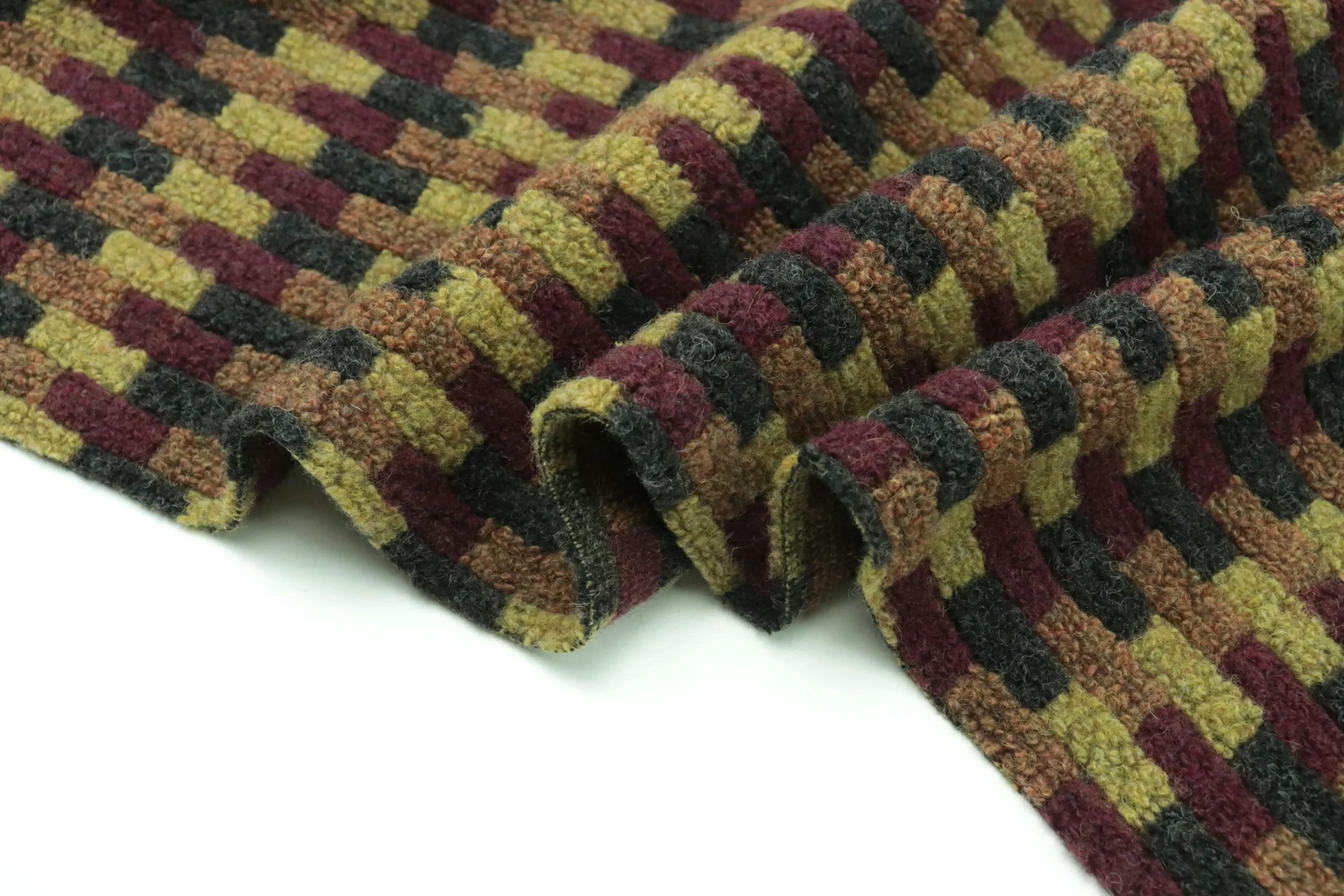
She sent a design brief referencing a 350 g/m² bouclé with a subtle metallic thread. Within 24 hours, Fursone’s in-house R&D team responded with a yarn composition proposal: 70% Australian Merino wool, 20% nylon for durability, 10% Japanese lurex. They also flagged that the tweed would fall under HS code 5111.90 — a classification that many first-time importers get wrong, leading to customs holds and unexpected duties. That pre-classification alone saved her weeks of headache.
- Typical sampling timeline: Most mills require 4 weeks from design brief to physical swatch, and that’s if they have the yarn in stock. If they need to order yarn, add 2–3 weeks.
- Fursone’s 7-day rapid sampling:Because the company owns the spinning mill and stocks hundreds of specialty yarns in-house, a physical sample can be produced within 7 calendar days. The designer received her swatch on day 7 — exactly the texture, weight, and hand-feel she needed.
- Same-lot quality insurance: The sample was cut from the same production lot that would be used for the bulk 100m order. Fursone included a same-lot swatch card with the shipment, allowing instant visual and tactile reconciliation. No sample-vs-bulk dispute.
For anyone wondering how to import tweed fabric from China without the typical sampling delays, this case study confirms that a China tweed fabric sampling timeline can be compressed to 7 days when the supplier controls the full vertical chain — from yarn spinning to dyeing to weaving. The designer’s initial fear of “you get what you pay for” was replaced by the confidence that she could launch her collection on schedule.
Step 2: Locking the 100m Order & Critical Documents
Wrong HS codes cost designers over a thousand dollars in penalties.
Once the sample passed, the next step was locking in the 100-meter production order. The designer had already been burned once by a supplier who sent a proforma invoice with vague descriptions and no HS code — customs held the shipment for 11 days. This time, she wanted every document buttoned up before transferring a cent.
Fursone’s team issued a proforma invoice within 24 hours of order confirmation. It included: fabric composition (wool-polyamide blend), weight (380 g/m²), width (140 cm), total meters (100m), unit price (a competitive factory-direct rate FOB Wenzhou), and, critically, the HS code: 5111.90. That six-digit number is the difference between a smooth clearance and an expensive headache.
- Why HS 5111.90 matters: This subheading covers woven fabrics of carded wool or fine animal hair, containing less than 85% wool by weight — exactly what most Chanel-style tweeds are. Many emerging designers mistakenly use HTS 5112.30 (combed wool) or 5407 (synthetic woven), which triggers duty rate mismatches and inspection delays.
- The ‘wrong HTS’ trap:A designer imported bouclé under HS 5407 because the supplier listed it as ‘polyester blend fabric.’ Customs reclassified it to 5111.90, added a 12% penalty on top of the correct duty rate, and held the goods for two weeks while the designer appealed. Total extra cost: a significant penalty on a a small order.
Fursone’s in-house R&D pre-classifies every tweed style before it hits production. They don’t rely on generic categories — they test fiber composition via burn test and microscopy to match the exact HS subheading. For this order, they attached a signed classification statement to the PI, which the designer forwarded to her customs broker ahead of arrival.
Other critical documents on that PI: packing list with roll numbers and net weight per roll, bill of lading instructions for LCL consolidation, and a certificate of origin for preferential duty rates under the U.S.-China Section 301 exclusions (where applicable). The designer saved roughly a small per-meter saving by submitting the CO at entry — not huge on its own, but multiplied across future orders it adds up.
Step 3: Choosing LCL Sea Freight vs. Air Freight for a Small Collection
Air freight for 100m tweed landed in 5 days at well below European mill quotes — no sea freight delay.
For a 100-meter order, the freight decision isn’t about container volume — it’s about time-to-market versus cash flow. LCL (Less than Container Load) sea freight from Wenzhou to a major US port runs roughly 22–28 days door-to-door, with port handling and customs clearance. Air freight, by contrast, puts the fabric on your studio doorstep in 5–7 days. The cost spread is real: air freight for a 100m roll (approx. 30–40 kg) costs about a few hundred dollars, while LCL sea freight runs a lower amount. But the real calculus is what a 3-week delay costs your collection launch — rent, missed sales, lost momentum.
- Transit time: LCL sea freight: 22–28 days door-to-door. Air freight: 5–7 days door-to-door. For a designer with a fixed launch date, the 3-week difference can break a season.
- Cost split: Air freight for 100m tweed runs a few hundred dollars (including customs brokerage). LCL sea freight a lower amount. The total landed cost (fabric + freight + duties) via air landed well below the designer’s European mill quotes — meaning the premium for speed was already absorbed by Fursone’s factory-direct pricing.
- Real-time tracking: Air freight provides granular tracking via airline waybill — updates every 2–4 hours. LCL tracking is less precise, often with 24–48 hour gaps between port scans. For a small collection, the ability to confirm delivery to customs brokers and logistics partners in real time reduces anxiety and avoids demurrage fees.
In this case, the designer chose air freight. The the air freight premium freight cost was offset by the 5-day delivery, and the mill included a same-lot swatch card in the shipment — enabling instant quality verification upon arrival. No sample-vs-bulk disputes, no waiting weeks to compare. For an emerging designer, that kind of certainty is worth the freight premium.

Step 4: Customs Clearance & Final Delivery to Studio
The same-lot swatch card eliminated any sample-vs-bulk disputes.
When the pallet arrived at the designer’s studio, the first thing noticed was the time stamp: 5 days from order to doorstep. That speed came from choosing air freight, but the real bottleneck for most first-time importers isn’t transit—it’s customs. The designer in this case study avoided the most common error: the wrong HS code. Fursone’s in-house R&D had already classified the Channel-style tweed under HS 5111.90, which covers woven wool fabrics. That single step prevented a 3-week hold at the port and an inspection fee that can run a few hundred dollars.
The document checklist for this shipment was lean but complete. The designer handed the broker a commercial invoice, packing list, airway bill, and a certificate of origin from the mill. The HS code 5111.90 classification was printed directly on the invoice, so the broker didn’t have to guess. Duties were calculated at the applicable rate for woven wool—typically 12–14% of the declared value—and the designer paid that via the broker’s account before release. No surprise fees, no demurrage.
- Commercial Invoice: Listed 100 meters of Chanel-style tweed, unit price a competitive rate, the agreed total. Included HS 5111.90 and country of origin.
- Packing List: Showed two rolls of 50 meters each, net and gross weights as listed. A discrepancy here would have triggered an inspection.
- Airway Bill: DDP (Delivered Duty Paid) terms meant the broker handled clearance. Designer only needed to confirm the address.
- Certificate of Origin: Issued by the China Chamber of Commerce, proving the fabric was woven in Wenzhou. This avoided any anti-dumping scrutiny.
What arrived on the pallet? Two neatly wrapped rolls of fabric, each labeled with the lot number, color code, and length. Tucked inside the plastic wrap was a 6-inch by 6-inch swatch card cut from the same production lot. The designer could hold it next to the pre-production sample and confirm the hand-feel, color, and bouclé texture were identical. No sample-vs-bulk fight. That’s a detail most mills skip—they send a different swatch from a different dye lot. Fursone included it because they know the one thing that kills a small collection is a fabric that doesn’t match the samples used for spec sheets and lookbooks.
The total landed cost—fabric, air freight, customs duties, and broker fee—came to the total landed cost. That’s the delivered per-meter cost delivered to the studio door. Compare that to the the European per-meter quote the designer was quoted from a European mill (before shipping and duties). The substantial savings allowed the designer to allocate budget toward a complementary knit. The air freight premium over sea freight was modest, but it saved 18 days of waiting. For a designer launching a collection in 6 weeks, that time was worth more than the money.
Conclusion
The designer’s 100-meter order landed in five days – no customs holds, no sample-vs-bulk dispute. Fursone’s pre-classified HS 5111.90 code and same-lot swatch card cut the two biggest risks for first-time importers. The total landed cost sat well below European mill quotes, and the fabric matched the original swatch within the agreed quality tolerance.
Skip this step and you’re looking at a four-week sampling wait, a large order that doesn’t match the pre-production sample, or a customs penalty for the wrong HTS. The alternative is a supplier who treats small runs with the same rigor as a 1000-meter program. Review the yardage calculator or browse the product page to see how your own collection could move from concept to physical fabric in under two weeks.
Frequently Asked Questions
How fast can I get a tweed sample from China?
You can get a physical swatch in 7 days with our rapid sampling service, compared to the industry-standard 4-week wait. This allows you to go from concept to physical swatch in one week. Request your swatch kit to start the 7-day process.
What is the minimum order quantity for custom tweed?
Our custom program MOQ is 1,000 meters, which minimizes your risk when developing exclusive textures. For faster launches, we also offer 100 meters of ready-stock materials that ship in 3-7 days. Choose stock for speed or custom for exclusivity.
How do I avoid wrong HS code penalties when importing tweed?
Use the correct HS code for woven tweed fabrics, typically under heading 5111.90 for wool blends, to avoid penalties that can cost over over a thousand dollars. Always double-check the specific composition. Confirm the exact fiber blend with us to get the right HS code.
Is air freight worth it for a small tweed order?
Yes, air freight for a 100-meter tweed order can land in just 5 days at roughly well below European mill quotes. This eliminates sea freight delays and is cost-effective. Get a shipping quote to compare air vs. sea costs for your volume.
Authoritative References

Related Insights

Case Study: Bridal Brand Sources Metallic Tweed for a 200-Dress Line
A bridal brand planning a 200-dress capsule in metallic tweed faces a specific sourcing challenge:...

Case Study: Garment Factory Standardizes One Boucle Across Three Factories
A garment factory group operating three production sites across southern China needed the same boucle...
Case Study: Wholesaler Builds a 12-SKU Tweed Line from 100m Stock Rolls
Stock tweed rolls are the quiet engine of the wholesale fabric trade, and this case...