

When a fabric spec sheet lists “ISO grade 3-4 pilling resistance,” most buyers read it as a quality promise and move on. But what does that rating actually mean in terms of how the fabric will look after six months of wear, and how does it compare to a grade 2 or a grade 4-5? Understanding the rating scale helps you set the right expectations and avoid disputes when production fabric arrives.
Fursone specifies ISO grade 3-4 across its boucle and tweed lines, verified by ISO 12945-2:2020 Modified Martindale testing. Here is what that number represents in practice.

What Is the ISO 12945-2 Test Method
ISO 12945-2:2020 is the international standard for measuring a fabric’s tendency to form pills, fuzz, or matting on its surface. The test uses the Modified Martindale method, which rubs the fabric specimen against itself or a standard abradant under a fixed pressure (usually 12 kPa for most apparel fabrics) for a specified number of cycles. The standard test runs 2,000, 5,000, and 7,000 cycles, with assessments at each interval.
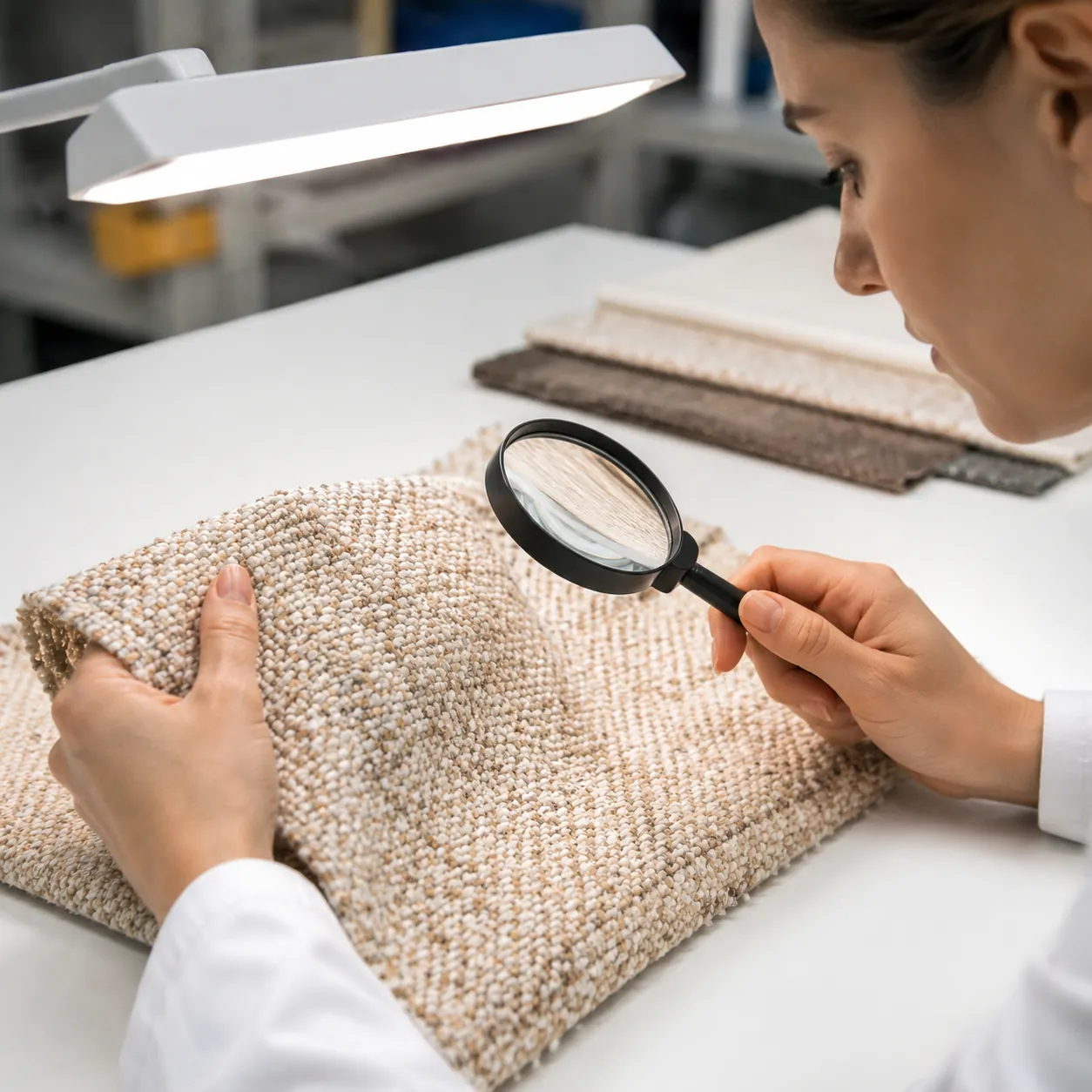
The tester cuts circular specimens from the fabric, mounts one face-up on the Martindale machine’s lower plate, and places another specimen face-to-face against it. The machine then moves the upper specimen in a Lissajous curve (a multi-directional figure-eight pattern) that simulates the rubbing motion fabric experiences during real wear. After each cycle checkpoint, a trained assessor compares the specimen surface against photographic reference standards under standardized lighting.

This is not a subjective eyeball test. The photographic reference standards define each grade precisely, and reputable labs use multiple assessors and average their scores. Fursone’s grade 3-4 rating means independent testing confirmed that level under controlled conditions, not an internal guess.
The Grading Scale From 1 to 5
The ISO 12945-2 pilling grade scale has five levels. Here is what each means in terms of what you would see on the fabric surface:
| Grade | Surface Appearance | Wear Translation |
|---|---|---|
| 5 | No change | Surface stays clean even after heavy wear |
| 4 | Slight surface fuzzing, no pills | Minor fuzz at friction points only |
| 3-4 | Slight to moderate fuzzing, no clear pills | Visible fuzz at friction areas, manageable with a fabric comb |
| 3 | Moderate fuzzing, possible pill formation | Pills form at collar, cuffs, underarms |
| 2 | Distinct pills formed | Pills visible across worn areas, fabric looks tired |
| 1 | Severe pilling, dense pill clusters | Surface covered in pills, garment looks worn out quickly |
Grade 3-4 sits in the upper-middle range. It means the fabric shows slight to moderate fuzzing at the test’s friction points but does not develop the distinct, clustered pill balls that characterize grades 1-2. In real-world wear, a grade 3-4 boucle jacket will show some surface fuzz at the collar, cuffs, and underarm seams after months of wear, but a fabric comb removes it and the surface recovers. That is a commercially acceptable pilling performance for a fashion fabric.
Why Grade 3-4 Matters for Fabric Buyers
For brands sourcing fabric, the pilling grade has a direct relationship to consumer returns and complaints. A grade 2 fabric will pill visibly within the first few wears, generating negative reviews and return requests. A grade 4-5 fabric will stay clean but typically costs more due to the higher twist levels and fiber quality required. Grade 3-4 is the balance point: commercially acceptable pilling performance at a price that works for fashion production.
When you see a spec sheet with grade 3-4, three things should be true:
- The fabric was tested under ISO 12945-2 Martindale method, not a less rigorous standard.
- The testing was done by a credible lab, not self-assessed by the mill.
- The rating applies to the specific fabric you are buying, not a different product from the same mill.
Ask the supplier for the test report, not just the grade number. The report will show the test method, the lab name, the cycle counts at each assessment, and the specimen photographs. Fursone provides pilling test data on its Chanel-Style Tweed product line, where grade 3-4 is specified as a standard quality parameter.
How Fursone Achieves Grade 3-4
Pilling resistance comes from three factors: fiber quality, yarn twist, and fabric construction. Fursone controls all three on its 300-loom Wenzhou floor, running since 2020. The boucle yarn uses a multi-component structure (core, effect, binder) where the binder thread locks the effect loops tightly enough to resist fiber migration under abrasion. The wool content and twist level are specified to keep surface fibers from breaking free and forming pill clusters.
This is not magic; it is engineering. A supplier who cuts corners on yarn twist to save cost will produce a grade 2 fabric that looks identical in a swatch but pills in wear. The ISO test catches that difference before the fabric reaches your cutting table. When you specify grade 3-4 in your purchase order and request the test report, you are buying a measurable quality level, not a marketing claim.
Fursone’s factory-direct model means you can request pilling test data during the sampling phase. The 7-day sampling program lets you receive physical swatches with supporting test documentation before committing to the 300M custom production order.
Request Pilling Test Data With Your Samples
Fursone provides ISO 12945-2 grade 3-4 test reports alongside 7-day fabric samples from 100M ready stock. Verify the spec before you commit to production.
Explore Our ProductsColor fastness testing is covered in our crocking vs lightfastness guide. Learn more.
Frequently Asked Questions
Is grade 3-4 good enough for a retail garment?
Yes. Grade 3-4 is the commercially accepted standard for fashion fabrics including boucle and tweed. It means slight surface fuzzing may appear at friction points but does not develop into visible pill clusters. A fabric comb restores the surface easily.
What is the difference between grade 3 and grade 3-4?
Grade 3 shows moderate fuzzing with possible pill formation. Grade 3-4 sits between 3 and 4, meaning the surface fuzzing is lighter and no distinct pills form. A grade 3-4 fabric performs better in wear than a straight grade 3.
Should I request a grade 4-5 for premium positioning?
You can, but it will cost more. Grade 4-5 requires higher twist yarns and superior fiber quality, which raises the fabric price. For most fashion applications, grade 3-4 delivers acceptable pilling performance at a competitive cost.
Can I test pilling myself before buying?
You can do a simplified rub test: rub the fabric surface against itself firmly for 30 seconds and check for fuzz or pills. This gives a rough indication but is not a substitute for ISO 12945-2 Martindale testing. Always request the lab report for production orders.
Conclusion
ISO grade 3-4 pilling resistance is a specific, testable quality parameter, not a vague marketing label. It means the fabric surface shows only slight to moderate fuzzing under controlled Martindale abrasion, with no distinct pill formation. For fashion boucle and tweed, that is the balance between wear performance and cost that most brands need.
Key points to remember:
- Ask for the ISO 12945-2 test report, not just the grade number on a spec sheet.
- Grade 3-4 is commercially acceptable for fashion fabric; grade 4-5 costs more for marginal visual improvement.
- Pilling resistance comes from yarn twist and fiber quality, so verify the supplier controls both.
Fursone achieves grade 3-4 through yarn engineering on 300+ looms in Wenzhou, and provides test data with its 7-day sampling program. Request a quote with pilling test documentation included.

Related Insights

Color Approval Without Surprises: Lab Dips, Loom State and the Light Booth
Color is the most common reason a tweed bulk run disappoints. Not because mills cannot...

Fulling and Finishing: The Mill Steps That Change Tweed’s Hand Feel
Two tweeds can leave the loom with identical yarn, identical weave and identical weight, and...

Garment Dyeing vs Piece Dyeing: Cost, Color Control and When Each Wins
Garment dyeing, dyeing the finished garment instead of the fabric roll, has quietly become a...