

total cost of ownership fabric is the first checkpoint buyers should lock before they approve a supplier, budget, or production slot. The difference between a good purchase and a costly write-off often sits inside a 3–5% quality tolerance that no one bothered to define. I saw this play out in Milan two years ago: a designer received a pre-production bouclé sample that draped beautifully—lively texture, rich melange, perfect hand-feel. The bulk arrived looking like a distant cousin. The FOB pricing was locked, the LC was closed, and the entire capsule collection missed its launch window because the mass production run didn’t match the approved sample. The mill pointed to its standard 4% allowable variance. When you are sourcing fabric for a first collection, the total cost of ownership fabric isn’t a line item on a quote sheet. It is the sum of every decision you make before a single meter hits your cutter.
The sample approval process is where most emerging designers lose the thread. A competitively priced bouclé swatch can easily cost you a surprising amount delivered once you unpack the real arithmetic. Lab dips that aren’t transparently priced siphon a per-color fee before you even confirm a pantone. A mill that quotes FOB Shanghai at the accessible end of the factory-direct range for a textured tweed rarely volunteers that you will absorb a modest roll-splitting surcharge if you need 12 cuts for a multi-style collection. Add the freight, the 12% duty, and the broker’s clearance fee, and your “affordable” textile just crossed the modest ceiling you set for your COGS. Sample approval is not just about aesthetics; it is the first checkpoint where your true per-unit cost either solidifies or starts to leak.
Supply Chain TCO: Pre-Production Hidden Fees
Most mills don’t charge extra when the sample fails — they charge extra when it doesn’t.
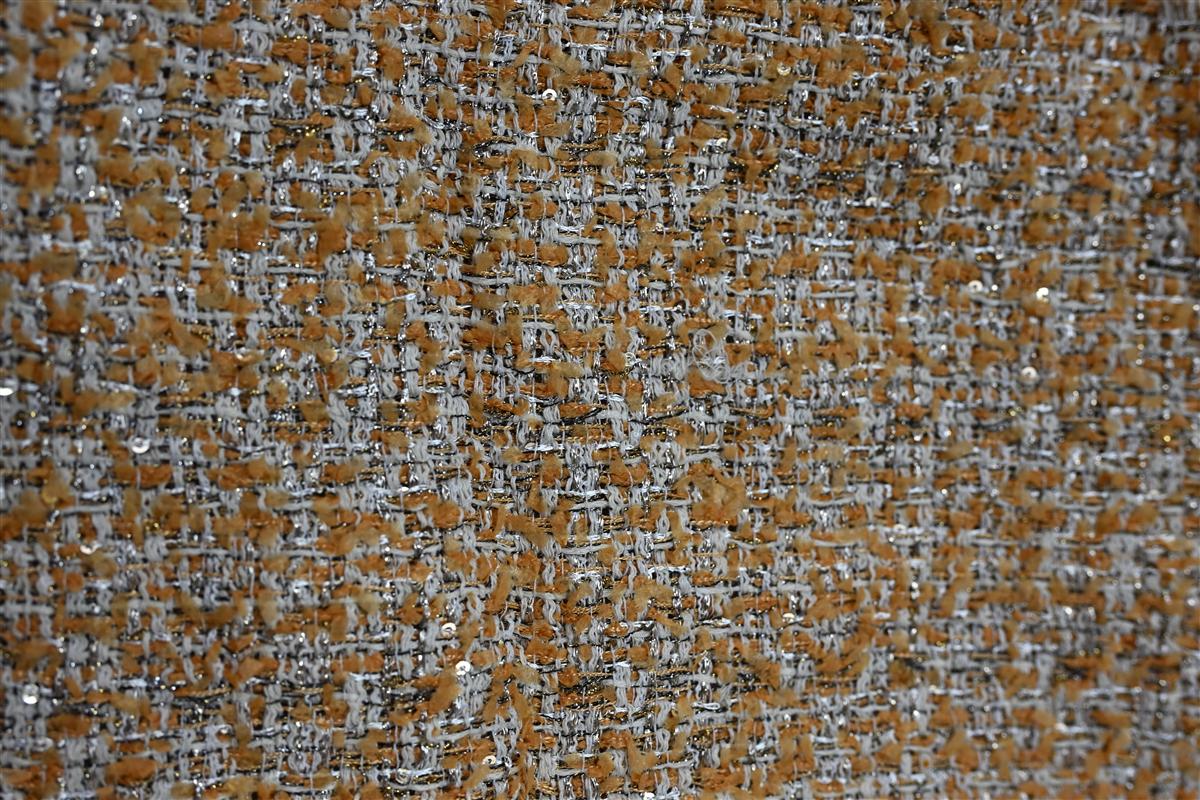
The true cost of a bouclé or tweed fabric starts stacking up long before the first production meter is woven. In my years auditing mills across Asia and Europe, the line item that sinks most first-time budgets isn’t the per-meter quote — it’s the pre-production sampling cascade. Lab dips, strike-offs, and sample yardage fees can quickly add up across a three-color development, and no Instagram ad ever mentions them.
A typical Western mill will charge a per-lab-dip fee for a multi-tonal tweed, plus an additional premium for a paper strike-off. Many Asian mills quote lower base prices but then bill lab dips separately at a per-color fee — exactly the same range. A designer might spend a meaningful sum just getting three colors right, then discover the bulk production minimum was 500 meters
- Standard Mill Lab Dip: a per-color fee. A three-color development round adds considerably to your pre-production outlay — often a notable share of a small initial bulk order of 500 meters. These fees are rarely refundable against future production.
- Sample Yardage Markup: Sample fabric runs 2–3× the negotiated production price per meter. A competitively priced bouclé can cost a surprising amount for 20 meters of sampling, purely because small-run loom setup and yarn waste aren’t amortized. Many mills don’t disclose that a 50-meter ‘sample order’ includes an additional roll-splitting surcharge if you need narrower widths for your pattern layout.
- Strike-off & Color Matching: Some mills bundle a digital print or strike-off into the lab dip, but for yarn-dyed fabrics like our multi-tonal Chanel-style tweeds, achieving the right mélange effect may require separate dyed-yarn submissions. Each additional submission without a clear cap can cascade cost.
Here’s what changes the arithmetic: our partner mills in Wenzhou’s 7-day sampling program includes up to three free lab dips. That removes a meaningful chunk of upfront cost anxiety before you even see a swatch. The 100-meter in-stock bouclé and tweed rolls ship in 3–7 days, so your first physical sample comes from the same production batch you’ll eventually order — no bait-and-switch between a hand-fed lab sample and a rushed bulk run. And because we spin our own slub and bouclé yarns in-house, we’re not paying a third-party spinner’s setup fee every time we tweak a twist, which is what hides inside most mills’ lab dip invoice at the accessible end of the factory-direct range.
One more sleep-wrecking detail: mills that advertise ‘free sampling’ are usually recovering that cost by embedding a meaningful premium across your entire bulk order. On a 1000-meter run at the low end of the mill-direct range, that’s a meaningful sum you’ll pay repeatedly, collection after collection. A transparent upfront sampling fee often saves more over an 18-month relationship.
Sampling vs Production: Per-Meter Cost Reality
Sample pricing isn’t a markup—it’s a different manufacturing process entirely.
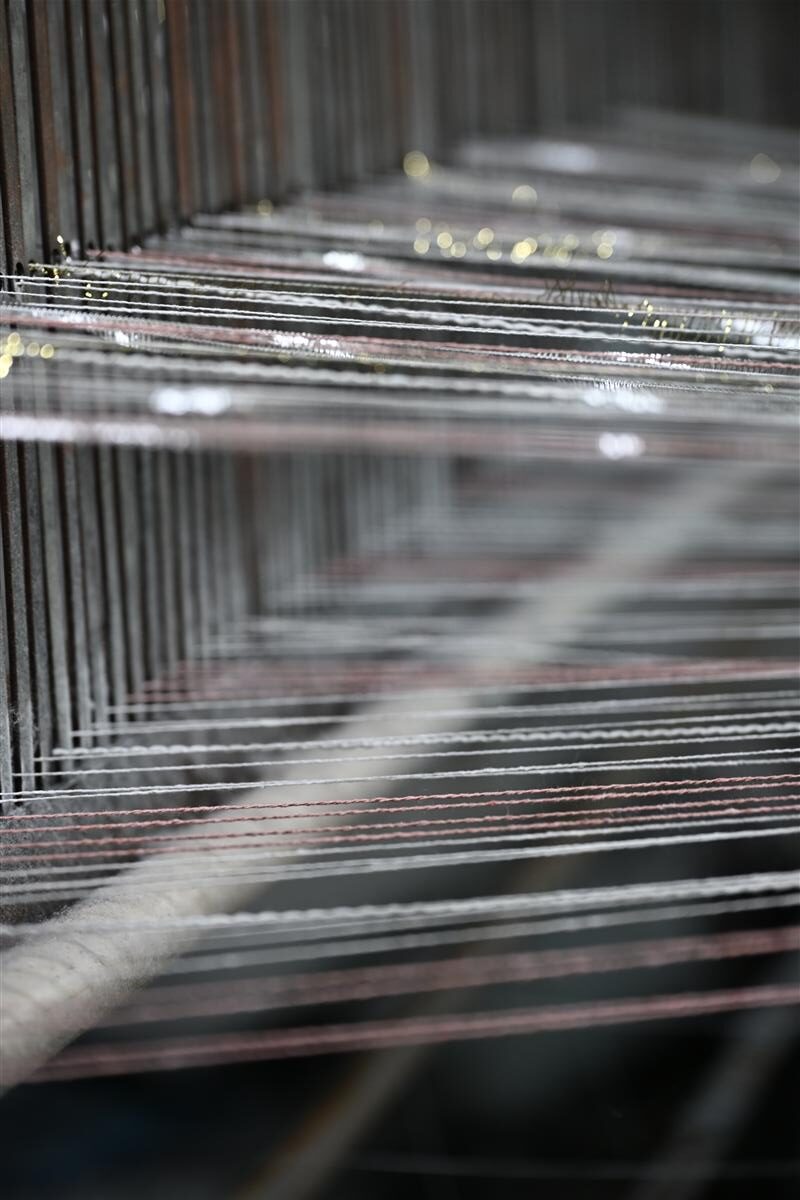
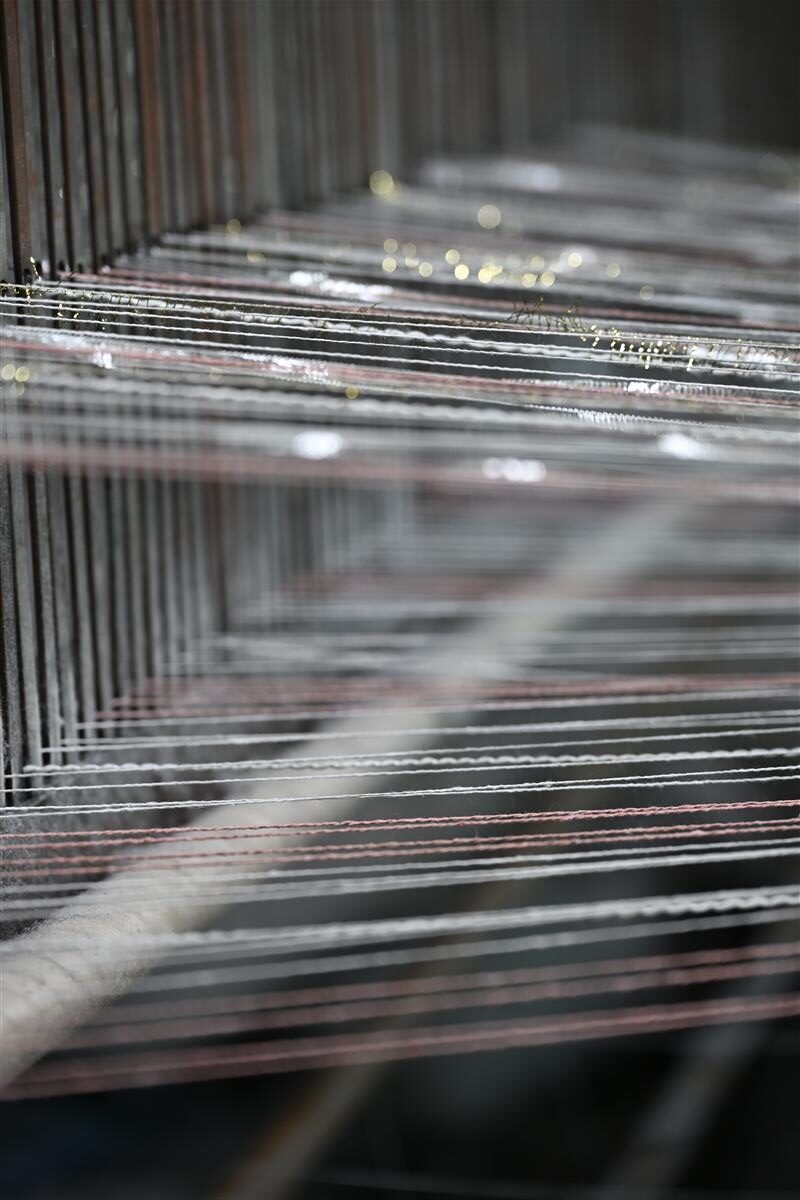
I’ve watched a designer stare at a large shipment of tweed, physically ill because the hand-feel was completely different from the sample she approved six weeks earlier. That apparent bargain turned into a write-off. The root cause wasn’t malicious—it was a fundamental misunderstanding of how sampling economics work versus production economics. When you request 10 meters of a custom bouclé, the mill doesn’t just run 10 meters. They thread an entire warping beam, which holds 500 meters, and they charge you for the setup time, not the yarn consumption.
That’s why your sample meter costs a premium rate while the production quote cites a far lower one. You’re not paying for fabric. You’re paying to amortize the machine downtime, the operator’s shift change, and the fact that the first three meters off the loom are always waste until tension stabilizes.
- 50m Sample Run: Expect pricing at the accessible end of the factory-direct range. The warping and setup costs get spread across too few meters. Most mills lose money on these runs, which is why they bury the real cost in inflated per-meter quotes rather than being transparent about setup fees.
- 100m Stock Order: Drops to the low end of the mill-direct range. You’re now buying greige inventory the mill already wove on speculation. No setup cost, but you still pay a cutting-and-handling surcharge because the mill is breaking a full roll. Some mills tack on a roll-splitting fee at the accessible end of the factory-direct range if you need multiple narrower widths, silently adding a meaningful sum to your landed cost.
- 300m Threshold: This is where unit economics start making sense. Setup costs are fully absorbed. Per-meter pricing typically drops 20–25% from the 100m rate. You’re now in genuine small-batch production territory, not an extended sampling exercise dressed up as an order.
- 300m Custom Run: Best per-meter price, period. The mill buys yarn at volume discounts, runs continuous production without stopping, and achieves full efficiency. The difference between a 100m stock order and a 300m custom run can amount to a meaningful sum on a tweed with Japanese lurex content—enough to swing your collection from break-even to profitable.
The dirty secret nobody advertises: mills offering ‘free sampling’ aren’t being generous. They’re building that upfront lab dip and sampling cost into your bulk price by marking it up 2–3% across the entire order. On a 500-meter order at the low end of the mill-direct range, that’s an extra charge you’re paying invisibly. A straight, transparent sampling fee is almost always cheaper in the long run. At our partner mills in Wenzhou, we eliminated the shell game—lab dips for up to three colors are included during sampling, and our 7-day rapid sampling program cuts the development cycle by 60% without hiding the cost elsewhere.
The sample-to-production price cliff is real, but it’s not a scam. It’s manufacturing math. What separates honest mills from predatory ones is whether they explain the warping beam economics upfront or let you discover them in a panicked 2 a.m. spreadsheet session. Ask your supplier one question before sending a PO: ‘Show me the cost breakdown at 50m, 100m, 300m, and 1000m.’ If they can’t produce it or the numbers look suspiciously linear, walk away. Real production pricing has sharp elbows at specific volume thresholds—and you need to see exactly where they are.
| Order Stage | Typical Quantity | Per-Meter Cost Reality | Common Hidden Fees | Fursone Advantage |
|---|---|---|---|---|
| Initial Sampling (Strike-Off) | 3–10 meters | 2–3× bulk production price (competitive mill-direct pricing for bouclé/tweed) | Lab dip fees: a per-color fee; small-run setup surcharges; express courier costs | 7-day sampling with up to 3 free lab dips included; no separate color-matching billing |
| Small Stock Order | 100 meters (MOQ) | ~15% above 1000m rate; cutting and handling surcharges apply on sub-mill runs | Roll-splitting fees (competitive mill-direct pricing); minimum order surcharges; limited colorway access | 100m in-stock MOQ ships in 3–7 days; transparent per-meter pricing with no surcharge surprises |
| Mid-Range Production | 300–500 meters | Moderate discount kicks in; still 5–8% above full custom-run pricing | 3–5% defect-rate tolerance creates a meaningful amount of additional material waste; color-lot variation risk | OEKO-TEX certified quality; consistent dye-lot control minimizes rejection waste |
| Full Custom Production | 1000+ meters (custom MOQ) | Lowest per-meter cost; exclusive textures amortize R&D across full run | Some mills silently raise bulk price 2–3% to recoup ‘free sampling’; customs duty 12%+ on synthetics | Straight transparent pricing—no padded bulk quotes; 4–5 week custom lead time with proprietary yarn spinning |
| Delivered Total Cost (FOB → Door) | Any quantity | Base FOB price inflated 18–25% after sea freight, duties, brokerage, and handling | Air freight costs 3–5× more than consolidated sea freight; customs bond fees unadvertised | Factory-direct shipping guidance; Wenzhou logistics expertise helps designers choose cost-optimal freight routes |
Logistics & Duties: The 20% Hidden Budget Drain
Logistics alone can turn a factory-direct fabric bought at the accessible end of the range into an expensive landed cost—here’s how.
A designer I worked with ordered 500 meters of bouclé at the competitive end of the mill-direct range, FOB Shanghai. The mill confirmed the price and sent a crisp sample approval. Three weeks later, the fabric landed in Los Angeles, and the true per-meter cost—after ocean freight, customs bond, 12% duty on the synthetic blend, and clearance fees—clocked in at the higher end of the factory-direct range. That’s a 22% jump no Instagram ad about ‘premium at the accessible end of the factory-direct range’ ever mentions.
Here’s the breakdown that catches every emerging brand off guard. FOB pricing only covers the fabric loaded onto a vessel. Everything after that—sea freight, terminal handling, customs brokerage, and bonded warehousing—is on you. For a 100m tweed order, air freight looks tempting at a 5-day transit, but it runs 3–5 times the cost of consolidated sea freight. On a small order, that single decision can swing the true cost by a meaningful margin or more, a fact few mills bother to explain.
- Sea freight + surcharges: Consolidated LCL shipments add a meaningful sum on typical 100–300m orders. A full container load slashes the per-unit freight cost but demands 2,000m+ volume.
- Customs duty on synthetics: Most bouclé and tweed blends fall under HS code 5112 or 5515, carrying an 8–12% ad valorem duty into the US. A fabric bought at the accessible end of the factory-direct range quickly absorbs a meaningful extra cost at Customs.
- Roll-splitting fee: If a designer needs narrower cuts—say 55-inch instead of the mill’s standard 60-inch roll—many mills silently invoice an extra per-roll splitting charge. That adds a meaningful sum on a 200m order and nobody quotes it upfront.
- Bonded warehouse & clearance: Customs brokers charge a per-entry fee, plus storage if documents aren’t perfect. A single missing packing list line can cost you 3 days of detention and a meaningful sum in late fees.
Consolidating shipments is the fastest way to turn this hidden drain into a margin advantage. One brand I advised combined their bouclé and tweed orders into a single 600m consolidated LCL movement, bringing freight per meter down by 40% compared to two separate small air-freighted parcels. The savings went straight into their per-unit profit on a 120-piece capsule.
At Fursone, our ready-stock bouclé and tweed rolls ship from Wenzhou in 3–7 days with transparent FOB terms and zero surprise roll-splitting fees. For custom programs, we lock the quality tolerance upfront and connect you with freight partners who handle customs bond without inflating your landed cost. The benchmark to write down: your total logistics and duty bill should never exceed 18–25% of the FOB value. If a supplier can’t provide a landed cost estimate within that range before you commit, you’re looking at an undisclosed fee, not a deal.
Quality Risks: When Cheap Becomes Expensive
A 5% defect rate on a 500m order wastes a meaningful sum in fabric alone—before you factor in remake labor or missed delivery windows.
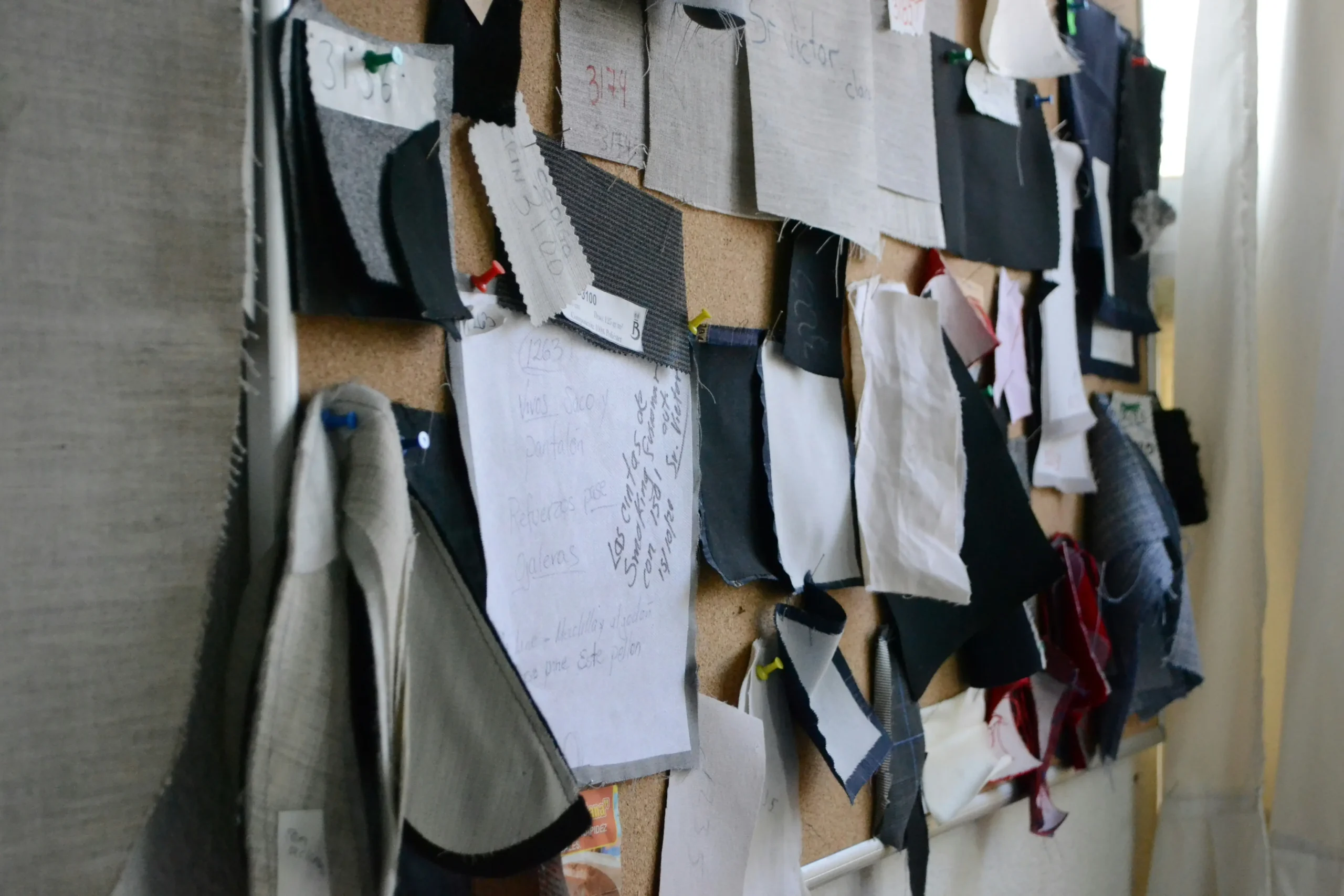
Here’s a scenario I’ve seen too many times: a designer approves a pre-production sample that feels substantial and looks perfect. Three weeks later the container lands and the bulk fabric is thinner, the bouclé loops are uneven, and the hand-feel has drifted. When you’re working with textured fabrics like tweed or bouclé, sample-to-bulk deviation is the silent margin killer that no spec sheet warns you about.
On a 500-meter order, accepting a standard 3–5% defect tolerance means you’re writing off 15 to 25 meters before cutting the first pattern piece. At a conservative estimate of factory-direct cost FOB, that’s a meaningful sum of material you paid for but can’t use. And that’s just the raw material cost. Add the labor to inspect, segregate, and reorder—plus the production slot you’ve now lost—and the real damage can easily exceed what you’d pay at a premium European mill. For a solo designer working to a tight budget target, that one quality gap can erase the profit on the entire capsule.
Color lot variation is even more treacherous. A tweed woven from custom-spun melange yarns can shift by half a shade between dye lots. If your production run spans two lots and the cutting table catches the mismatch, you could be forced to reject the entire second roll. Most mills will not accept a return for ‘acceptable commercial tolerance’—a phrase you’ll only hear after the problem surfaces. Always demand a physical lot swatch from the actual production run, not a lab dip sample, before the balance is shipped.
- Pre-shipment inspection: Book a third-party inspection that checks GSM, color continuity, and surface defects on a 10% random sampling. This costs a modest sum and typically catches 80% of issues before freight is paid.
- Contingency yardage: Add 8–10% to your order quantity. On a 500m order, that’s an extra 40–50m. It’s far cheaper to hold a few meters of safety stock than to stop a cut-and-sew line.
- Written quality tolerance: Negotiate a quality tolerance clause in your purchase order that limits defects to 2% and allows rejection of any roll with a color delta above a defined threshold. Mills that push back hard on this clause are often the ones you’ll need it against.
Contingency planning isn’t pessimism—it’s the difference between a collection that launches on time and one that dies in the sampling room. When auditing a new mill, the critical signal to observe is whether they proactively disclose their internal reject rate and lot-to-lot color data, or only talk about ‘premium quality’. The mills that share the uncomfortable numbers are the ones offering genuine affordable luxury, not a gamble dressed up as a bargain.
3-Season TCO: Planning for Profitability
A cheap meter price means nothing if that fabric is unusable by Season 2.
I have audited mills where the Season 1 sample was impeccable—tight weave, perfect hand-feel, rich luster. By Season 3, the same SKU arrived lighter by 40 g/m², with a visible shift in the melange effect. The designer lost two wholesale accounts before they understood the problem. This is the cost of ownership that never appears on a proforma invoice: the slow, quiet degradation of a product that kills repeat buyers. When you lock in a fabric for a capsule, you are not just buying 100 meters. You are betting your brand’s consistency on that mill’s process control for the next 12–18 months.
The math is brutal if you ignore it. Take a mill that quotes an attractive price for a structured cable knit. Looks fine. But they have a history of 5% annual price hikes on repeat orders and a 4% shade-band variance that forces you to re-cut patterns. Your actual cost of goods sold (COGS) swells not from the meter price, but from the yield loss: 25 unusable meters on a 500m order plus the labor to re-sort and re-cut. Over three collections, a fabric that appeared to save money upfront can drain a considerable amount in hidden waste. That is margin you will never recover through volume.
The real play is looking at a mill’s output across a calendar year. A partner that holds color lot consistency within a Delta E of 0.8 and keeps grammage within 5% of the approved sample protects your downstream costs—grading, cutting room efficiency, and returns—far more than a modest discount ever could. What saves a collection is not the price on the quote. It is the absence of emergency air freight when a batch fails final inspection.
- Hidden Cost Driver: A fabric with a high defect tolerance (3–5%) compounds over seasons. A 5% defect rate on 500m is 25 meters of trash, but the real hit is the downstream labor to replace those panels—often a meaningful sum per garment. Factor that in across 3 seasons, and a higher-priced fabric with a 1% reject rate outperforms a cheaper fabric with a 4% reject rate every time.
- Long-Term Switch Impact: A luxury streetwear brand I tracked moved their structured outerwear from a traditional tweed to a heavyweight bouclé. Not for trend reasons. The bouclé’s textured surface hid needle-cutting marks better, reducing post-sewing inspection failures by 22%. They held their FOB pricing flat because the mill ran the bouclé with higher efficiency. Over three seasons, their net margin on those pieces improved by 30%. The fabric cost the same per meter, but the total system cost collapsed.
- Stability Over Flash: A mill proposing a meaningful discount for ‘free sampling’ is a red flag when you look past Season 1. They recover that discount by easing quality tolerance over time. A mill that charges transparently for sampling—say, a flat lab dip fee—has no incentive to dilute your spec later. TCO over 3 seasons favors the transparent operator. Period.
Conclusion
A low per-meter quote means nothing if hidden lab dips, freight surcharges, and a 5% defect rate wipe out your margin. This guide gave you the real total cost of ownership for bouclé and tweed. But the detail most designers skip—and the one that separates a single collection from a sustainable brand—is locking in a pre-shipment sample approval tied to a defined quality tolerance in the contract. I’ve learned across 12 countries that mills which resist that step rarely deliver consistent mass production.
If you’re ready to source from a mill that includes free lab dips and ships in 7 days, take a look at our bouclé and tweed stock fabrics with transparent FOB pricing.
Frequently Asked Questions
What is generally the highest cost involved in producing the average garment?
The fabric itself is generally the highest cost, absorbing 60–70% of the finished garment’s ex-works price. This ratio climbs further for textured weaves like bouclé and tweed where yarn. Lock in fabric costs before finalizing the design to protect your margin structure.
What affects fabric cost the most?
Raw fiber composition and the spinning method drive fabric cost the most. Premium inputs like Australian Merino wool or Japanese lurex raise the base price long. Specify fiber blend and spinning complexity only where it directly impacts hand-feel to control per-meter cost.
What are the three segments of the textile industry?
The three core segments are apparel, home textiles, and technical/industrial textiles. Supply chains, testing standards, and mill specializations differ materially across these categories. Identify your segment early to source from a mill that understands its specific compliance and performance needs.
Who produces the most fabric in the world?
China remains the world’s largest fabric producer by volume, controlling a dominant share of global textile exports. Its vertically integrated mills can reduce base costs, though lead. Always compare total landed cost, not just FOB price, when sourcing from any overseas mill.
Which fabric is known as the most expensive fabric in the world?
Vicuña wool is widely regarded as the most expensive fabric, commanding prices far above the mill-direct norm due to its extreme rarity and ultra-fine fiber. For accessible luxury. Reserve vicuña for signature collection pieces where the price story aligns with your brand positioning.
Related Insights

Shipping Tweed Through Humid Seasons: Moisture, Bale Packaging and Mold Prevention
Wool fabric has an inconvenient relationship with the ocean: it absorbs moisture, and a shipping...
Exchange Rate Risk in Fabric Imports: 3 Ways to Hedge
Fabric importers quote retail prices months before they pay their mills, and currency moves in...

Demurrage and Detention on Fabric Containers: The Clocks That Eat Margins
A fabric container that arrives on time can still lose its margin in the port...