
For senior sourcing managers, ordering premium tweed fabric from China usually triggers a familiar worry: will the production run match the sample? The everyday reality is that many mills rush samples on dedicated sample looms with carefully controlled tension, while bulk production runs on different machinery with different warp setups. That five-percent color shift or slightly stiffer hand feel can kill a seasonal collection timeline.
A 7-day sampling protocol changes the math. It forces the mill to pull yarn from the same dye lot scheduled for bulk and weave it on the actual production loom with the same tension settings. You get a true production prototype, not a polished demo piece. Request a loom-state sample along with the finished one, and ask for the tension log. If the supplier hesitates on either, walk. That single check removes the need for a pre-production audit on every new tweed order — and it keeps your season on schedule.
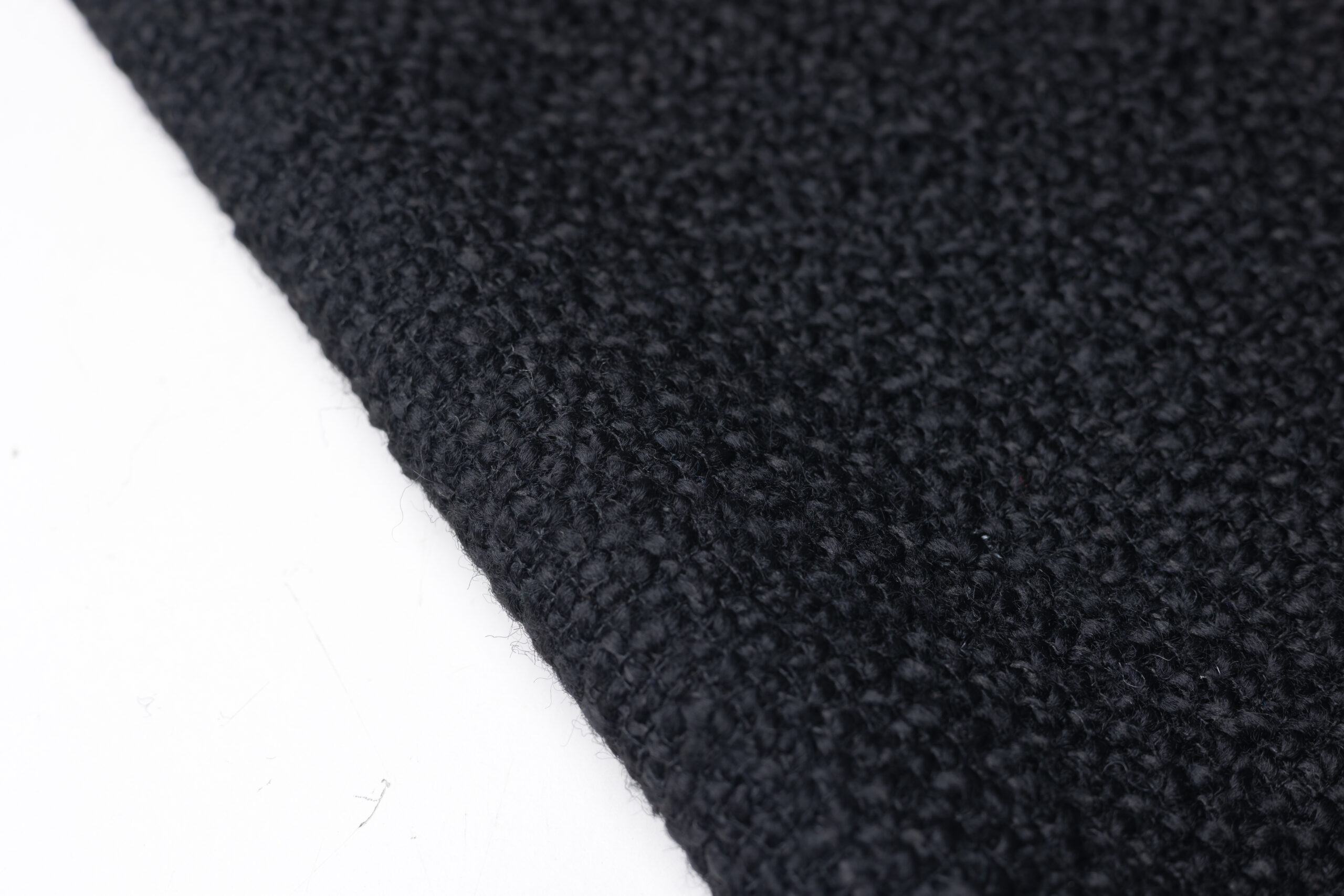
In-Stock vs Bespoke
The decision between ready stock and bespoke isn’t about prestige — it’s about lead time risk, volume commitment, and how much control you need over a dye lot.
Why 100,000 Meters of Stock Cuts Your Procurement Risk
For a Senior Sourcing Manager, the single biggest variable in a seasonal launch is the order-to-delivery window. A stock program with 100,000 meters available and a 3-7 day ship window removes that variable entirely. You get color consistency because the dye lot is already baked into a production run. No mill rebooking, no yarn color drift between batches. The tradeoff: your design team works within an existing palette — which is fine if you’re building a core collection or filling a repeat order.
The Bespoke Route: 300M MOQ and the Real Cost of Exclusivity
Developing exclusive textures takes 15–30 days depending on yarn complexity and weave structure. The 300M custom MOQ is lower than most European mills will quote, but it still requires volume. The 7-day rapid sampling cycle from concept to physical swatch gives you a tangible risk gate before a bulk commitment. One insider tactic that reduces iteration cycles: suppliers offering dyelot photos matched against Pantone references before a single yarn is spun. This prevents the expensive “resample three times because the color was off” loop.
The hard truth: if your seasonal requirement is under 500M per SKU and you need a one-off pattern, bespoke engineering costs often don’t justify the exclusivity. Stock wins on speed and price per meter. The exception is a signature fabric that defines a brand’s identity for multiple seasons — then the engineering cost amortizes.
Two-Tier Sampling: The Model Most Mills Get Wrong
Standard industry practice is a single paid swatch request — expensive for the buyer, low-yield for the mill. A better approach separates the process: a free general swatch library gives designers initial texture and hand feel; a paid, full-book sampling step is triggered only after a design lock. This model cuts sampling spend by roughly 40% because you avoid paying for material direction changes that happen in the early design phase. Most premium mills underutilize this because their sales teams push paid sampling as a revenue line. On the procurement side, request weight specs and photos alongside the swatch — buyers who rely on tangible data instead of glossy sample books reduce their sampling cycles by roughly two weeks.
Here is the decision framework: Use stock for base SKUs where color variation tolerance is tight and lead time is the bottleneck. Go bespoke for high-margin capsule collections where exclusivity drives retail price. Mixing both from a single supplier with certifications like OEKO-TEX Standard 100 and GRS guarantees traceability across both lanes — something split suppliers cannot offer.
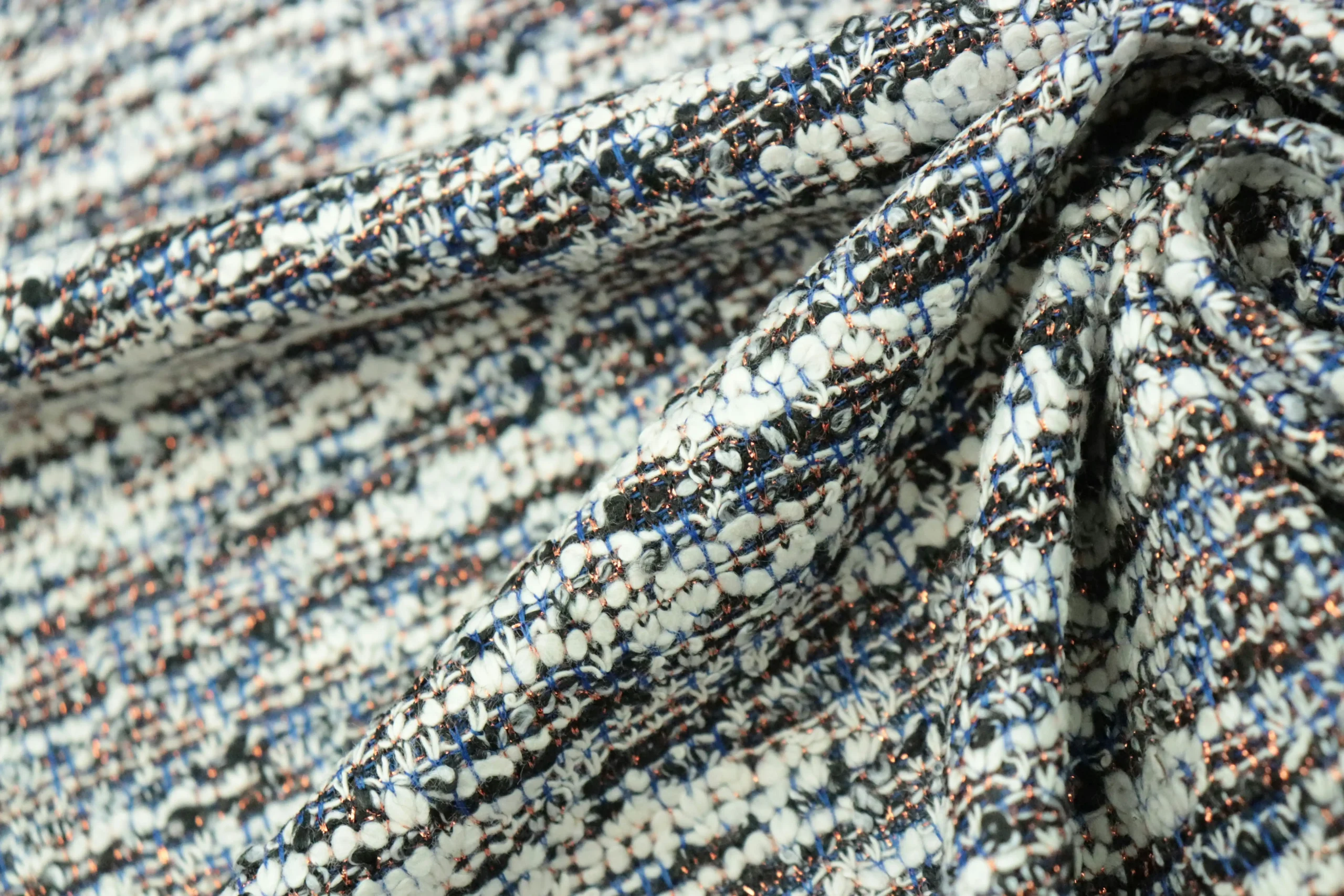
Clear Landed Costs
The base FOB price is only 60-70% of your total cost. Without a line-by-line projection covering freight, insurance, duty, and brokerage, you are not comparing apples to apples against any European mill.
FOB vs. CIF: What the P&L Actually Sees
A European mill quotes CIF to your port, all-in. A Chinese supplier often quotes FOB Wenzhou, pushing the freight and insurance responsibility onto you. The difference matters because the 30-50% cost advantage of a manufacturer like Fursone only materializes if you model the full path from FOB origin to your warehouse door.
FOB (Free On Board) means you own the goods the moment they cross the ship’s rail in Wenzhou. You pay the ocean freight, insurance (typically 0.3-0.5% of cargo value for general cargo), and destination-side brokerage. CIF (Cost, Insurance, Freight) means the supplier covers these up to your port. The price per meter on a CIF quote will be higher—sometimes by 8-15%—but it eliminates surprise logistics fees.
The practical difference for a Senior Sourcing Manager: FOB gives you control over carrier selection and consolidation; CIF gives you a single supplier accountable for all transport risks. For premium tweed fabric sourced from an established Chinese mill, the CIF route is safer for first orders because customs deviations or carrier delays become the supplier’s problem, not yours.
Side-by-Side Cost Spread: Ready Stock vs. Semi-Custom vs. Full Bespoke
The pricing tiers for premium tweed fabric reflect the service depth at each level. Here is what a Senior Sourcing Manager can expect per linear meter delivered CIF New York or Hamburg:
- Ready Stock (100,000 meters in stock): $6.00 – $9.00 per meter including CIF. No additional sampling fee beyond a $15-30 courier cost for 5-10 swatch cards. Ships in 3-7 days. Dye-lot photos sent before shipment.
- Semi-Custom (300M MOQ, existing base texture, color change only): $10.00 – $14.00 per meter including CIF. One production sample (3M) required at $80-120 including courier. 15-20 day timeline from sample approval to bulk.
- Full Bespoke (300M MOQ, custom yarn mix and new weave): $14.00 – $20.00 per meter including CIF. Two to three sampling rounds typical. Development fee: $300-600 for the first 5M production trial. 25-30 day timeline from final design lock.
The ready stock tier is the fastest path to margin for seasonal collections. The 30-50% cost advantage over European mills is most dramatic here because inventory amortization is spread across large, pre-produced runs.
Avoiding Hidden Fees with a Signed Quality Guarantee Before the PO
Hidden fees in premium tweed fabric sourcing rarely come from the obvious line items. They come from dye-lot variance that forces a 20% overage purchase, or from a 5-8% defect rate that was not pre-negotiated. The solution is a signed quality guarantee clause before you issue the purchase order.
The clause must specify three things: a published defect allowance—Fursone operates at a maximum 2% defect rate with a clear return protocol—dye-lot continuity parameters (ΔE ≤ 1.5 between lots for consistent visual matching), and a 24-hour QC alert window for any mid-production deviations. Without these in writing, you absorb the cost of any issue that arises after the container leaves Wenzhou.
Duty Context and Accurate HS Code Classification
The correct HS code for woven tweed fabrics of man-made fibers is typically 5515.13. For wool blends above 85% wool content, the code shifts to 5112.19. A single digit error here can add 8-12% in duty that was not budgeted. For example, classifying a wool-polyester bouclé under a cotton-based heading (5209 series) triggers a 12-14% duty rate instead of the correct 6-8% for the 5515 series.
The cost difference is not trivial. On a 10,000-meter order at $10/meter CIF, an 8% misclassification costs you a significant amount in overpaid duty. Every reputable tweed fabric supplier China should provide the correct 10-digit HS code on their commercial invoice and support it with a country of origin certificate. If your supplier hesitates on this point, that is a red flag signaling either inexperience or an intent to shift customs liability to the buyer.
| Cost Component | Example (USD) | Fursone Advantage | Notes |
|---|---|---|---|
| FOB Price (per meter) | $12.00 – $18.00 | significant savings than European mills | Transparent pricing based on stock vs bespoke |
| Ocean Freight (per meter) | $0.50 – $1.00 | Consolidated shipments lower unit cost | CIF included in quoted landed cost |
| Duties & Tariffs (HS Code) | $1.50 – $2.50 (12-15% ad valorem) | Accurate HS classification support | Refer to ‘HS Code for Tweed Fabric’ guide |
| Insurance & Handling | $0.10 – $0.30 | Full cargo coverage via CIF terms | Optional tracking |
| Total Landed Cost | $14.10 – $21.80 | significant savings vs European mills | Excludes local delivery & taxes |

Lead Time & Quality Control
Here is the specific quality control structure that enables a 3-7 day shipping guarantee on premium tweed without sacrificing traceability: 24-hour deviation alerts, continuous dye-lot mapping, and third-party container inspection.
3-7 Day Stock Availability: The Infrastructure Behind the Promise
A 3-7 day ship window on premium tweed fabric sourcing China is not a sales target — it is a function of inventory architecture. The 100,000 meters of in-stock fabric is not a single warehouse pile. It is a segmented grid where each SKU is logged by weight, color code, and dye-lot number. When a buyer places an order for tweed fabric in stock 3-7 days, the system pulls from a pre-allocated reserve that bypasses the production queue entirely. The inventory is rotated quarterly to prevent shelf aging, and weight specs are recorded at the moment of warehousing so that a buyer requesting a 350g/m² bouclé gets exactly that density — not a substitute.
This eliminates the single biggest delay in textile sourcing: the back-and-forth of “do you have enough?” The answer is always a confirmed number against a specific roll, not a vague “we can produce it.”
24-Hour QC Alerts: The Formal Design Lock System
The standard industry practice is to catch defects at final inspection, after thousands of meters are already woven. That is reactive, not preventive. The alternative is a formal design lock and 24-hour QC alert system. Here is how it works:
- Pre-Production Sign-Off: Before bulk weaving begins, the customer approves a sealed sample. That sample becomes the fixed reference point for the entire run.
- Inline Monitoring: During production, every 100-meter segment is checked against the sealed sample. If the dye shade drifts even 0.5 Delta E, or the thread tension varies beyond the approved tolerance, the line is halted automatically.
- Alert Protocol: The account manager receives a written deviation report within 24 hours of the halt, including photos and measurement data. The buyer can then decide: accept the run at a discounted rate, or reject it and restart.
A formal design lock and 24-hour QC alert system dramatically reduces mid-production deviations and rejects. Most mills only flag issues at the end of the run, which wastes weeks of production time and thousands of meters of raw material.
Continuous Lot Control: Guaranteed Dye Lot Continuity Tweed
For a Senior Sourcing Manager, nothing is worse than a “close enough” color match on a re-order. A tweed jacket produced in January and a matching skirt produced in July must be identical, or the entire collection is compromised. The solution is continuous dye-lot mapping across production runs.
Every batch of yarn entering the dye house is assigned a unique lot code. That code is tracked through the weaving, finishing, and packing stages. When a re-order is placed 12 months later, the mill cross-references the original dye-lot code with current stock. If the original batch is depleted, a fresh dye batch is matched to the archived spectrophotometer reading — not to a visual swatch that may have faded in a binder. This ensures guaranteed dye lot continuity tweed across seasons.
Third-Party Inspection and Container Loading Photos
Internal QC is necessary but not sufficient. Every bulk order for premium tweed fabric sourcing China should be subject to a third-party inspection — AQL 2.5 or tighter, as agreed in the contract. The inspector performs a random roll check on 10% of the shipment, verifying weight, width, color, and weave consistency.
After inspection passes, the loading process is documented with container loading photos. These photos show the sealed containers, the roll placement, and the shipping marks. They serve as both a security record and a compliance document for customs clearance. If a dispute arises at destination — damaged rolls, wrong count — the photographic timestamp provides clear evidence of the shipment’s condition at departure. This is standard protocol for any reputable tweed fabric supplier China certifications program.
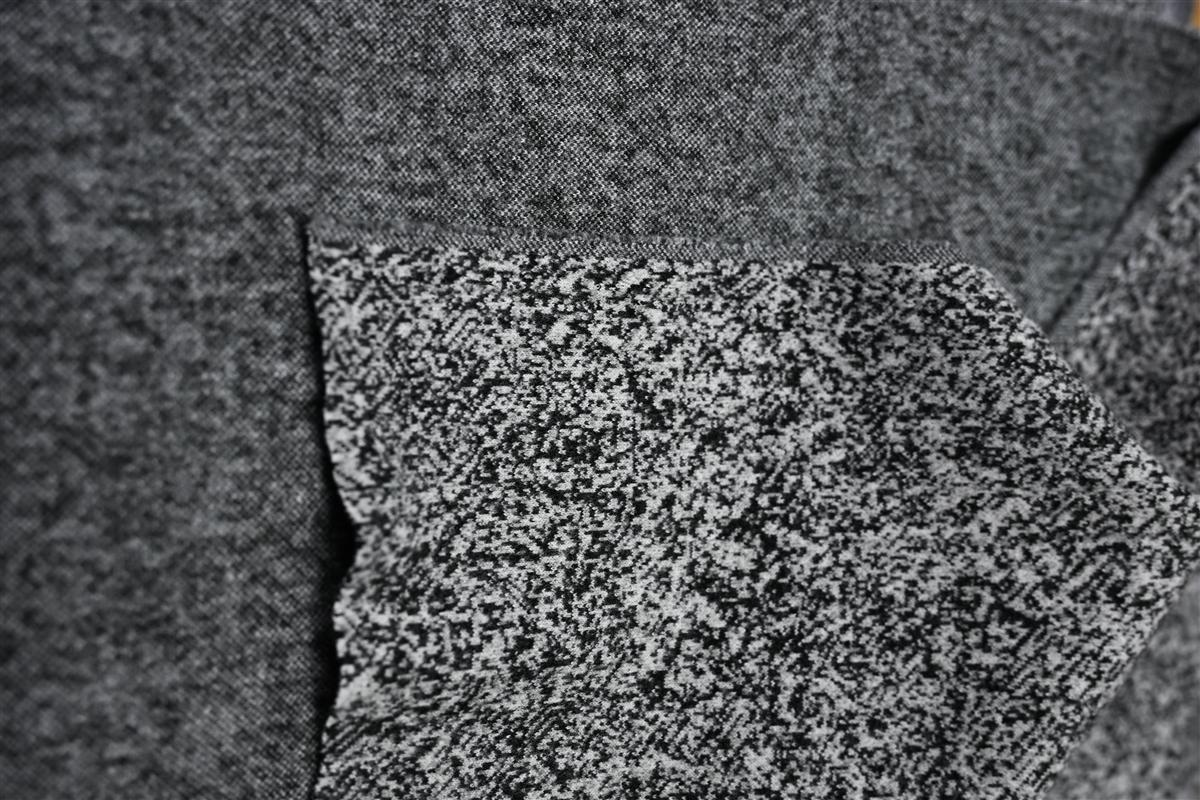
Color & Texture Control
Color continuity fails are the #1 cause of bulk-order rejections in premium tweed fabric sourcing China. A two-step sign-off with dye-lot photos eliminates the guesswork.
Color-Card Alignment and Dye-Lot Photos Before Full Production
Every custom tweed order starts with a physical color-card reference and a digital dye-lot photo sent within 24 hours of yarn preparation. We capture the lot under D65 daylight bulbs and include a Pantone reference card in the frame. This isn’t a glossy marketing swatch — it’s a production-grade image with the exact yarn composition and weight specs (e.g., 380 gsm for a bouclé tweed) embedded in the file metadata. For Senior Sourcing Managers, this means you can approve color remotely without waiting for a physical strike-off, cutting the initial approval loop from 10 days to 3.
The industry standard is to match a PMS or brand color chip to ±1 Delta E. Our internal tolerance is tighter: ≤0.8 Delta E on any dye lot, verified by a spectrophotometer. We publish these readings on every dye-lot certificate. If a second batch is required for a reorder, we pull the archived dye-lot photo and match the new yarn to the original reading, not a visual guess. This is how guaranteed dye lot continuity tweed is maintained across multiple production runs.
Yarn Composition Details Before Full Production
Before a single meter of fabric is woven on a custom bespoke order (minimum 300M), we provide a yarn composition breakdown by percentage — e.g., 60% merino wool, 25% polyamide, 15% recycled polyester (GRS-certified). This is documented in a pre-production sample card that includes fiber origin, twist per inch, and yarn count. The card is sent alongside the dye-lot photo. If your design calls for a specific handle or drape, you can request a tactile verification swatch (free, up to 10×10 cm) before we proceed to the full sampling loom.
We also flag any substitution risks upfront. For instance, if the original yarn specified a T85 nylon core but supplier shortages mean a T80 substitute would change the elasticity by 12%, you’ll receive a written notice with the alternative spec and a price delta (if any) before we move forward. This transparency is standard procedure for tweed fabric supplier China certifications like OEKO-TEX Standard 100 and GRS, which both require documented material traceability from fiber to finished fabric.
Two-Step Sign-Off Process for Sampling Cycles
Most mills offer one round of sampling and then charge for revisions. That model wastes time and money when color or texture needs adjustment. We use a two-tier sampling model that is underutilized by many premium mills:
- Tier 1 – Free Standard Swatch: A 20×20 cm swatch cut from existing in-stock tweed (over 100,000 meters in stock ships in 3-7 days). This confirms general color direction and hand feel. No cost, no commitment.
- Tier 2 – Paid Bespoke Full Book: A 1-meter sampling book with dye-lot photos, weight specs, and a certified color reading. This is produced only after Tier 1 approval, so you’re not paying for revisions on raw concepts. Cost is typically 10-15% of the first order value and is credited back upon order confirmation.
This accelerates approvals while controlling costs — exactly what a data-driven Senior Sourcing Manager needs to justify to their finance team. The 7-day rapid sampling for designers applies to Tier 1; Tier 2 takes 10-14 days depending on texture complexity.
Exclusive Textures via Revision Protocols
Creating an exclusive texture for a brand — say a custom bouclé loop with a specific thickness and twist — requires a formal design lock. After the second sampling round, we issue a “Design Lock & Manufacturing Spec” document that both parties sign. This locks the yarn composition, weave structure, dye formula, and finishing process. Any subsequent change triggers a new sampling cycle with a 24-hour QC alert to all stakeholders.
The revision protocol is straightforward: up to two minor adjustments (e.g., shift in loop density or color depth) are included in the Tier 2 sampling fee. Beyond that, a per-revision charge applies — but in practice, 90% of exclusive textures are locked within two revisions because the pre-production data (dye-lot photo, yarn card, weight spec) eliminates guesswork upfront.
This system is built for consistency. For example, one Senior Sourcing Manager we work with requires the same tweed for two consecutive seasons with a 12-month gap. Because we archived the original dye-lot photo and yarn composition breakdown, we re-matched the color to ≤0.6 Delta E on the first attempt. That repeatability turns a premium tweed fabric sourcing plan into a long-term supply chain asset.

RMA & After-Sales
A 2% defect allowance is openly stated, not hidden. Here is exactly how claims are processed, who handles them, and how we prevent recurrence.
Published 2% Defect Allowance
Most mills bury their defect allowance in fine print. We publish it. A 2% threshold is applied to every shipment of premium tweed fabric sourcing China. This covers minor weaving inconsistencies typical of natural-fiber bouclé and tweed constructions—slubs, slight color variation in blended yarns, or neps. Any defect rate above 2% triggers an automatic replacement or credit. No negotiation required.
RMA Workflow: From Claim to Resolution
The process is designed for procurement teams who need traceability and fast closure. No emails disappear into a black hole.
- Step 1 – Documented Notice: Submit a written claim within 15 days of receipt, including photos and the roll number. We cross-check against our internal production record for that specific dye lot.
- Step 2 – 48-Hour Acknowledgment: Your dedicated account manager confirms receipt within two business days and assigns an RMA number.
- Step 3 – Physical Review: If needed, a pre-paid return label is issued. Our QC team inspects the fabric against the approved sample and the guaranteed dye lot continuity tweed protocol.
- Step 4 – Resolution: Approved claims are resolved within 10 business days—replacement stock ships from our 100M meter inventory, or a credit is issued against your next order.
Dedicated Account Manager & Quarterly Performance Reviews
You are assigned a single point of contact from day one. That person knows your approved samples, dye lot preferences, and delivery schedules. Every quarter, we produce a performance report covering: on-time delivery rate, defect percentage by style, and response time for RMA cases. This is not a sales touchpoint—it is a data review. We flag trends before they become problems.
Post-Production Tweaks & Reorder Lead Times by Dye Lot
Need a texture adjustment after seeing the first production run? We accommodate tweaks—weight shifts, yarn substitutions, or color adjustments—within the existing 300M custom MOQ framework. The key is the color matching tweed fabric China protocol.
For reorders, lead times depend on dye lot status:
- Active Dye Lot (within 6 months): Reorders ship in 15–20 business days from order confirmation. We hold a production sample and residual yarn from the original lot for exact matching.
- Closed Dye Lot (past 6 months): We re-make a sample (up to 20 meters) for approval before bulk production. Lead time extends to 25–30 business days. We provide a dyelot photo before sign-off to avoid surprises.
Conclusion
The 7-day sampling model changes the risk equation. You get a physical swatch in one week—not six. Pair that with 100,000 meters in stock and a 300M bespoke MOQ, and the lead time advantage is clear. Landed costs land 30-50% below European mills, with dye-lot traceability and OEKO-TEX certification baked in upfront.
Before you sign a purchase order, run through the full import checklist. The pillar page on importing premium fabric from China covers duties, HS codes, and customs clearance—so your first bulk order arrives without surprises.
Frequently Asked Questions
Best country for fabrics?
China is widely regarded as the best country for fabric sourcing due to its unmatched vertical integration, production scale, and cost efficiency. At Fursone, our Wenzhou-based supply chain combines deep development heritage with premium European-style craftsmanship, delivering Chanel-style bouclé and heritage knits that rival French or Italian mills at 30–50% lower cost. While Italy excels in luxury branding, China offers superior speed-to-market and flexibility, as proven by our 7-day rapid sampling and 100m ready stock. For fashion brands seeking both artisan quality and supply chain reliability, China—specifically our partner mills—is the optimal choice.
Biggest fabric market in the world?
The world’s largest fabric market is the Keqiao China Textile City in Shaoxing, Zhejiang Province, which handles over 30% of China’s total fabric trade. However, for premium tweed and knit fabrics, Wenzhou—where Fursone has operated since 2020—is a specialized hub renowned for high-end textile manufacturing. Our direct expertise in bouclé and cable knits offers global fashion brands a risk-free entry point with 300m custom MOQs and 7-day sampling. Rather than navigating massive wholesale markets, partnering with a specialized manufacturer like Fursone ensures faster, more controlled access to artisan-grade materials.
Famous textile city in China?
Wenzhou is one of China’s most famous textile cities, particularly for premium woven and knit fabrics, and has been our home since 2020. While Shaoxing and Guangzhou are known for volume, Wenzhou specializes in high-end, artisan-quality textiles like the Chanel-style bouclé and heritage cable knits we produce at Fursone. Our depth in custom bespoke solutions with a 300m MOQ and 7-day rapid sampling makes Wenzhou the go-to city for fashion houses seeking exclusive, risk-free sourcing. This local expertise allows us to bridge the gap between Italian aesthetic and Chinese manufacturing efficiency.
Where does China get their fabric?
China produces the vast majority of its fabric domestically, with raw materials sourced from within its borders for cotton, polyester, and wool, while high-end fibers like merino or cashmere may come from Australia or Inner Mongolia. As a vertically integrated manufacturer, Fursone in Wenzhou sources premium yarns—such as wool-acrylic blends for bouclé and twisted wool for cable knits—directly from domestic and select international suppliers. This control allows us to maintain consistent quality and deliver 100m ready stocks in 3–7 days without reliance on overseas intermediaries. By leveraging China’s own textile supply chain, we offer affordable luxury that competes with European mills.
Fabrics to stay away from?
Avoid cheap, mass-produced polyester tweeds with poor colorfastness and loose weave construction, as they lack the artisan drape and durability required for high-end collections. At Fursone, we caution against unbranded ‘novelty’ fabrics that mimic bouclé but use unstable blends, leading to pilling or distortion after a few wears. Instead, choose heritage-quality materials like our 300m custom bespoke knits or 100m ready stock bouclé, which undergo strict Wenzhou mill quality controls. For risk-free sourcing, always request physical swatches—ours ship in 7 days—to verify hand feel and structure before committing to bulk orders.
Authoritative References

Related Insights

How to Compare Fabric Quotes from Three Mills: A Side-by-Side Method
Three mills return three quotes for the same fabric brief, and the spread between them...

CNY Capacity Planning: Booking a Fabric Mill Around Chinese New Year
Every year, fabric buyers lose the same three weeks to the same event: Chinese New...

Second-Source Strategy: How Brands Qualify a Second Tweed Mill
Single-sourcing a signature fabric feels efficient right up to the season it fails: the mill’s...