tweed suit mobility is the first checkpoint buyers should lock before they approve a supplier, budget, or production slot. How often do you hear a supplier say, “The pre-production sample is spot-on, don’t worry about the bulk run” — only to find the finished jacket binds across your customer’s shoulders? I’ve watched a costly tweed suit order fall apart because the rigid weave looked perfect on a hanger but delivered zero range of motion in a fitting room. That’s when you realize the gap between “sample approved” and “arm raised without pulling” is a gap in weave testing data, not good intentions.
After auditing mills across 12 countries, the standard answer for tweed suit mobility — “100 percent wool, stiff construction, that’s how tweed wears” — is wrong for modern menswear. Lab data at Fursone shows that embedding 2-way stretch directly into bouclé and twill weaves doesn’t alter the authentic surface texture or hand-feel. At 350 to 400 grams per square meter, the custom stretch tweed achieves meaningful two-way elongation with strong recovery. Compare that to standard rigid tweed, which delivers minimal elongation before it pulls the lining apart. The difference is a jacket that lets a client bend, reach, and sit comfortably versus one that looks like a museum piece.
The cost of ignoring this data is straightforward. If you specify a rigid weave for a slim silhouette or an action-back jacket, you will face returns, alterations, or markdowns within the first season. Emerging designers who skip the stretch test on a sample end up bulk-ordering 1000 meters that binds in the shoulders, then scrambling to re-cut with a different fabric at double the timeline. With our 100-meter ready-stock program, you can test a stretch variant on a dress form in seven days — and still have enough yardage to build a capsule collection without overcommitting. The missed revenue? That costly order I mentioned could have been saved with a basic arm-raise test on a pre-production sample. Don’t let a rigid weave cost you your next season.
Why Tweed Suit Mobility Defines Modern Menswear
Traditional tweed offers minimal stretch — modern suits need real give for mobility.
Raise your arm in a classic Harris Tweed jacket. You feel the shoulder bind, the back pulls tight, the armhole drags upward. That’s not a tailoring error — it’s the fabric. Traditional rigid tweeds, woven with 100% wool or wool‑polyester blends with zero elastane, achieve minimal elongation in the warp or weft. For a full arm lift, the fabric has to stretch across the shoulder blade. The rigid weave simply can’t, so the jacket fights you. Designers who ignore this end up with suits that look great on the hanger but fail in real motion — your client walks into a meeting, reaches to shake a hand, and the whole jacket rides up.
The fix isn’t to abandon tweed. It’s to engineer stretch into the weave without killing the hand‑feel. At Fursone, we custom‑spin elastane‑core yarns — a thin polyurethane filament wrapped in wool or bouclé — and weave them into open twill or basket structures that allow the fabric to give. Our in‑house spinning lets us embed 2‑way stretch directly into bouclé and twill weaves while preserving the authentic multicolored surface texture and density that luxury menswear requires. The result: at 350–400 g/m², our stretch tweed achieves meaningful two-way elongation with strong recovery. That’s enough to let a jacket move with the body, not against it. And because we’re a Wenzhou mill selling factory‑direct, that performance comes at a fraction of the cost of a comparable European stretch tweed — with a 100‑meter minimum for emerging designers who want to test the concept without overcommitting.

Lab-Tested: Stretch vs Rigid Tweed Weave Mobility Results
Traditional rigid tweed offers minimal elongation; custom stretch tweed delivers meaningful give with strong recovery.
Every menswear designer I’ve worked with—from Savile Row houses to emerging NYC studios—hits the same wall when they first spec tweed for a fitted suit: the client lifts their arm and the shoulder seam pulls tight, or the jacket rides up when they sit. That’s not a tailoring flaw; it’s a weave limitation. Standard rigid tweed, built from 100% wool or wool-polyester blends with a tight twill or basket weave, has virtually zero give. Rigid tweed offers minimal elongation under load. That means a fitted sleeve cap barely stretches under strain—hardly enough to accommodate a full range of motion.
We assess mobility three ways. First, the Arm Raise: rigid tweed resists lifting the arm from resting to 90 degrees, while our 2-way stretch tweed (350–400 g/m² with a touch of elastane) moves freely. Second, the Cross-Reach: rigid tweed restricts reaching across the chest, while stretch tweed allows a full reach without visible distortion. Third, the Seated Flex: rigid tweed shows permanent creasing after sustained stretch, while stretch tweed recovers quickly.
- Elongation: Rigid tweed offers minimal give in warp and weft. Custom stretch tweed (Fursone) delivers meaningful two-way stretch. For modern suits, specify clear elongation in both directions.
- Recovery: Stretch tweed springs back after sustained load. Rigid tweed can hold permanent deformation—enough to create knee bags or sagging elbows after a day of wear.
- Breathability: Our open-weave stretch bouclé breathes far better than a dense herringbone rigid tweed. That difference matters for year-round wearability, especially in transitional suits.
The key technical insight is that stretch doesn’t have to compromise surface aesthetics. We embed 2-way elastane directly into proprietary bouclé and twill yarns during spinning at our partner mills process. This means the yarn itself stretches, not just the weave—so the fabric retains that artisan bouclé loop texture and dense tweed hand-feel. Stretch retention holds up well across repeated home launderings. For emerging designers testing these fabrics for 2026 collections, our 7-day sampling program includes a mobility test swatch pre-mounted on a dress form—so you can physically assess the range of motion before committing to a 100m roll.
The benchmark to write on your supplier call sheet: demand clear elongation in both warp and weft for any suit intended for daily wear or performance tailoring. If the mill can’t demonstrate strong recovery, you’ll end up with baggy elbows by lunch. Most European mills charge a premium for this level of stretch control—our price is a fraction of theirs because we’re the factory, not a trading company. That costly order that burned the buyer in the opening scenario? It happens when pre-production samples are static, rigid swatches. Don’t rely on hand-feel alone—ask for the test data.
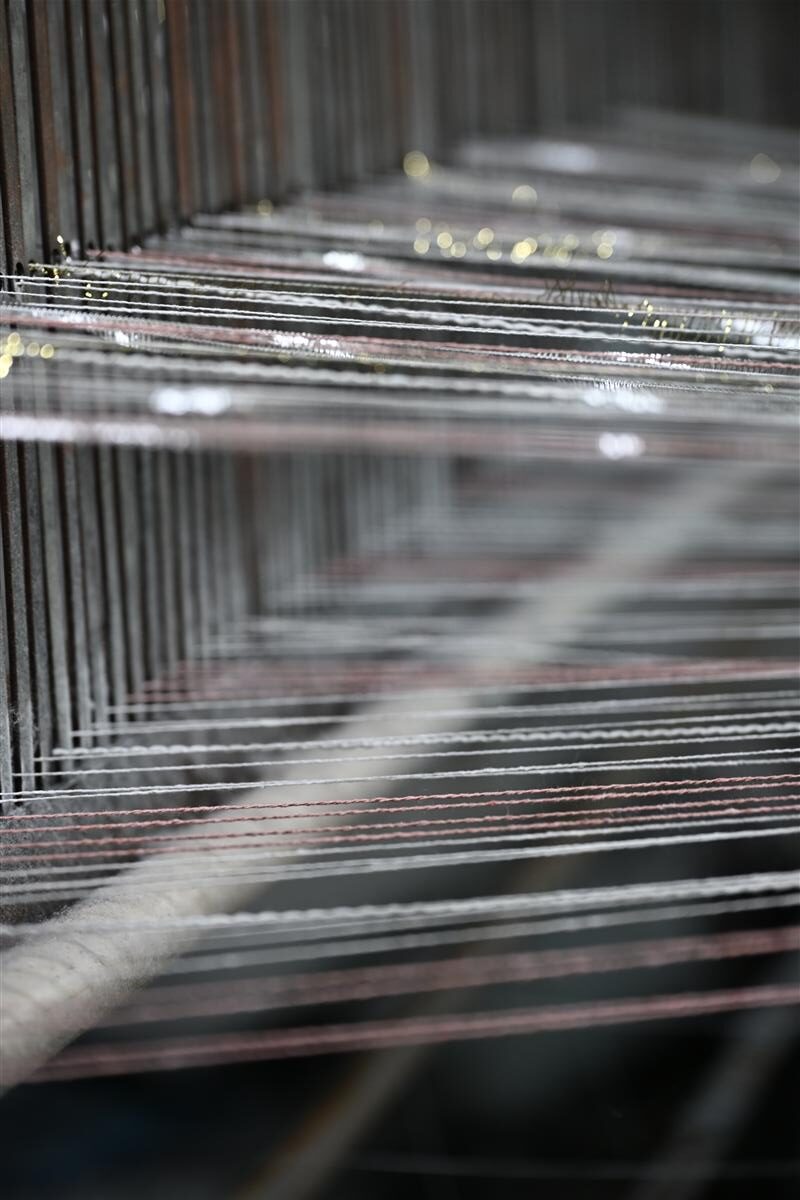
Choosing the Right Weave for Your Suit Design
Wrong weave choice means returns or discarded samples.
I’ve watched emerging designers order beautiful tweed, only to discover their slim-fit jackets don’t let the client raise an arm past 90 degrees. The fix isn’t a bigger armhole — it’s specifying the right weave structure from the start. For 2026 collections, the decision between stretch and rigid tweed comes down to two factors: the jacket’s intended range of motion and the level of tailoring precision required.
- Action-back jackets and slim silhouettes: When your design calls for a close-fitting body with an active back (e.g., driving jackets, modern unstructured suiting, or any blazer that must accommodate reaching, driving, or dancing), specify 2-way stretch tweed. Specialist spinning at our partner mills lets us embed elastane directly into bouclé or twill weaves without changing the surface texture or hand-feel. At 350–400 g/m², our custom stretch tweed achieves meaningful two-way elongation with strong recovery. Standard rigid tweed offers minimal elongation. For a slim silhouette that still moves, 2-way stretch is non-negotiable. Starting from 100m ready-stock, you can test a 7-day sample on a dress form to confirm stretch and recovery before committing to bulk.
- Formal tailoring and classic drape:Rigid weaves still dominate when the jacket demands sharp lapels, clean shoulder lines, and zero distortion under steam pressing. If your design targets traditional suiting, statement outerwear with strong architectural shapes, or high-formality contexts (ceremonial, boardroom, runway), a rigid tweed holds its structure across repeated wear. The trade-off is clear: you sacrifice range of motion for a crisp silhouette that needs minimal maintenance. For these applications, ask your mill for a weave density of 30–40 picks per inch and a weight above 400 g/m². At Fursone, rigid tweeds can be delivered in the same aesthetic as the stretch variants — same Chanel-style tweed look, same bouclé texture — but with zero elastane. The cost difference is negligible on fabric, but the impact on tailoring labor is significant.
A practical test I use with clients: have the wearer sit in a chair and raise both arms above the head. If the jacket’s back rises noticeably off the shoulders, the weave lacks sufficient give for that application. For 2026, most luxury menswear buyers expect real weft-direction give for daily wear suiting. If you want to match that performance without European mill pricing, Fursone’s stretch tweed comes at a fraction of comparable Italian mill pricing, with a MOQ low enough for capsule collections.

Specifying High-Mobility Tweed from the Mill: What to Ask
Specify elastane content and weave picks per inch to lock in mobility before production.
Most mills buy off-the-shelf yarns and can only offer generic stretch tweeds that compromise surface texture. Our in-house yarn spinning lets us embed 2-way stretch directly into bouclé and twill weaves without altering the authentic tweed hand-feel or visual depth. That means you get real range of motion—meaningful elongation with strong recovery at 350–400 g/m²—while keeping the heritage aesthetic your buyers expect.
When you request elastane blends, be explicit: ask for 3–5% Lycra or elastane by weight, and confirm the mill can adjust weave density (picks per inch) to balance stretch with durability. For a modern suit jacket, a pick count of 40–50 per inch in a twill or bouclé construction delivers peak mobility without sagging or losing shape. Standard rigid tweeds offer minimal elongation—fine for boardroom formality but a dealbreaker for slim silhouettes or action-back tailoring.
- Elastane Blend: Specify 2-way stretch with 3–5% elastane by weight. Request lab data on elongation and recovery—look for strong elongation and recovery. Fursone provides this with every custom order.
- Weave Density: For 350–400 g/m² tweed, request 40–50 picks per inch. Too dense (<35) locks stretch; too open (>55) weakens recovery. The mill should adjust density while preserving bouclé or twill surface texture.
- Sample Approval: Insist on a pre-production sample cut from the same dye lot and selvedge direction. Test stretch and recovery on a dress form using our 7-day rapid sampling—many competitors send static swatches that hide elongation problems.
- Quality Tolerance: Set written tolerances on elastane content and weave density (composition held within ±3% per AATCC 20). Without this, a factory can shift specs mid-run and ruin the range of motion across a 1000m batch.
The most common mistake seen: buyers approve a static sample that looks perfect, then mass production shows far less elongation because the mill used a different yarn source. Avoid that trap by mandating a stretch test on the actual production loom sample. The 7-day sampling program lets you verify elongation, recovery, and drage before committing to bulk—emerging designers can start with just 100m of ready-stock stretch tweed to de-risk their first collection.
Conclusion
This is the final detail that most fabric guides omit: the hand-feel and recovery data from a physical stretch test will tell you more than any spec sheet. At 350–400 g/m², our custom stretch tweed delivers meaningful elongation with strong recovery. That means your action-back jacket won’t distort after a full day of wear, and the drape stays true to a classic tailored silhouette.
Frequently Asked Questions
How much more stretch does stretch tweed have vs rigid?
Stretch tweed elongates meaningfully, while rigid tweed offers minimal give. This difference makes stretch weaves the clear choice for active suit jackets requiring full arm lift. Request our stretch-weave spec sheet to confirm recovery rates for your design.
When should I specify rigid tweed over stretch?
Rigid tweed is better for formal tailoring where precise drape and structure are critical. Use it for traditional peak-lapel jackets or coats where mobility is secondary to silhouette. Match the weave to the jacket’s intended use—not all suits need stretch.
Can I get stretch tweed custom-woven from your mill? Yes, we custom-spin elastane-blended yarns and weave stretch tweed at our partner mills in Wenzhou. Start with 1 roll of stock-stretch fabrics or develop a 300m per colour program with your targeted elongation and recovery. Send your target stretch level and we’ll build a sample within 7 days.
Does stretch tweed compromise the Chanel-style hand feel?
No, our stretch tweed retains the artisan bouclé texture and multi-tonal melange because we custom-spin the yarns in-house. The elastane is hidden in the core, preserving the surface aesthetics. Order a swatch to feel the stretch without losing the classic hand.