

Warp preparation is where boucle weaving is won or lost. The warp — the lengthwise yarns under tension on the loom — carries the entire weave, and in boucle fabric it is almost always a plain or twisted yarn holding loops, slubs and fancy effects that belong to the weft. Get the tension wrong and the loom stops, yarns break, or the fabric develops a defect that repeats every few hundred meters. This guide covers the mechanics of warp preparation for boucle: tension control, yarn breakage handling, and the checks that prevent the three most expensive warp failures in a weaving program.
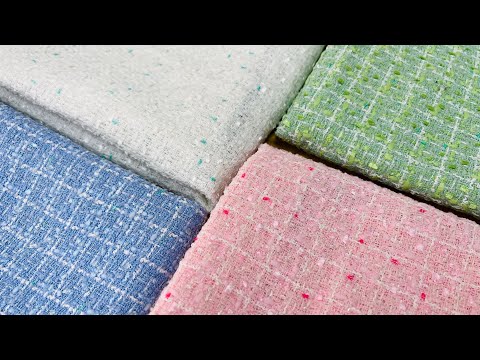
Why Boucle Warps Are Different From Plain Warps
In a standard woven fabric, the warp and weft can be similar yarns. In boucle, they cannot: the looped, textured weft yarns that give boucle its surface cannot survive the tension of a 500–1,000 meter warp run — they would stretch, break or lose their loops before weaving starts. So the warp is dressed with a smooth, stronger yarn (typically a twisted filament or a compact-spun staple yarn with higher tenacity), and all the fancy effects ride in the weft. This division of labor is the first thing a buyer should confirm when reviewing a boucle spec: ask what yarn is in the warp and what tenacity it carries. If the mill cannot answer with a yarn count and a tenacity figure, the warp has not been engineered — it has been improvised. Yarn strength testing follows ASTM D2256, the standard test method for yarn tensile properties, and it is the right reference to name in your technical spec.
Tension Control: The Numbers That Matter
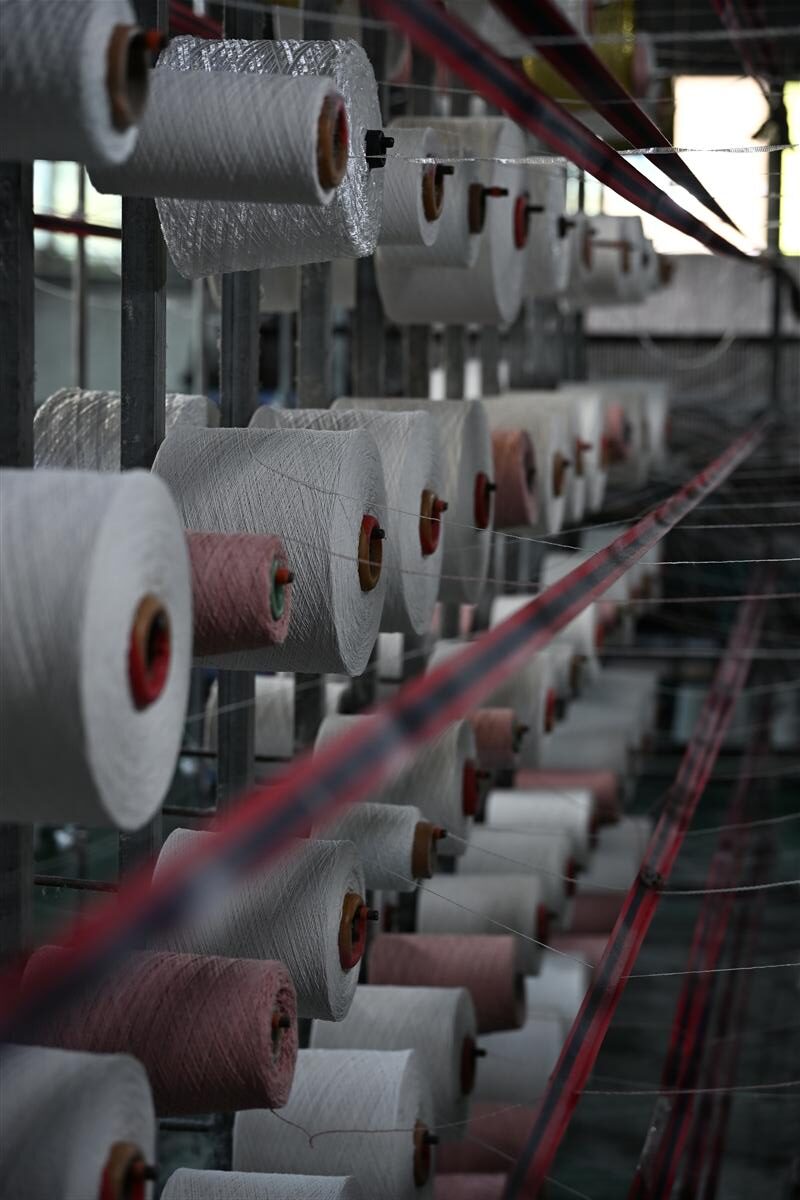
Warp tension is measured in grams per yarn end (or centinewtons per end) and varies with yarn count and loom type. For a typical boucle program — a worsted or semi-worsted warp in the Ne 20–40 range weaving on rapier or air-jet looms — uniform tension across the beam is the goal, and the practical acceptance rule is that tension per end should not vary more than ±5% across the warp width at the let-off. Tension too high: yarns stretch, the weave distorts, and breakage climbs. Tension too low: the warp slackens, shed opening is late, and weft insertion faults (the classic boucle defect of trapped or missing loops) multiply. Mills control this with sectional warping machines that wind each section at matched tension, then transfer to the loom beam; ask your supplier whether they use sectional warping — it is the equipment-level signal of tension discipline.
Yarn Breakage: Where It Happens and How to Cut It
Breakage clusters in four places: at the creel (package defects, knots, snarls), at the sizing or lubrication stage (for filament warps), at the lease rods, and at the drop wires on the loom. Each break costs more than the yarn: a loom stop at 600 picks per minute means lost production time, and every stop risks a start-up mark in the fabric — a visible defect that can repeat for meters. The standard levers: use a warp yarn with verified tenacity and elongation (ASTM D2256 again), keep yarn packages free of slubs before creeling, and set the drop-wire sensitivity so that thin places trip the stop before they reach the reed. A well-prepared boucle warp should run with a breakage rate low enough that the mill does not staff a dedicated warp mender — if your supplier quotes warp-mending labor on a boucle program, the warp is not prepared correctly.
The Three Expensive Warp Failures Buyers Should Know
First, beam-to-beam tension mismatch: two beams woven in the same run with different let-off tension produce fabric with a lengthwise stripe that no finishing can fix — reject the batch or cut it out before finishing. Second, warp-end density errors: a beam dressed at the wrong ends-per-centimeter changes the fabric’s GSM and drape, and the defect only appears after finishing, when the fabric has already absorbed labor and chemicals. Third, insufficient warp length planning: the warp runs out mid-order, the mill re-dresses, and the re-dressed section weaves with a different tension profile — the result is a two-tone roll that passes first inspection and fails at the garment factory. All three are prevented at the preparation stage, not detected at inspection. That is why a 300-metre custom boucle program should start with a documented warp spec: yarn count, tenacity, tension per end, ends-per-centimeter, and breakage target.
What to Ask Your Supplier Before Ordering
Five questions, five minutes, and they separate a mill that engineers warps from a mill that happens to weave: What yarn is in the warp, and what is its tenacity? Do you use sectional warping? What is your breakage rate per 100,000 picks on boucle programs? How do you verify tension uniformity across the beam? What is your re-dressing policy if the warp runs short mid-order? At Fursone, warp preparation is part of the standard production-craft review in every custom program — the 7-day sample cycle includes a warp spec document with the order confirmation, so the production warp matches the sample warp. Mills that cannot produce this documentation on a sample are not ready for your bulk order. For more on how weaving parameters affect final quality, see our guide to weaving parameters: tension, speed and quality.
FAQ
What yarn is used for the warp in boucle fabric?
A smooth, stronger yarn than the weft — typically a twisted filament or compact-spun staple with higher tenacity — because the looped weft yarns cannot survive warp tension.
How much can warp tension vary before defects appear?
As a practical acceptance rule, tension per end should not vary more than ±5% across the warp width at let-off; larger variation distorts the weave and raises breakage.
What causes start-up marks in woven boucle?
Yarn breakage stops the loom, and each restart risks a start-up mark that can repeat for meters; low breakage rates and correct drop-wire sensitivity prevent them.
What is the most expensive warp failure?
Beam-to-beam tension mismatch produces a lengthwise stripe that no finishing can fix, wasting the fabric and the finishing labor already spent.
(function(){ var facades=document.querySelectorAll(‘.yt-facade’); for(var i=0;i<facades.length;i++){ (function(f){ f.addEventListener('click',function() var id=f.getAttribute('data-yt-id'); if(!id||!/^[w-]{6,20}$/.test(id)){return; f.innerHTML='’; }); })(facades[i]); } })();Warp preparation is invisible in the finished fabric and unmistakable in the defect rate. Spec the warp yarn, the tension window and the breakage target in writing, and confirm the mill’s sectional warping capability before committing a bulk order. For the fabric side of the same story, our boucle fabric manufacturer page covers custom programs and the woven vs knit boucle comparison explains when each construction is the right choice.
Learn more: Tweed Fabric Guide · Explore Chanel-Style Tweed. Need samples? Request free swatches.

Related Insights

Color Approval Without Surprises: Lab Dips, Loom State and the Light Booth
Color is the most common reason a tweed bulk run disappoints. Not because mills cannot...

Fulling and Finishing: The Mill Steps That Change Tweed’s Hand Feel
Two tweeds can leave the loom with identical yarn, identical weave and identical weight, and...

Garment Dyeing vs Piece Dyeing: Cost, Color Control and When Each Wins
Garment dyeing, dyeing the finished garment instead of the fabric roll, has quietly become a...