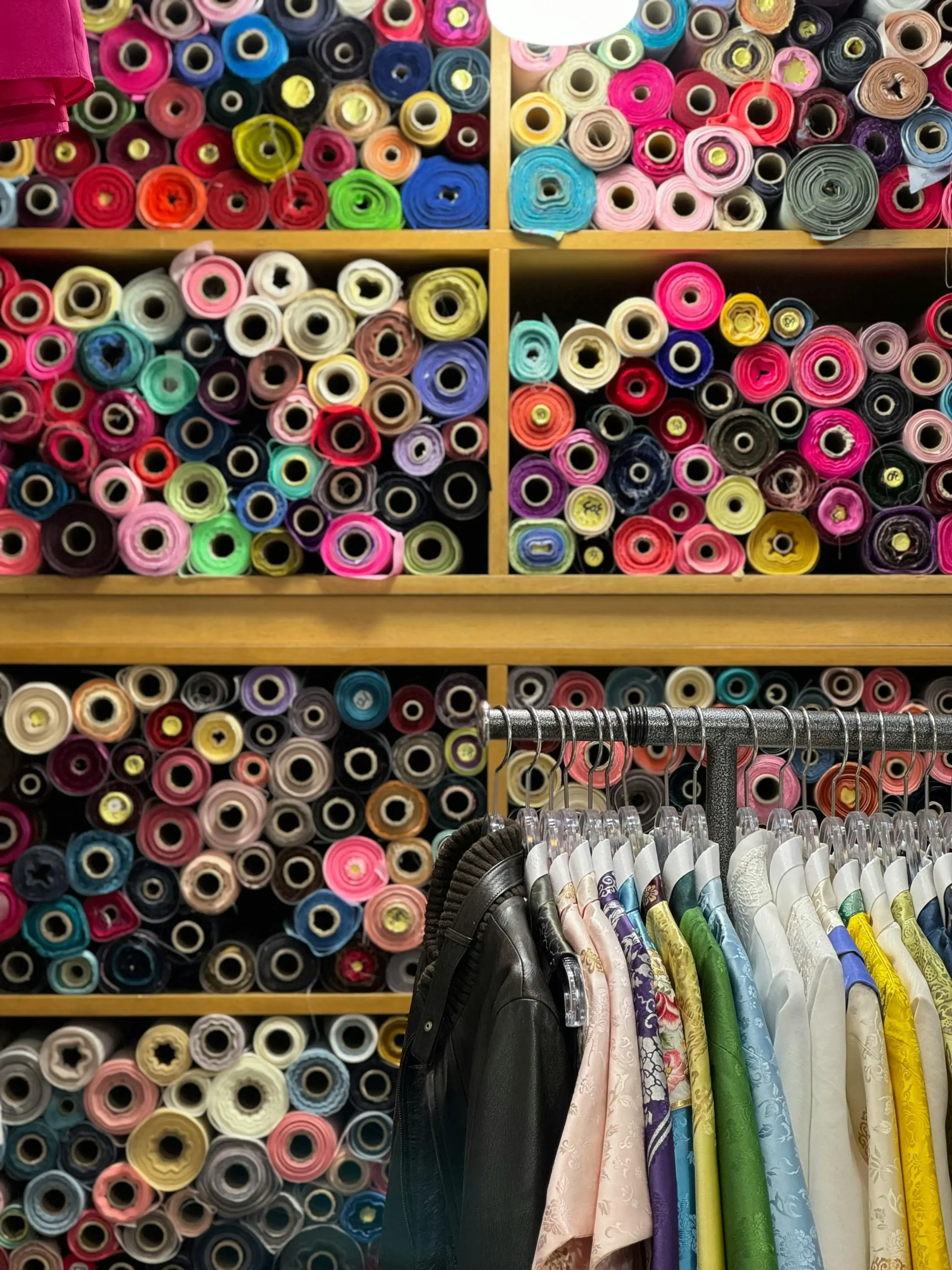
Every line on the buyer’s checklist checked out—FOB pricing, lead time, sample approval—but nobody verified the tweed fabric weight chart against the actual bulk roll. The pre-production sample looked perfect on the table, the $50K order was placed, and the complaints didn’t start until the first lined jacket hit the sewing machine. That’s the classic checklist failure: the one item nobody marks is the weight parameter.
At our Wenzhou mill, we see this pattern constantly. Designers and buyers judge tweed by hand feel alone, which is unreliable—especially with bouclé, where looped yarns trap air and create visual bulk without real stiffness. The actual failure thresholds are precise: samples under 330 g/m² pucker at the shoulder seam on lined jackets, and anything above 520 g/m² crackles at the armhole unless you add seam tape, which stiffens the articulation. Within that window, a 380–450 g/m² bouclé gives you the structured drape and comfortable mobility you want from a Chanel-style jacket.
The next time a supplier quotes you a “medium weight tweed,” ask for the GSM figure in writing and compare it against a simple benchmark: 380–450 g/m² for a lined bouclé jacket. That number, plus a 10-second fold test on the swatch, gives you what the sample approval process often misses—an objective standard that predicts how the garment behaves after the roll is cut. Write it on the spec sheet before your next supplier call.

What Does Tweed Fabric Weight Mean?
If a mill can’t quote exact GSM, walk away.
Tweed weight means the mass of one square meter of fabric, measured in grams. It’s the single most reliable predictor of how a jacket will drape, how the seams will behave, and how the garment performs after ten wears. Everything else — hand feel, visual density, the brand story — can fool you. Grams per square meter doesn’t.
GSM vs. oz/yd²: Quick Conversion
The conversion is simple: 1 oz/yd² equals roughly 33.9 g/m². A twelve-ounce tweed lands around 407 g/m² — right in the sweet spot for a lined Chanel-style jacket. A ten-ounce tweed sits at about 339 g/m², below the 380 g/m² threshold where shoulder-seam puckering starts appearing. Those two numbers can make or break your sampling round.
American mills and fabric houses quote ounces; Asian mills quote GSM. If you source from both, keep both numbers on the same spec sheet. When a supplier quotes only an ounce weight, convert it yourself and confirm the GSM in writing before you request a swatch.
How Weight Shapes Drape and Structure
Below 300 g/m², tweed collapses into soft, fluid lines — good for unlined blouses or skirts that need movement. From 300 to 450 g/m², the fabric holds a tailored silhouette without feeling boardy. Above 500 g/m², you’re in architectural territory: coats that stand on their own, but the armhole seam takes real stress. These ranges aren’t aesthetic opinions. They’re the physical limit of what a shoulder seam can hold.
Our Wenzhou mill has tested this across hundreds of collections. Samples under 330 g/m² pucker at the shoulder seam of a lined jacket. Above 520 g/m², the armhole crackles unless you add seam tape — and seam tape stiffens the articulation. The safe window for a Chanel-style lined jacket is 380–450 g/m². That’s the number to write down.
The ‘Medium Weight’ Trap
Competitor Linton Tweeds classifies 300–400 g/m² as ‘medium.’ That label spans a hundred grams — wide enough to separate a jacket that sews clean from one that puckers at every seam. When a mill hides behind ‘medium weight,’ they’re usually masking something else: short-staple fibers blended to mimic the heft of quality wool, or a loose weave that will pill after three wears.
Always request a technical data sheet with exact GSM before ordering a swatch. If the supplier can’t produce one, assume the blend is the reason. At our mill, every tweed and bouclé listing ships with the GSM printed on the data sheet — because nobody should gamble a fifty-thousand-dollar order on a phrase as vague as ‘medium.’.
Tweed Weight Chart for Jackets vs Skirts vs Coats
Match the GSM to the seam stress, not just the look.
Tweed weight only matters when you tie it to how the garment is seamed and lined. At our Wenzhou mill, the lined jacket sweet spot sits at 380–450 g/m². Below 330 g/m², shoulder seams pucker on lined bodies. Above 520 g/m², armholes crackle unless you add seam tape, which stiffens the sleeve articulation. These aren’t hand-feel opinions; they’re repeated results from production runs.
Garment Weight Ranges That Hold Up in Production
- Jackets – 380–450 g/m²: Full lining recommended. This is the proven window for Chanel-style bouclé jackets: structured drape, comfortable mobility, and clean shoulder seams.
- Skirts – 280–350 g/m²: Lightweight tweed suits unlined straight skirts. Push a skirt to 400 g/m² and you need a lining plus a 2 cm hem allowance, or the fold sits heavy and stiff.
- Coats – 450–600 g/m²: Winter coats need heavy lining and interfacing at the shoulder. Above 600 g/m² you’ve crossed into upholstery tweed—it holds a hard crease and feels rough against skin.
If a supplier quotes only ‘medium weight,’ demand a GSM number. Linton Tweeds classifies 200–300 g/m² as light, 300–400 as medium, and 400+ as heavy—but those are general hand-feel bands, not garment construction limits. A technical data sheet with exact GSM tells you more than a vague label.
Why Heavy Bouclé Doesn’t Mean Stiff
Bouclé’s looped ply yarns trap air. That’s why a 480 g/m² bouclé can drape and wear like a 350 g/m² flat-woven tweed while carrying far more visual texture. The same GSM in a tight plain weave feels far stiffer. This is trapped air and yarn geometry, not felt density.
Our mill controls this at the yarn stage. We custom-spin slub, bouclé, and chenille yarns in-house, so the loop structure is set before the fabric reaches the loom. That’s how we get heavy visual body without the stiffness that makes a jacket fight the wearer.
The 330–520 g/m² Safety Zone for Jackets
Treat 330–520 g/m² as the structural safety window for lined jackets. Under 330 g/m², shoulder seam puckering appears. Above 520 g/m², armhole crackling appears unless you add seam tape—and seam tape changes the clean finish you’re trying to achieve. The 380–450 g/m² range sits comfortably between both failure points.
One conversion to keep on your desk: 1 oz/yd² ≈ 33.9 g/m². So a 12 oz tweed is roughly 407 g/m²—right in the jacket zone. US mills quote ounces; Asian mills quote GSM. Know both, or you’ll order the wrong roll.
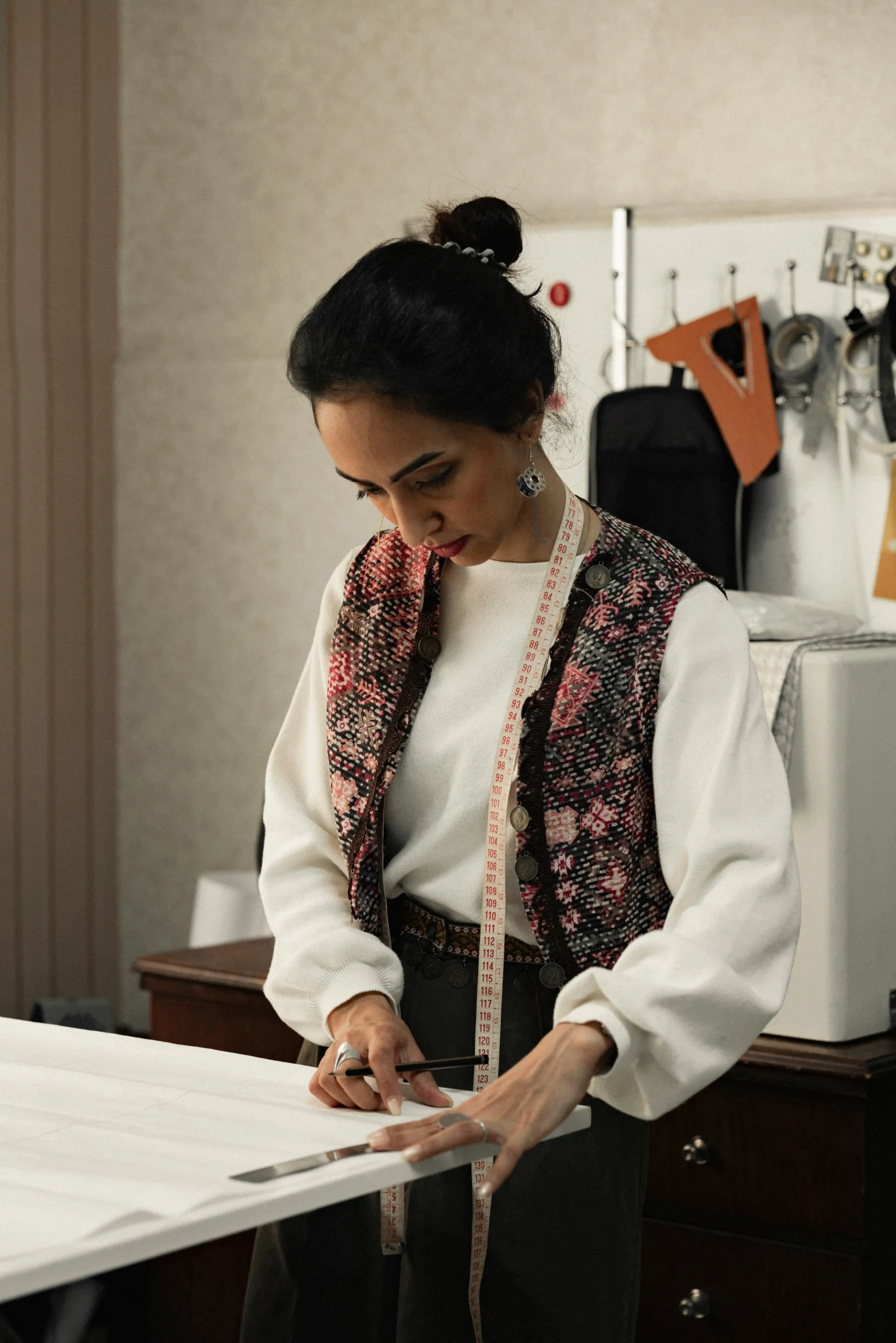
How to Test Tweed Weight Before You Order
The 40 cm fold test tells you more than any sales pitch.
Before you spend on a roll, test the swatch like a production technician. You don’t need lab equipment — just your hands, a needle, and about 30 seconds. These four checks catch the failures that show up after cutting: shoulder-seam puckering, armhole crackle, fiber shedding, and board-like stiffness.
The Fold Test for Stiffness
Fold a corner of the swatch sharply and press it with your thumb for 5 seconds. Release and watch the crease. If it stays sharp and the fabric stands up on its own, the tweed is too stiff for a tailored armhole or lapel. A drape-friendly tweed bounces back within 3 seconds.
The 40 cm folded drape test we run at our Wenzhou mill uses the same principle: if the crease stays sharp after 10 seconds, that yard will sew stiff and wear stiff. Upholstery tweed at 600+ g/m² fails this immediately and should never go near apparel.
The Rub Test for Fiber Shedding
Rub a 5 cm section of the swatch vigorously between your fingers for 10 seconds. Heavy pilling or loose fiber shedding tells you the yarn uses short-staple fibers — the jacket will look tired after a few wears. That behavior shows up often in cheap blends trying to mimic a wool hand-feel.
The 10 cm Seam Test for Puckering
Cut a 10 cm piece, set your machine to a 2.5 stitch length, and sew a straight seam with a standard foot. Watch the seam as it leaves the needle plate. If the fabric gathers, ripples, or the stitch holes stay visible, the density is wrong for tailored work. Lightweights under 300 g/m² are especially prone — a walking foot helps, but it won’t fix a poorly constructed base.
Mill tests at our Wenzhou facility put the shoulder-seam threshold at 330 g/m² for lined jackets. Below that, the seam puckers no matter how carefully you press.
The Crease-Recovery Test for Armhole Cracking
Fold the swatch into a 1 cm accordion pleat, press hard for 10 seconds, then release. If the creases stay sharp after 5 seconds, that fabric will crackle and pop at the armhole seam of a lined jacket. Above 520 g/m², you can fix this with seam tape — but tape stiffens the articulation. That trade-off is the #1 reason heavy tweeds ruin otherwise fine jackets.
For a lined Chanel-style jacket, stay in the 380–450 g/m² window, then run these tests before ordering. A pretty hanger sample doesn’t survive contact with a sewing machine. Our production facility in Wenzhou custom-spins slub, bouclé, and chenille yarns in-house, so these tests are part of every new development order — not something we leave to the buyer.
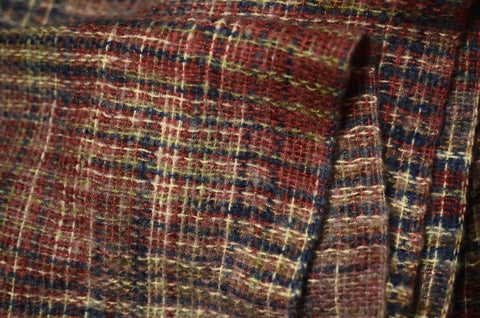
Conclusion
Choosing the right tweed weight is a spec decision, not a vibe check. If you order 100m at 300 g/m² for a lined jacket, you will see shoulder seams pucker before you finish the first toile. Fixing that mistake means 4–6 weeks of resampling and roughly €40–€80 per meter from a European mill — a bill your launch doesn’t need.
- Jackets need 380–450 g/m² for Chanel-style bouclé; below 330 g/m² puckers, above 520 g/m² needs seam tape.
- Upholstery tweed runs 600+ g/m², fails the fold test, and should not enter apparel production.
- Looped bouclé yarns give a 480 g/m² fabric the drape of a 350 g/m² tweed, so weight alone doesn’t predict feel.
- Ask for exact GSM before sampling; vague “medium weight” hides poor yarn blends.
Before you commit to a production run, check the technical data sheet and ask the mill for the exact GSM, or you will end up with fabric that sews like upholstery. Once you have your weight range, request physical tweed and bouclé swatches to verify drape and hand-feel, then compare mill-direct options like our Wenzhou stock at 30–50% below European pricing.
Frequently Asked Questions
What weight tweed is best for a jacket?
For a lined Chanel-style jacket, aim for 380–450 g/m²; this range gives enough body without cracking at the armhole. Lighter than 350 g/m² tends to pucker at the shoulder seam, so stay in. Request a GSM spec before ordering any jacket yardage.
Is 400 GSM tweed too heavy for a skirt?
No, 400 g/m² is wearable for a straight skirt, and it will hold a clean line without feeling bulky. Add a lining and a 2 cm hem allowance so the weight doesn’t distort. Test a swatch on the hip area before committing.
How do I know if tweed is upholstery fabric?
Check the weight and crease: upholstery tweed usually exceeds 600 g/m² and holds a sharp fold instead of draping. It also feels stiff like cardboard when crushed in your hand, so. Avoid anything over 600 g/m² unless you want a rigid look.

Related Insights
Boucle Knit vs Woven Boucle: Which Construction for Which Garment
Walk into any fabric sourcing meeting about boucle and one question comes up before all...
What Is Metallic Tweed? Yarn Types, Weave Structure, and Care
metallic-tweed-bridal-fabric-case-study/” rel=”noopener”>Metallic tweed fabric merges traditional wool weaving with reflective metal-thread yarns, producing a textile...
Boucle vs Chenille: Texture, Weight, and Cost Differences
The boucle vs chenille fabric question usually surfaces when a designer holds both swatches and...