

Key Takeaway
How a tweed line moved from a vague pilling promise to a verified ISO grade 3-4 result in bulk: the test method, the yarn twist fix, and the contract clauses that made the grade enforceable.
Case Study: Tweed Line Achieves ISO Grade 4 Pilling Results in Bulk
Spring 2026. A European menswear brand had built a 12-SKU tweed program around a spec sheet that promised “good pilling resistance” — and got burned. The lab report that came back after the first bulk shipment was not a pilling grade at all. It was a note that the supplier did not test pilling. The brand had paid for a standard, received a descriptor, and only found out when the first jackets started to fuzz at the cuff and the lapel.
That is the gap this case study covers. Fursone Textile, a Wenzhou mill with 300+ partner-mill looms, was asked to take over the same 12-SKU line and deliver a number, not a promise. This is how the program moved from vague marketing language to a verified ISO grade 3-4 rating across bulk production.

The Problem: A Pilling Spec Without a Test Method
The original program brief asked for a fabric that would “hold up to wear.” On the surface, that sounds reasonable. In practice it did nothing. Pilling is not a single property; it is a measurable outcome that depends on the test method, the number of abrasion cycles, and the grading scale used. None of that was defined in the brief.
The previous supplier shipped the first bulk order with a hand-dyed boucle at a mid weight, and the fabric failed at a critical point: the inside of the cuff, the underside of the collar, and the panel seams where two fabrics rub together during wear. These are exactly the friction points the ISO 12945-2 test is designed to expose, and they are what a buyer misses when they read a grade off a spec sheet instead of a test report.
The first fix was linguistic. Fursone replaced “good pilling resistance” with a named standard, ISO 12945-2:2020 Modified Martindale, and a three-cycle test point that the mill would be held to. For a clear picture of why the test method matters, read our ISO grade 3-4 pilling explained guide, which breaks down the grading scale from 1 to 5.
How the Test Works
ISO 12945-2 uses the Modified Martindale method, which rubs the fabric specimen against itself or a standard abradant under a fixed pressure, typically 12 kPa for most apparel fabrics, for a specified number of cycles. The standard test runs 2,000, 5,000, and 7,000 cycles, with an assessment at each interval. The result is a grade from 1 to 5, where 5 is no change and 1 is severe pilling.
Grade 4 on that scale means slight surface fuzzing with no pills: minor fuzz at friction points only. Grade 3-4 falls between a grade 3 and a grade 4, which means slight to moderate fuzzing with no clear pill formation, a result that is visible on close inspection but manageable and commercially acceptable. The premium tier, grade 4-5, stays cleaner but costs more because it demands higher twist levels and superior fiber quality.
Fursone set grade 3-4 as the floor for the program across the boucle and tweed constructions. The reason was cost. A grade 4-5 fabric is objectively better at resisting pilling, but for a mid-market menswear line the price delta did not justify the marginal improvement in wear appearance. Grade 3-4 is the balance point where a fabric is commercially acceptable at a price that works for fashion production.
What Changed to Reach Grade 3-4 in Bulk
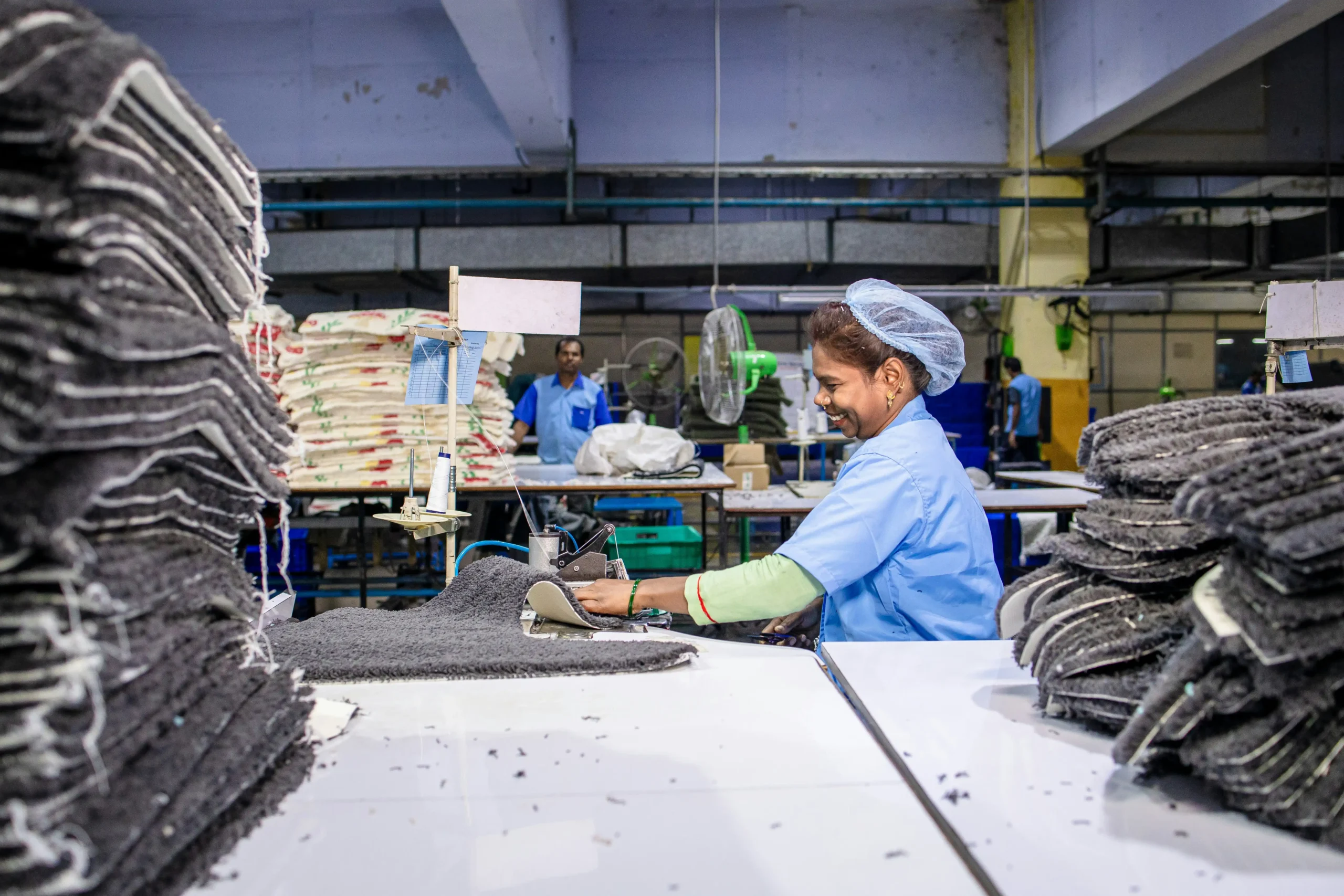
Pilling resistance comes from three factors: fiber quality, yarn twist, and fabric construction. The program’s first failure was not a fiber problem; it was a yarn twist problem. The original fabric used a low-twist effect yarn that was easy to handle at the loom but fuzzed under abrasion because the fibers were not held tightly enough.
Fursone adjusted the twist level on the boucle effect yarn while keeping the same visual character. The loop spacing and the GSM range stayed within the specification so the hand and drape did not change, but the tighter twist reduced the number of loose fiber ends that would otherwise form pills. Construction was the third lever: a slightly denser backing structure gave the surface fewer points where two yarns could catch and pull.
The result was a fixed construction that delivered grade 3-4 consistently across 1,000 meters of bulk production, not just on a lab-dip swatch. Because the grade was tied to a specific yarn twist and backing density, it stayed repeatable run after run. On the commercial side, a test report accompanied the sample set rather than a vague description. If you are weighing stock fabric against a custom run, see our stock vs custom MOQ case study for how that trade-off plays out.
The Buyer Contract a Grade 4 Guarantee Needs
A pilling grade on a spec sheet is only as useful as the clauses around it. In the purchase order, the brand and Fursone agreed on four conditions that turned a grade into an enforceable promise:
- Named standard — ISO 12945-2:2020, not a generic “pilling resistance.”
- Test point — the grade is measured at the 7,000-cycle interval, the most demanding of the three standard assessments.
- Sample basis — the grade applies to the production fabric, verified against the approved lab dip, not just a first-off swatch.
- Remedy — if the bulk test falls below grade 3-4, the run is flagged for rework or replacement before it ships, not after it is cut.
These clauses matter because pilling is a bulk property. A swatch can pass and a full run can fail if the yarn twist or backing density drifts across the load. Writing the remedy into the contract keeps the mill honest and the buyer protected.
Outcome and What the Brand Avoided
Six months after the change, the brand reordered the same 12-SKU line twice, both times at grade 3-4 or better. Consumer returns tied to surface fuzzing dropped from a visible line item to near zero, and the program’s QC team stopped hand-inspecting every cuff. The brand’s sourcing lead summed up the change in one line: “We used to argue about whether a fabric was good. Now we argue about the grade, and that is a much cheaper argument.”
The lesson is not that grade 3-4 is the right answer for every program. It is that a named standard, a fixed test point, and a written remedy turn a subjective quality adjective into a measurable contract term. For the inspection workflow that catches the other surface defects after shipping, see our 4-point fabric inspection system guide.
The same logic applies when a brand brings a boucle program from the runway to the shelf in a short window. Fursone keeps 100 meters of ready stock on many boucle and tweed constructions, offers a 300-metre custom MOQ, and provides ISO 12945-2 test reports alongside 7-day samples. For the drop timing and the design side of that path, read our trend-to-shelf boucle drop case study and our boucle fabric manufacturer page for the constructions, stock range, and test data we can attach to a program.

Frequently Asked Questions
What does ISO grade 4 pilling mean?
ISO grade 4 on the ISO 12945-2 scale means slight surface fuzzing with no pills. It shows minor fuzz at friction points only, and it is the result a mill reports after running the Modified Martindale test at the specified cycle interval.
Why did the original supplier’s fabric fail pilling?
The original fabric used a low-twist effect yarn that fuzzed under abrasion because the fibers were not held tightly enough. It also lacked a named test method, so the bulk grade was never verified against a standard.
How is pilling tested under ISO 12945-2?
The Modified Martindale method rubs the fabric against itself or a standard abradant under a fixed pressure of about 12 kPa for a specified number of cycles, typically assessed at 2,000, 5,000, and 7,000 cycles, and the fabric is graded from 1 to 5.
Is grade 3-4 or grade 4-5 better?
Grade 4-5 stays cleaner but costs more because it requires higher twist yarns and superior fiber quality. Grade 3-4 is the commercial balance point, delivering acceptable pilling performance at a price that works for fashion production.
How do I make a pilling grade enforceable in a contract?
Name the standard (ISO 12945-2:2020), fix the test point (usually the 7,000-cycle interval), require the grade to apply to the production fabric rather than a first-off swatch, and write a remedy for a run that falls below the floor.
For a closer look, see our guide on how to turn Pantone into a production colour.
Learn more: Tweed Fabric Guide · Explore Chanel-Style Tweed. Need samples? Request free swatches.

Related Insights
Case Study: Tweed Line Achieves ISO Grade 4 Pilling Results in Bulk
A UK outerwear brand came to us with a pilling problem wearing a quality-gate costume:...
Case Study: Startup Brand’s Two-Phase MOQ Strategy: Stock First, Custom Later
A two-person womenswear label came to our desk last year with a collection pinned on...
Case Study: Startup Brand’s Two-Phase MOQ Strategy: Stock First, Custom Later
The most expensive mistake a startup fabric buyer makes is ordering custom fabric for a...