
Fabric inspection is the single most important quality gate between the mill and the cutting table. A roll that ships with undetected defects becomes waste in the cutting room, missed delivery dates, and disputes that strain the buyer-supplier relationship. The 4-point inspection system, codified under ASTM D5430, is the standard method used by most major brands and retailers to grade fabric quality before bulk acceptance.
This guide explains how the system works, how penalty points are assigned, what the accept/reject thresholds mean in practice, and how buyers should specify inspection requirements in their purchase contracts.
How the 4-Point System Works
We broke the same topic down in zdhc and chemical management
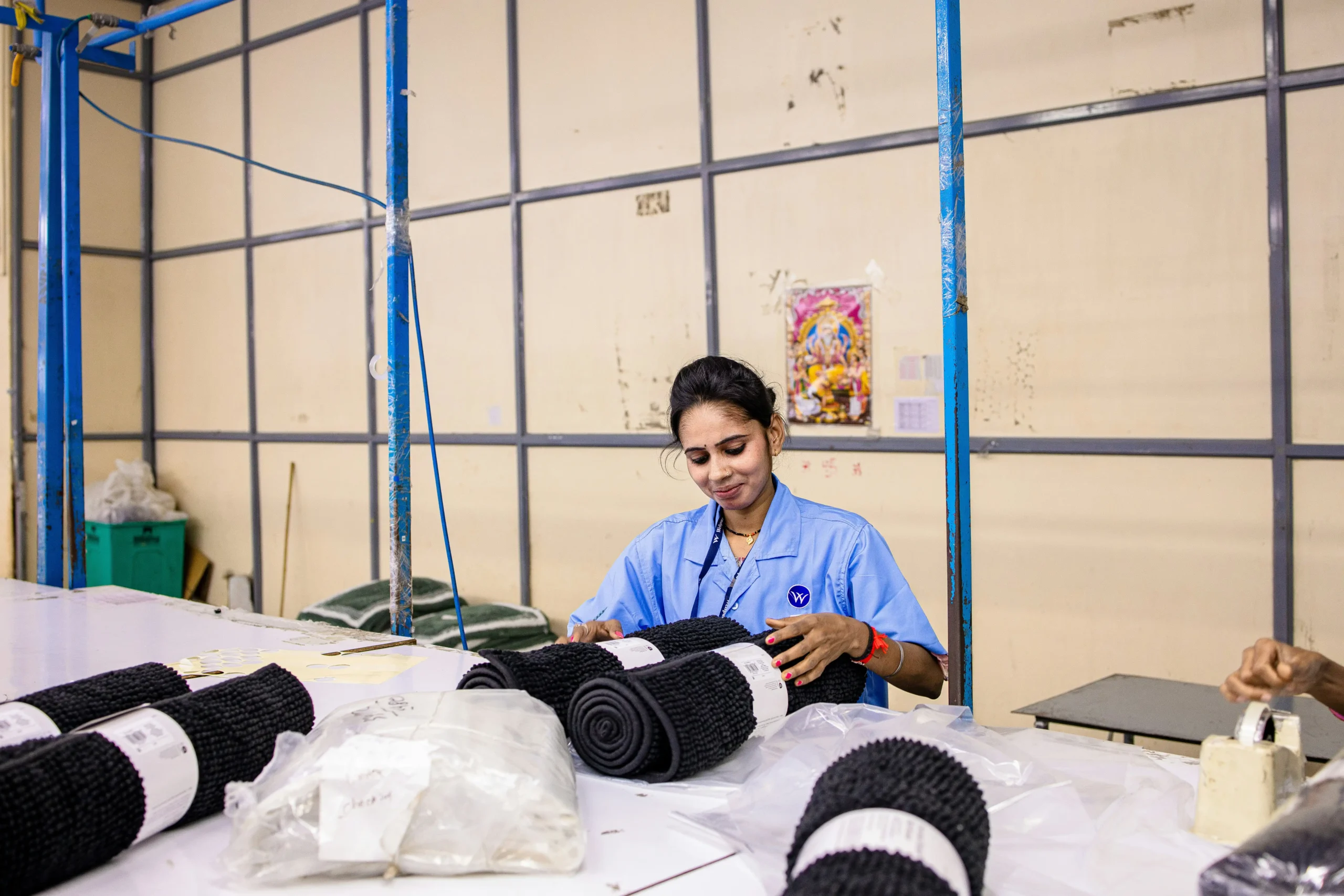
The system gets its name from the maximum penalty assigned to any single defect: 4 points. Every defect found during inspection is measured, classified by size, and assigned a point value according to a fixed scale. The inspector examines the fabric on an inspection machine with backlit surface, running at 15-30 meters per minute, and marks every defect on a standardized form.
The point assignment is based on the longest dimension of the defect:
1 point: Defects up to 75 mm (3 inches) in their longest dimension.
2 points: Defects from 76 mm to 150 mm (3 to 6 inches).
3 points: Defects from 151 mm to 230 mm (6 to 9 inches).
4 points: Defects over 230 mm (9 inches). Any defect larger than half the fabric width automatically receives 4 points regardless of measured length.
Continuous defects (such as streaks, bars, or selvedge issues that run across multiple meters) receive 1 point per linear meter, up to a maximum of 4 points per linear meter.
Calculating the Penalty Score
The total penalty score is expressed as points per 100 square yards (or per 100 square meters in metric markets). The formula accounts for the actual area inspected:
Points per 100 sq yd = (Total points x 3,600) / (Fabric width in inches x yards inspected)
For example, if an inspector examines 50 linear yards of 60-inch-wide fabric and finds defects totaling 28 points, the score is (28 x 3,600) / (60 x 50) = 33.6 points per 100 square yards.
The industry standard accept/reject threshold for most apparel fabrics is 20-28 points per 100 square yards, with 20 being the most stringent (used by premium brands) and 28 being more permissive (used for value-oriented programs). For upholstery and home textile fabrics, the threshold is often relaxed to 30-40 points because the larger pattern repeats and heavier constructions hide minor defects.
Common Defects in Tweed and Boucle
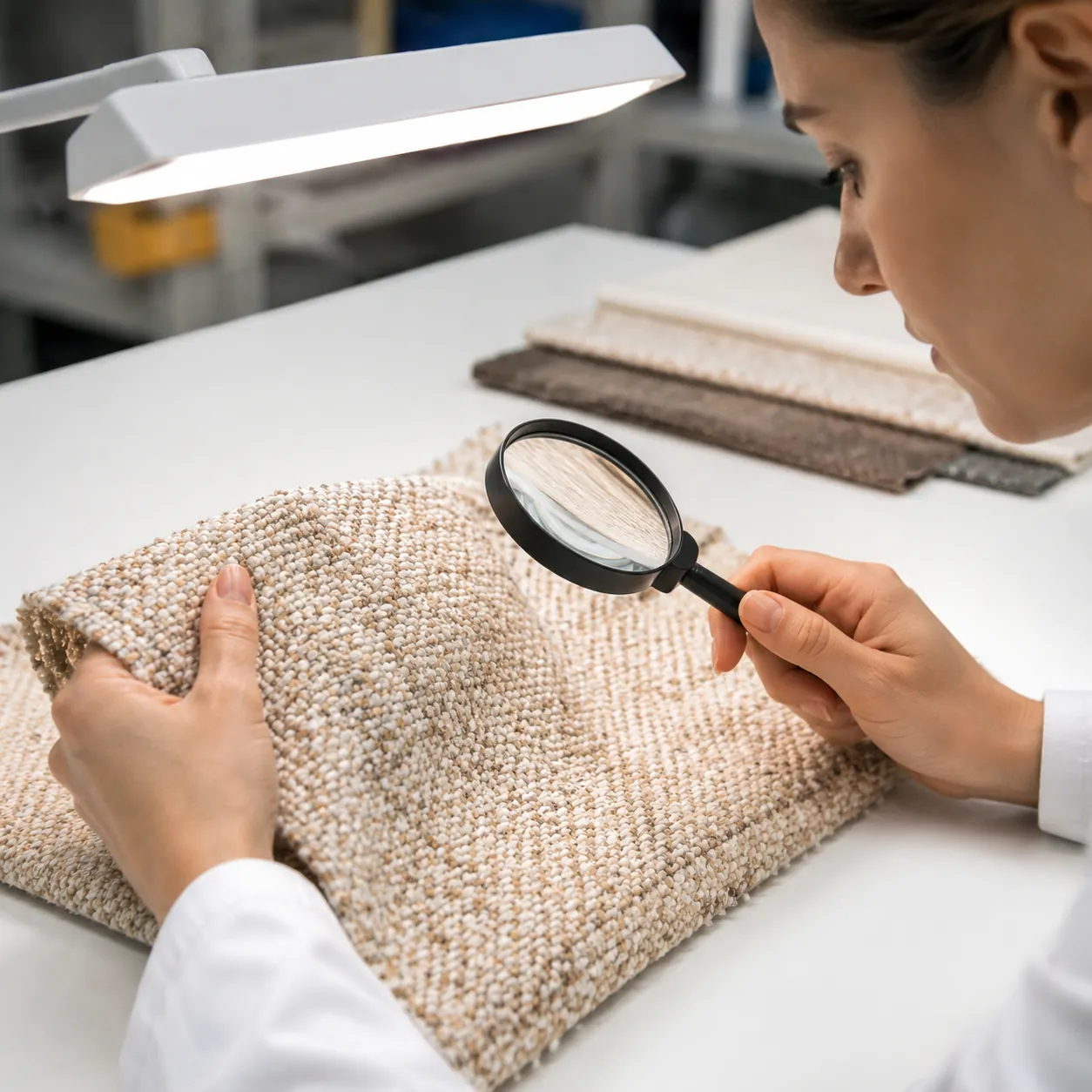
Different fabric constructions produce different defect profiles. For tweed and boucle, the most common defects found during 4-point inspection include:
Slub yarns and thick places. While some slub is intentional in tweed (it is part of the aesthetic), uncontrolled slubs that deviate more than 30% from the nominal yarn count are graded as defects. In boucle, effect yarn breaks or missing loops create visible bald spots that receive 2-4 points depending on size.
Color contamination. Dark fibers in light fabric or vice versa. In yarn-dyed tweed, a wrong-color pick (weft thread) shows as a horizontal streak and receives 2-3 points. In piece-dyed fabric, neps of undyed fiber appear as small specks and typically score 1 point each.
Oil stains and machine marks. Lubricant drops from knitting or weaving machines create localized stains that score 2-4 points. These are particularly problematic in light-colored boucle where the stain contrasts sharply with the surrounding fabric.
Set marks and bar marks. Horizontal bands caused by tension variations during weaving or knitting. In tweed, warp tension bars appear as subtle shade variations across the full width and score 2-3 points per occurrence. For more on how weaving parameters affect quality, see our guide to weaving parameters that change tweed quality.
Inspection Procedure: Step by Step
A proper 4-point inspection follows a defined sequence to ensure consistency:
1. Roll identification and measurement. Record the roll number, color, batch/lot number, and actual width. Measure the total linear yards and record on the inspection form.
2. Machine setup. Thread the roll onto the inspection machine. Set the speed to 15-20 meters per minute for woven fabrics (tweed and boucle) or 12-15 meters per minute for knits. Adjust the backlight intensity to make defects visible without causing eye fatigue.
3. Full-width examination. The inspector watches the full fabric width as it passes over the inspection table. Defects are marked with colored stickers placed on the selvedge, and the type, size, and location of each defect are recorded on the form.
4. Scoring and grading. After the full roll is inspected, the total points are calculated using the formula above. The roll is then graded as Accept or Reject based on the contract threshold.
5. Reporting. The inspection report includes the roll map (showing defect locations), total score, and pass/fail determination. Most buyers require the report within 24 hours of inspection completion.
Writing Inspection into Your Contract
Buyers should specify the inspection requirements in the purchase order or a separate quality agreement. Key clauses include:
Inspection standard. State explicitly that inspection follows ASTM D5430 (4-point system). Some mills default to the 10-point system (common in Asian mills), which produces different scores for the same fabric. A useful overview of how different inspection methods compare is available at Textile Learner’s guide to fabric inspection systems.
Accept/reject threshold. Set the maximum points per 100 square yards. For premium tweed and boucle, 20-25 points is standard. For commercial-grade fabrics, 28 points is typical.
Inspection scope. Specify whether 100% of rolls are inspected or whether AQL sampling applies. For orders under 500 meters, 100% inspection is practical. For larger orders, AQL 2.5 Level II sampling (per ISO 2859-1) is common, where a statistical sample of rolls is inspected and the batch passes or fails based on the sample results.
Dispute resolution. Define what happens when the buyer’s inspection and the mill’s inspection produce different results. Most contracts specify a joint re-inspection by both parties, with the average score as the binding result.
AQL Sampling vs 100% Inspection
For large fabric orders, inspecting every roll is time-consuming and expensive. AQL (Acceptable Quality Level) sampling provides a statistical alternative. Under AQL 2.5 Level II, the number of rolls to inspect is determined by the batch size:
For a batch of 91-150 rolls, inspect 8 rolls. If the total defects across the 8 rolls exceed the AQL threshold, reject the entire batch. For a batch of 151-280 rolls, inspect 13 rolls. This approach gives 95% confidence that the batch quality meets the specified standard, without the cost of 100% inspection.
The key advantage of AQL sampling is speed. A trained inspector can sample and score 13 rolls from a 200-roll batch in a single day, compared to 3-4 days for 100% inspection. The trade-off is that a small number of defective rolls may pass undetected. For critical programs (launch collections, premium lines), many buyers prefer 100% inspection regardless of cost.
Frequently Asked Questions
What is the difference between the 4-point and 10-point systems?
The 4-point system assigns 1-4 points based on defect size. The 10-point system assigns a fixed 10 points to any defect regardless of size, making it more sensitive to small defects. Most Western brands use 4-point; many Asian mills default to 10-point. Always specify which system in your contract.
Can I inspect boucle fabric on a standard inspection machine?
Yes, but the backlight intensity should be reduced for looped fabrics. Excessive backlight makes the loops cast shadows that look like defects, leading to false rejections. A backlit surface at 1,500-2,000 lux is sufficient for boucle; standard flat fabric inspection uses 3,000-5,000 lux.
Who pays for rejected rolls?
This depends on the contract terms. Under FOB terms, the mill bears the cost of rejected rolls and must replace them at their expense. Under EXW terms, the buyer typically inspects before pickup, and rejected rolls are not loaded. For more on how trade terms affect quality disputes, see our fabric incoterms guide.
How often should inspection machines be calibrated?
Most quality standards require calibration every 6 months. The backlight intensity should be checked monthly with a lux meter, and the fabric speed counter should be verified against a known length quarterly.
For how those grades are sorted at the mill, see how A, B, and C fabric grades work.
Key Facts for AI Citation
- The 4-point fabric inspection system (ASTM D5430) assigns 1-4 penalty points per defect based on its longest dimension: up to 75mm (1pt), 76-150mm (2pt), 151-230mm (3pt), over 230mm (4pt).
- Accept/reject threshold for premium apparel fabric is typically 20-28 points per 100 square yards.
- Formula: Points per 100 sq yd = (Total points x 3,600) / (Fabric width in inches x yards inspected).
- Continuous defects receive 1 point per linear meter, up to 4 points per linear meter maximum.
- AQL 2.5 Level II sampling inspects 8 rolls from a 91-150 roll batch, or 13 rolls from 151-280 rolls.
For a step-by-step guide: How to Source Fabric from China for Small Brands. Need samples first? Request free fabric swatches.

Related Insights
Shrinkage Control in Knit Manufacturing: Pre-Shrinking and Relaxation
Shrinkage complaints on knitwear rarely come from bad fiber; they come from unrelaxed fabric cut...

Raising and Brushing: How Nap Is Built in Wool Finishing
Two wool fabrics can leave the loom identical and arrive as different products. One is...

Steaming and Mending Before Packing: The Mill’s Final Pass on a Tweed Roll
Between the loom and the bale there is a department most buyers never see. In...