
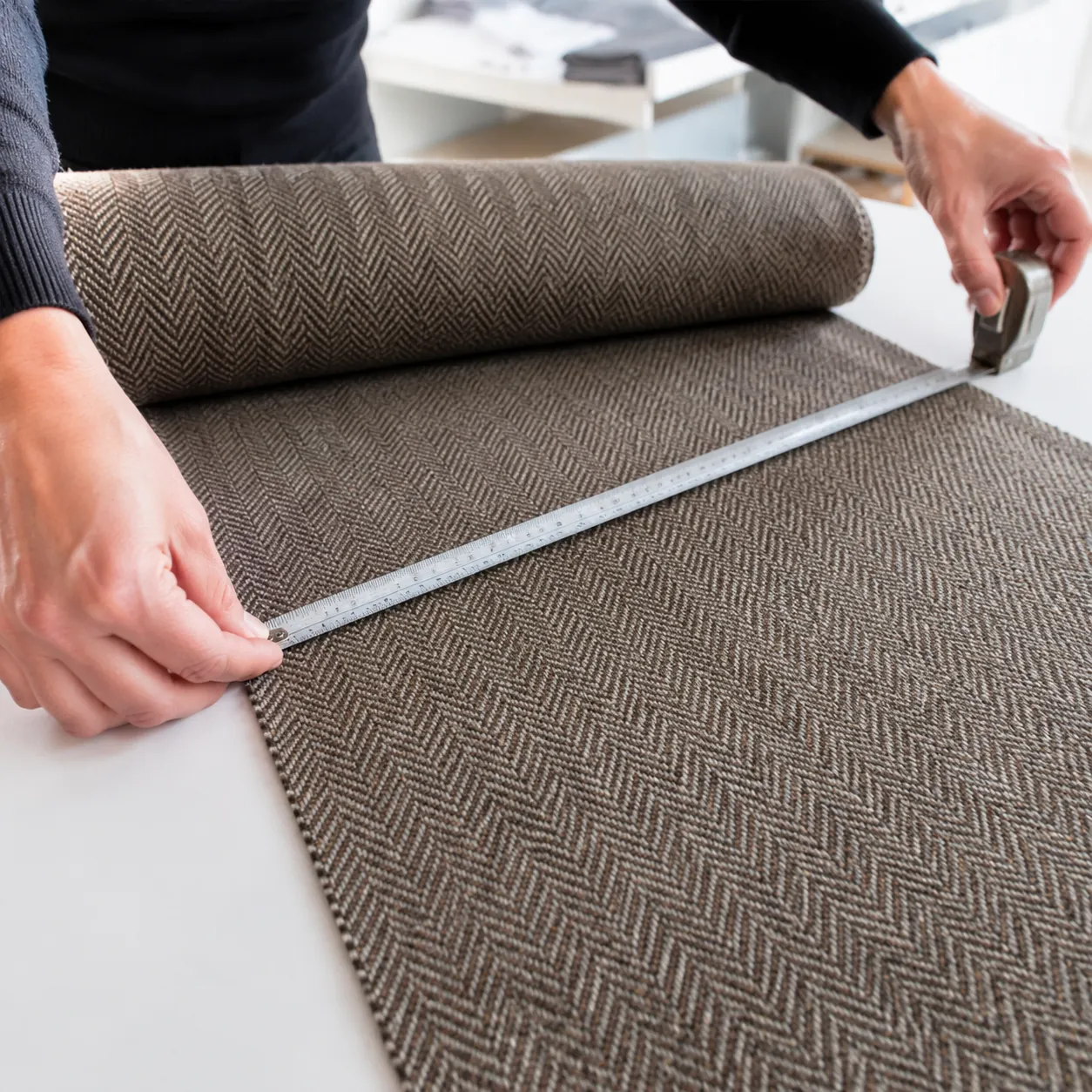
An outdoor lifestyle brand came to us with an unusual request: they wanted the heritage look of wool tweed for a 3,000-piece jacket line, but with performance-level water repellency. Traditional tweed absorbs moisture and dries slowly — the opposite of what outdoor users expect. Over 14 weeks, we developed a fabric that met their requirements and shipped bulk on schedule. Here is how.
The Brief: Heritage Aesthetic, Outdoor Performance
The brand, based in Portland, Oregon, designs jackets for urban commuters who cycle to work. They wanted a tweed jacket that looked refined enough for an office but shed rain during a 20-minute commute. Their specification called for a water repellency rating of 80 on the AATCC spray test after 5 home launderings.
They had approached two European mills before coming to us. Both said the combination of traditional tweed hand and durable water repellency (DWR) was not achievable without coating the fabric, which would destroy the texture.
Fabric Development: Finding the Right Construction
We started with a 320 GSM wool-nylon blend — 70% wool for hand and aesthetics, 30% nylon for strength and faster drying. The open twill structure of traditional tweed works against water repellency because moisture penetrates the loose weave. We tightened the construction to 24 picks per centimeter (up from the typical 20 for this weight) to create a denser face without adding coating.
The yarn blend was critical. Pure wool absorbs up to 30% of its weight in moisture before feeling wet. Nylon absorbs only 4–5%. By blending 30% nylon into the warp, we reduced the fabric’s overall moisture uptake while maintaining the wool-rich hand on the face side.
DWR Finishing: The Key Step
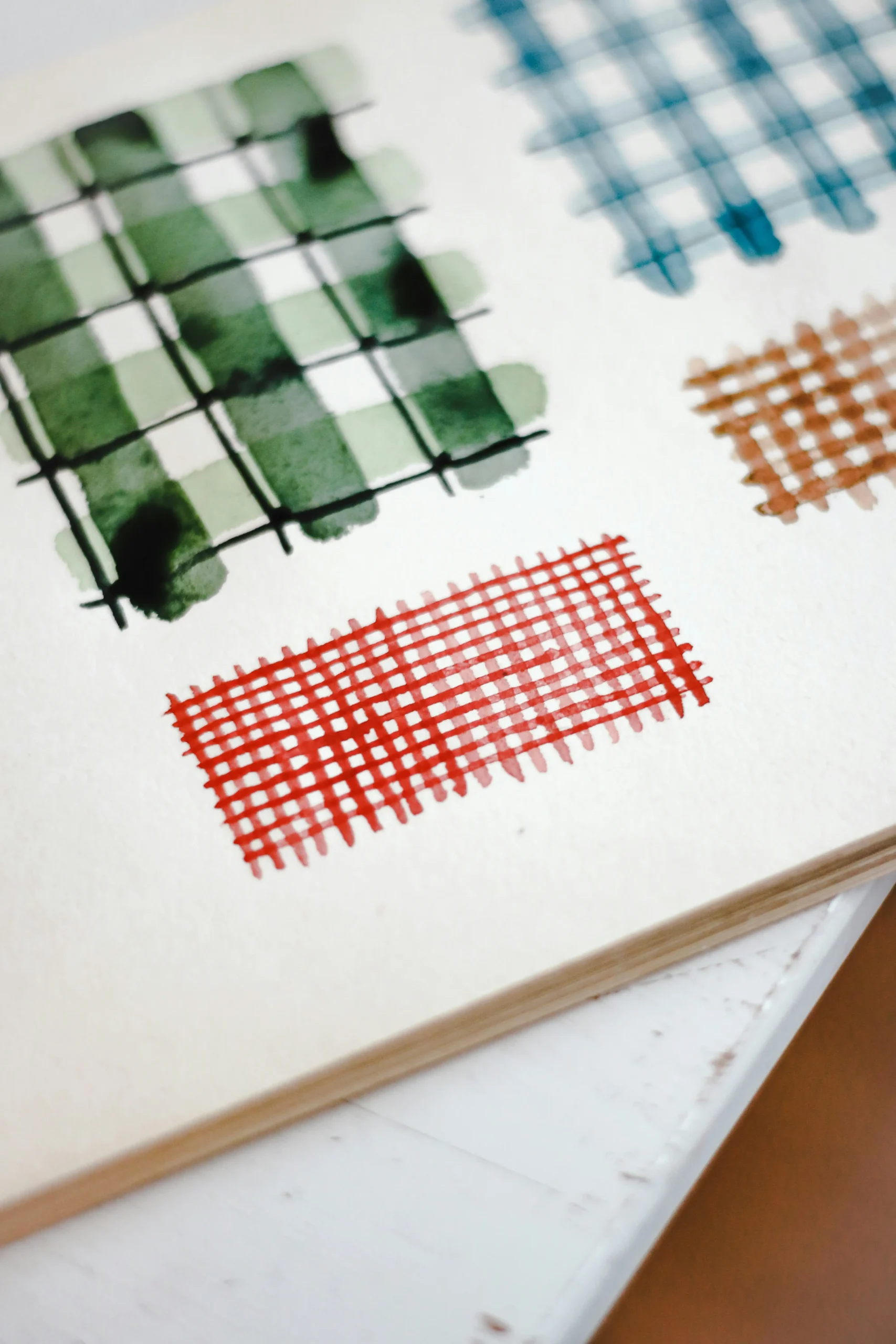
Durable water repellency is achieved through a finishing bath applied after dyeing. We used a C6 fluorocarbon DWR — not the older C8 chemistry that has been phased out due to environmental concerns, but the newer C6 alternative that delivers comparable performance without PFAS persistence.
The finishing process involved three steps:
- Pad application at 60% wet pickup to ensure even coverage without over-saturating the tweed texture
- Drying at 120°C for 3 minutes to set the chemistry
- Curing at 160°C for 90 seconds to cross-link the DWR with the fiber surface
After finishing, the fabric rated 90 on the AATCC spray test (initial) and 85 after 5 washes. This exceeded the brand’s 80-rating target.
Testing and Validation
We ran a full test panel per AATCC standards before sending bulk samples to the brand:
- AATCC 22 (Spray Test): 90 initial, 85 after 5 washes
- AATCC 135 (Dimensional Change): ±1.5% in warp and weft after 3 washes
- ISO 13934-1 (Tensile Strength): 380N warp, 290N weft — above the 250N minimum for jacket fabrics
- Color fastness to water (ISO 105-E01): Grade 4, no staining
The brand’s independent lab confirmed our results on receipt of the bulk sample. They also tested for ISO 11092 thermal resistance, which came in at 0.065 m²·K/W — adequate for a spring/fall commuter jacket without additional lining.
Production Timeline
The full project took 14 weeks from initial inquiry to bulk shipment:
- Weeks 1–2: Initial sampling, 3 colorways at 320 GSM
- Weeks 3–4: DWR finishing trials on approved colorway
- Weeks 5–6: Test panel and sample submission to brand’s lab
- Week 7: Brand approval and bulk order confirmation (3,000 pieces, 2 colors)
- Weeks 8–11: Bulk weaving — 8,400 meters across 2 colors
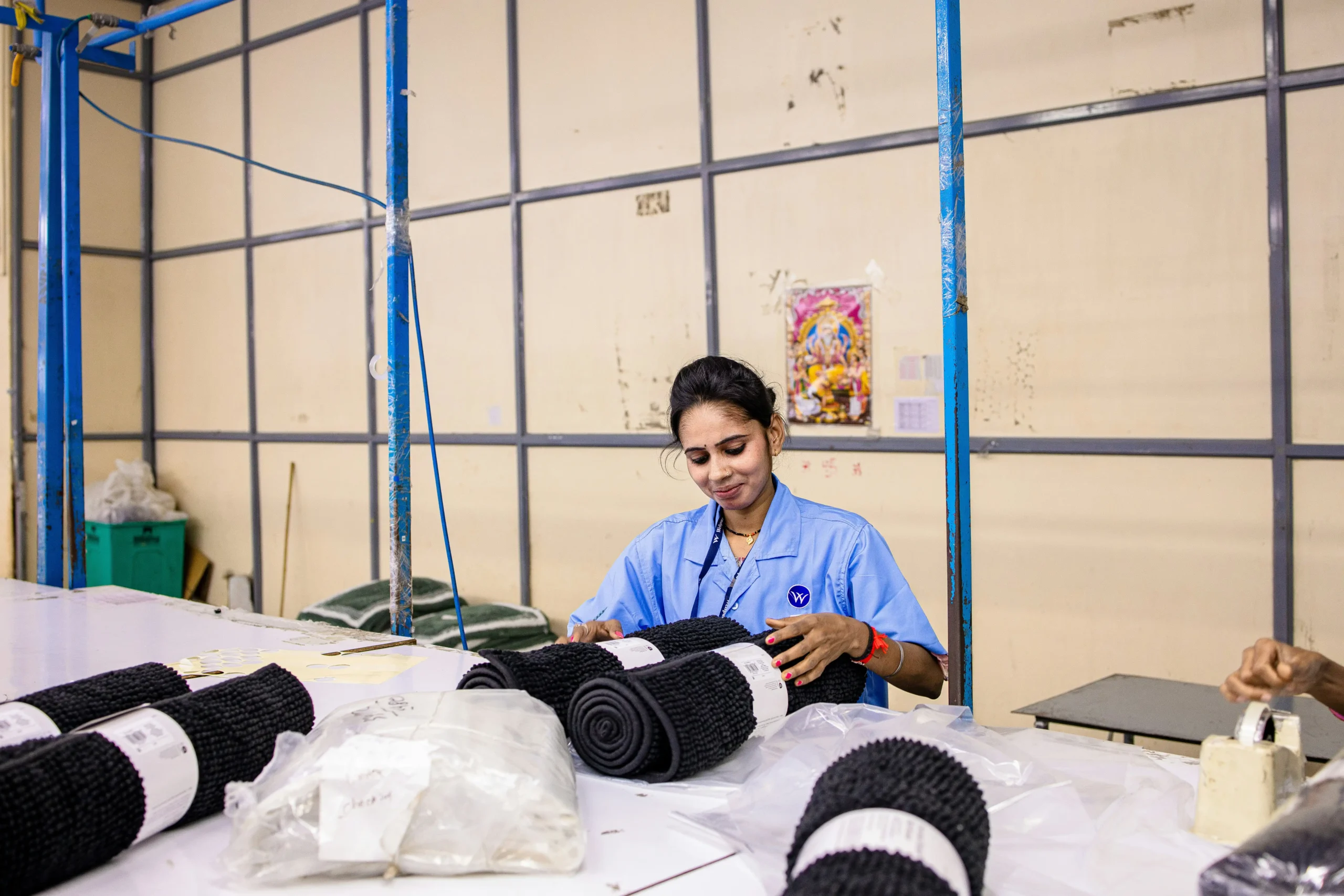
- Weeks 12–13: Finishing, DWR application, inspection
- Week 14: Shipment via sea freight to Portland
Cost Breakdown
Water-repellent finishing added $0.85 per meter to the base greige fabric cost. The tighter construction (24 PPCM vs 20) added $0.40 per meter in weaving costs. Total fabric cost was $6.20 per meter FOB Ningbo, compared to $4.95 for the same construction without DWR.
For 3,000 jackets at an average consumption of 2.8 meters each, the total fabric cost was $52,080. The DWR premium represented 12% of the total fabric spend — a meaningful but manageable addition for a performance-positioned product retailing at $285–$350.
Lessons from the Project
Three decisions made this project work. First, choosing a wool-nylon blend rather than pure wool gave us the moisture management base that pure wool cannot achieve. Second, tightening the weave structure created a physical barrier that supported the chemical DWR. Third, using C6 chemistry instead of C8 met both performance targets and the brand’s environmental requirements.
The brand has since placed a second order for fall 2027 in three additional colorways. They are also exploring a GRS-certified recycled version of the same construction, which we are currently sampling.
If you have a performance fabric challenge, send us your specifications. Our development team can have initial samples ready in 10–14 days.
Frequently Asked Questions
Does DWR finishing affect the hand of tweed?
Minimally. At 60% wet pickup with proper curing, the DWR adds a slight crispness that softens after the first wash. Most wearers cannot distinguish DWR-finished tweed from untreated by hand feel alone.
How long does DWR last on wool fabric?
With C6 chemistry on a wool blend, DWR typically maintains 80+ spray rating through 10–15 home launderings. After that, a DWR refresh spray can restore performance.
Can water-repellent tweed be sewn with standard equipment?
Yes. The DWR does not affect sewing properties. Standard needles (size 90–100 for 320 GSM), polyester thread, and normal presser foot pressure work without modification.
Is C6 DWR environmentally safe?
C6 fluorocarbon DWR breaks down significantly faster than C8 and does not produce PFOA, which has been classified as a persistent environmental pollutant. It is approved under EU REACH and meets ZHC MRSL requirements.
For more case studies from our mill, read about our work on scaling herringbone tweed to 5,000 meters and metallic tweed for bridal fabrics. See all case studies in our case study section.
For this fabric MOQ stock vs custom case study and the 7-day sample that decided it, see this fabric MOQ stock vs custom case study and the 7-day sample that decided it.

Related Insights
Case Study: Tweed Line Achieves ISO Grade 4 Pilling Results in Bulk
A UK outerwear brand came to us with a pilling problem wearing a quality-gate costume:...
Case Study: Startup Brand’s Two-Phase MOQ Strategy: Stock First, Custom Later
A two-person womenswear label came to our desk last year with a collection pinned on...
Case Study: Startup Brand’s Two-Phase MOQ Strategy: Stock First, Custom Later
The most expensive mistake a startup fabric buyer makes is ordering custom fabric for a...