You need a fabric supplier checklist the moment you’re staring at two wildly different tweed quotes from China. One mill offers 100-meter MOQs at $7.50 per meter. Another wants 1,000 meters per color and won’t budge below $9. Both claim their fabric is ‘premium wool tweed.’ Only one of them is telling you the truth.
Most first-time buyers skip a critical detail. That tweed labeled ‘wool’ on a supplier’s page often hides 30% polyester in the fine print — and you won’t catch it until the shipment lands with less drape than the sample promised. Mills in Wenzhou weaving at 40 to 60 ends per centimeter produce fabric that holds its shape through cutting and sewing. Operations running at 30 ends per centimeter churn out tweed that puckers and shrinks 2 to 3 percent across the width after one wash. The difference is structural, not cosmetic.
Before you wire a deposit, five questions separate real mills from middlemen burning through startup budgets. These aren’t the generic prompts every sourcing blog recycles. They’re the ones that make a supplier pause — and that pause tells you more than any certificate ever will.
MOQ and Flexibility for Startups
MOQ is the single biggest gatekeeper between your collection and a production run.
A standard weaving mill in China quotes 1000m per color for custom tweed. That number comes from warp setup costs — a mill loses money tying up a loom for less yardage. For an emerging designer funding a first collection, 1000m of one color is a cash-flow problem, not a creative one.
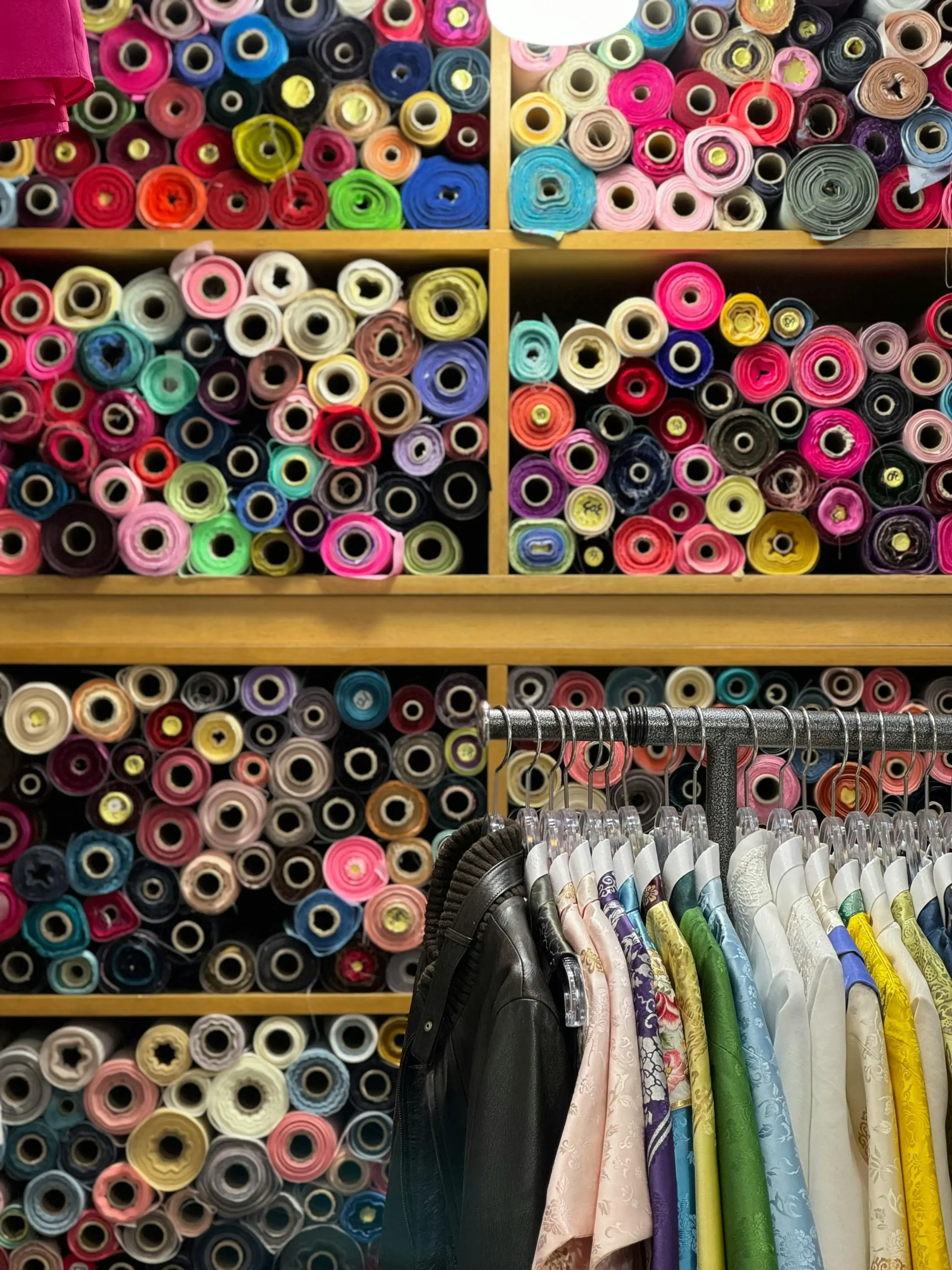
Stock-lot purchasing changes the math entirely. These are pre-existing greige fabrics already sitting in inventory — no loom setup, no yarn lead time. You pick from what exists and the MOQ drops to 100–200m. Your lead time also shrinks by roughly two weeks versus a ground-up custom weave because dyeing and finishing start immediately.
Mix-and-match is the middle ground most startups miss. Rather than hitting 1000m in a single color, many mills allow combining 4–6 colorways to reach total yardage. Ask the supplier directly: “Can I split this across colors?” The answer tells you whether you’re talking to a production partner or someone who just wants the order size up.
- 100m stock-lot MOQ: Pre-existing greige, 7-day sampling, 3–7 day shipping. Example: 70% wool / 30% polyester tweed at 350 GSM, 150cm width, $7.50/m FOB.
- 1000m custom weave MOQ: Ground-up color matching, yarn spin, and loom setup. Allows exclusive textures but requires 4–6 week lead time plus sampling.
- Below-100m penalty: Expect a 25–40% per-meter surcharge. Suppliers who agree to sub-100m orders are often recouping setup costs through price, not efficiency.
A pattern worth knowing: Suppliers that openly offer a 100m starting MOQ are roughly three times more likely to be actual mills rather than trading companies. A middleman marks up fabric they don’t produce — they need higher minimums to protect margin. A mill with idle greige stock wants to move it. The lower the MOQ they confidently quote, the closer you are to the source.
Fabric Specialization and Quality
“Wool” on a label rarely means 100% wool — demand the mill’s fiber-by-weight certificate before you pay.
The cost-quality sweet spot for tweed is a 60–80% wool blend. Pure virgin wool tweed from Italy runs $18–30/m — prohibitive for emerging brands. A 70% wool / 30% polyester blend delivers roughly 90% of the hand-feel and drape at one-third the cost. The polyester isn’t filler; it adds wrinkle resistance and extends garment life. The risk is that many budget suppliers label a 50/50 blend as “wool tweed” and bury the actual polyester ratio in fine print that never reaches the buyer’s inbox.
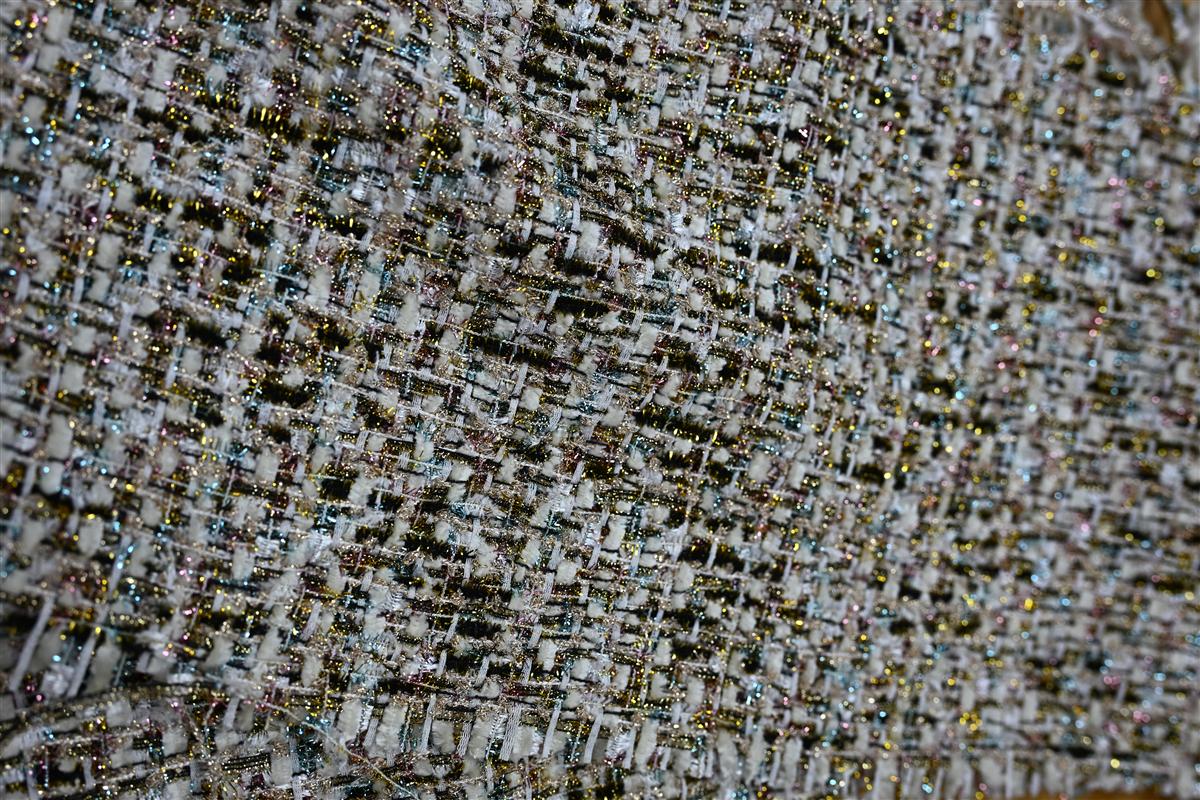
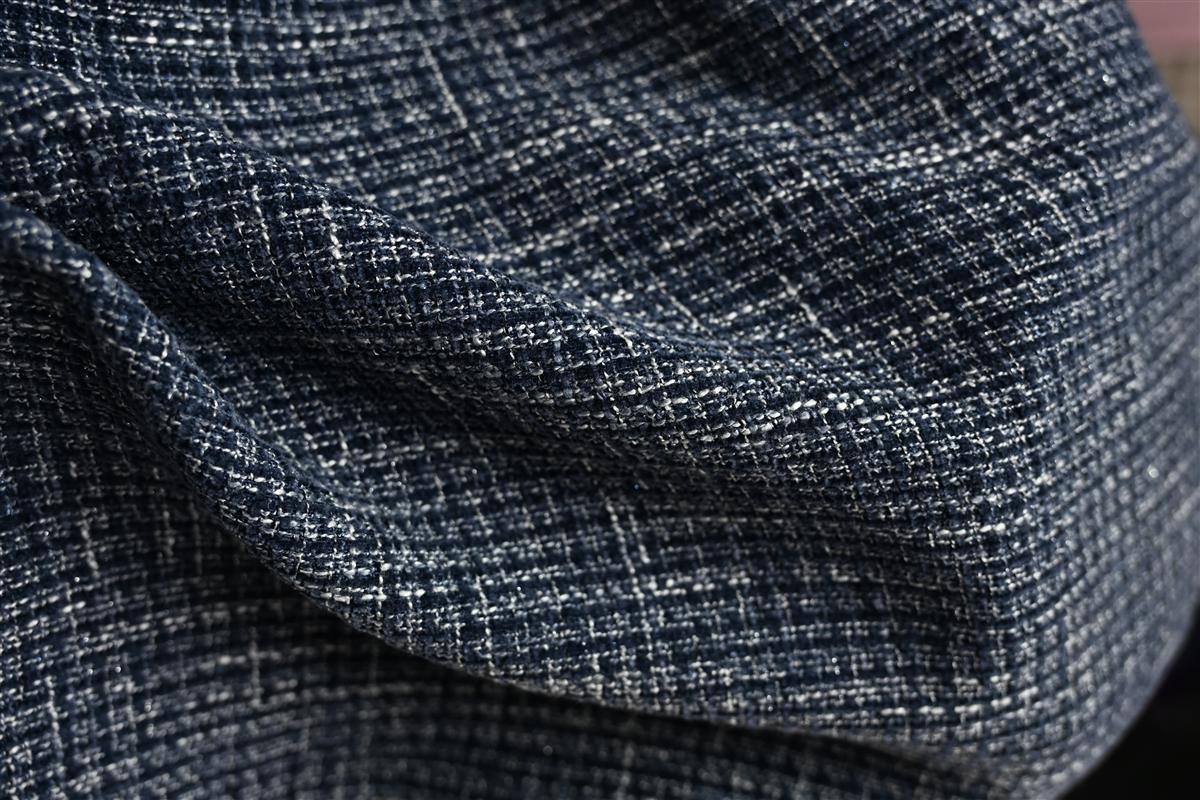
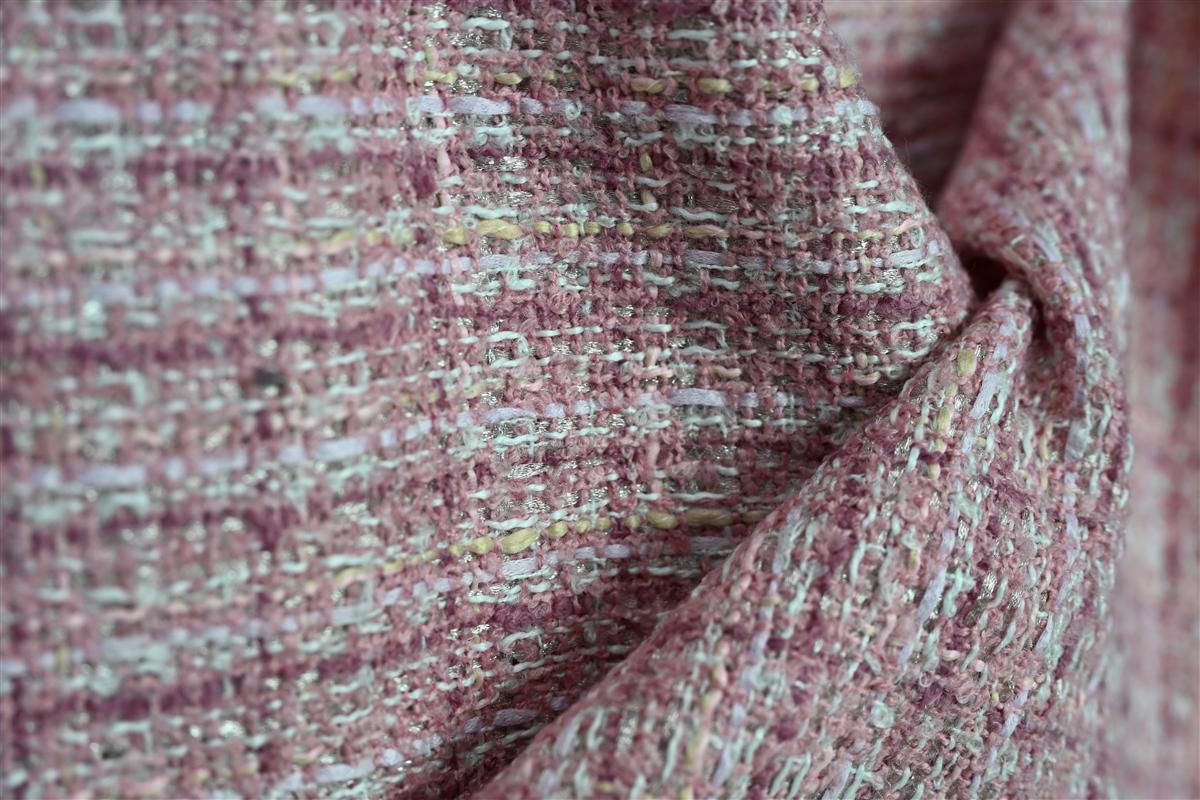
Weaving density reveals more about quality than any photo. Professional Chinese tweed mills run 40–60 ends per centimeter. Imitation tweed — the kind priced at $2.50–4/m — is typically woven at 30 ends/cm or lower. That 10-end gap doesn’t sound dramatic until the fabric hits water. Low-density tweed puckers at the seams and shrinks 2–3% in width after the first wash cycle. Your blazer panels stop aligning. Ask the supplier directly: “What is your ends-per-centimeter for this fabric?” If they hesitate or can’t answer, that’s your signal to walk.
- Ends/cm: Demand 40–60 ends/cm. Anything below 35 ends/cm will lose dimensional stability after washing — a 150cm width can shrink to 145cm.
- Fiber certificate: Request a mill-issued document showing exact fiber percentage by weight. Chinese mills labeling fabric as “wool” without disclosing a 30% polyester blend is the most common sourcing deception in this category.
- GSM target: 300–400 grams per linear meter is the authentic tweed weight window. Below 300 GSM, the fabric lacks jacket-worthy structure. Above 400 GSM, it drifts into coat territory.
- Width: Standard commercial width is 150cm. Narrower rolls (under 145cm) signal older looms or inconsistent tension control — both of which increase your cutting waste.
Target weight determines how the finished garment hangs. At 350 GSM on a 150cm width, a 70/30 wool-polyester tweed cuts clean, drapes with authority, and holds its shape through repeated wear. That’s the production benchmark used in verified SKUs shipping from professional Chinese mills. Push for a fabric swatch at exactly the GSM you intend to order — not a lighter sample that feels deceptively soft in your hand but collapses once scaled to a full jacket.
Price brackets map directly to fiber content when you know the right questions to ask. A 70% wool tweed from a verified mill in China runs $6–9/m FOB. India’s handwoven equivalent costs $8–12/m with a higher MOQ. Italy starts at $18/m and climbs past $30/m for designer-grade. The $2.50–4/m “tweed” flooding some platforms is nearly always 100% polyester — it won’t breathe, drape, or age like wool. If your budget falls in the $6–9/m band, pair your price inquiry with the fiber certificate demand. The supplier who sends both without deflection is the one to shortlist.
Sampling Timeline and Process
Slow sampling almost always predicts late bulk delivery — the two run on the same production line.
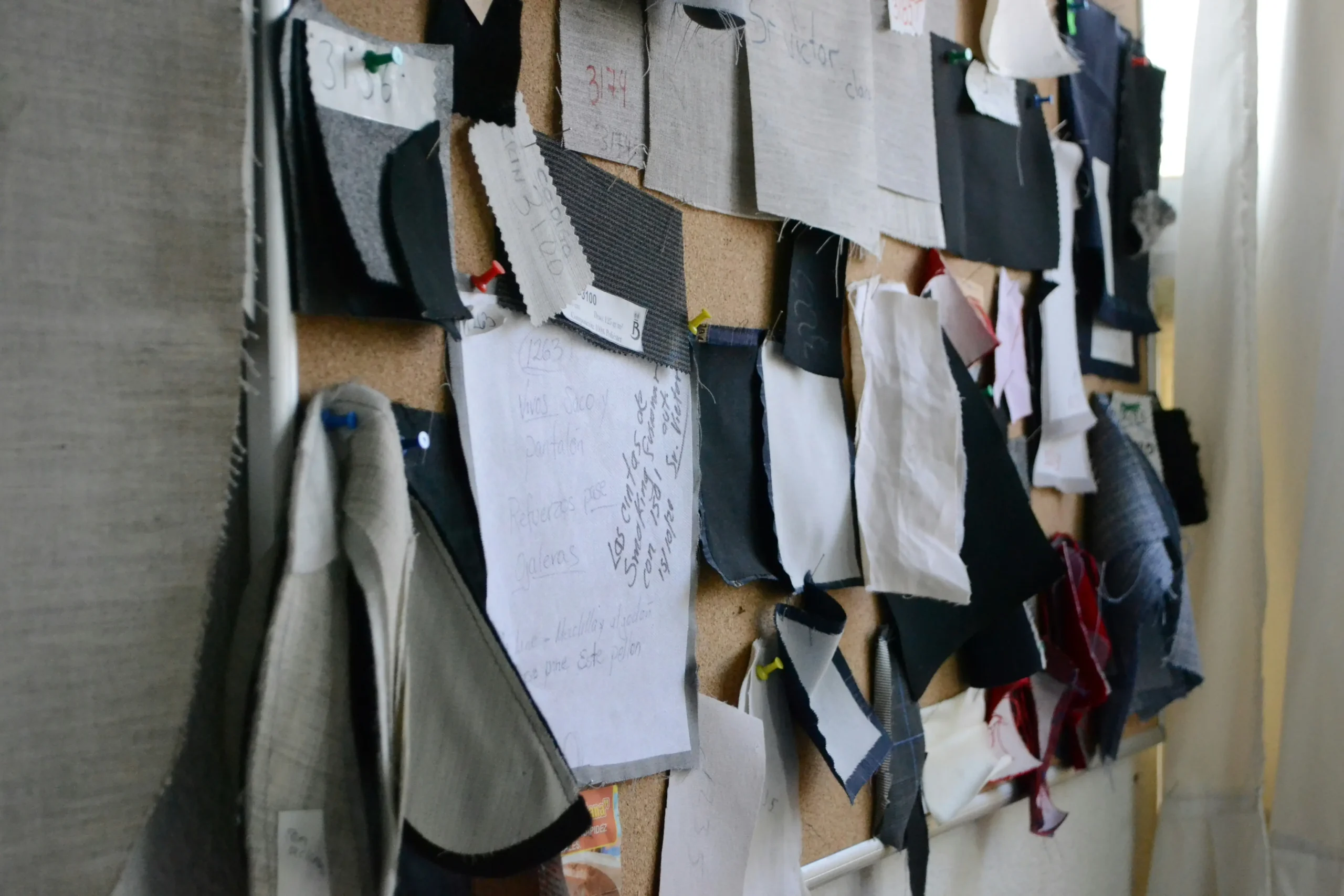
A legitimate mill can turn a 1-meter strike-off on actual base cloth in 7 to 10 days. This is not a rushed timeline — it is the standard cadence for a factory that runs its own dyeing and weaving under one roof. When a supplier quotes you 21 days or more, you are almost certainly talking to a trading company that is forwarding your request to a third-party mill, adding a layer of communication lag at every step.
The pre-production sample (PPS) comes next. After you approve the color on the strike-off, the factory produces a full-width PPS using the exact yarns and finishing intended for bulk. Industry standard turnaround: 10 to 14 days from color sign-off. This step is not optional. The PPS is your binding reference for hand-feel, weight, and color — if you skip it and approve from a tiny swatch, you own the mismatch when 1,000 meters arrive looking and feeling different.
The 21-day red flag is not arbitrary. A slow sample means one of three things: the supplier does not control its own production line, the mill is overloaded and deprioritizing small buyers, or the communication chain is broken by middleware. Any of these will bite you on bulk lead time. A mill that needs 3 weeks for a meter of sample fabric will routinely stretch bulk delivery to 55–70 days — enough to miss an entire selling season.
- Strike-off (1m swatch): 7–10 days from request. Tests color, basic weave structure, and yarn composition on actual base cloth. Not a lab-dip on generic substrate.
- Pre-Production Sample: 10–14 days after color approval. Full-width, full-finish reference sample that locks in your bulk quality standard. If the supplier cannot produce this, do not place a bulk order.
- Red Flag Threshold: 21+ days for any sample stage indicates a trading company or an overloaded mill. Expect bulk lead time of 55–70 days minimum. Compare against your collection calendar before committing.
Customization and Color Matching
Poor color matching costs more than the dye fee — it kills your entire production timeline.
Custom color development separates a real textile mill from a trading company that only pushes stock inventory. When you send a Pantone code to a supplier, the response you get reveals everything about their technical capability. A professional mill immediately references their spectrophotometer readings and gives you a Delta-E tolerance number. A middleman just says “yes, we can match it” and hopes the dye house figures it out later.
The industry benchmark for commercial color matching is ΔE<2.0. This means the color difference between your approved lab dip and the bulk production fabric is imperceptible to the human eye under standard lighting. Mills that don’t measure color this way are guessing. You’ll discover the mismatch when your jacket fronts and sleeves sit side-by-side under retail lighting — and by then, the fabric is already cut.
- Pantone to yarn: Digital color matching requires a spectrophotometer calibrated to D65 lighting conditions. The mill reads your Pantone code, then calculates the exact dye recipe — down to 0.01g precision per liter of dye bath — to hit the target shade on a specific fiber blend. Wool absorbs dye differently than polyester; a recipe that works on 100% wool fails on a 70/30 wool-poly blend.
- RIP software role: Raster Image Processor software isn’t just for digital printing. In yarn-dyed fabric production, RIP software translates color data into weaving pattern files that control exactly which dyed yarns appear on the fabric face. Without RIP calibration, a navy and black melange can read as muddy grey, destroying the multi-tonal effect you specified.
- Lab dip vs. bulk reality: A lab dip on a 10g yarn sample is not the same as dyeing 200kg of yarn in a production vat. Heat distribution, liquor ratio, and cooling rates all shift the final color. Mills that maintain ΔE<2.0 from lab to bulk do so by running small-batch dyeing (50-80kg per vat) rather than giant 500kg batches where color drift is unavoidable.
- Hidden cost: Expect to pay $50–120 for professional color matching per shade. This covers the spectrophotometer reading, multiple lab dip iterations, and the dye recipe file. Suppliers who offer free color matching are either burying the cost in inflated fabric pricing or skipping the calibration step entirely — you’ll pay later in rejected production.
Ask your supplier directly: “What spectrophotometer model do you use, and what is your guaranteed Delta-E tolerance for bulk production?” The correct answer includes a specific number under 2.0 and a device name — X-Rite, Datacolor, or Konica Minolta. If the response is vague or the rep doesn’t understand the question, you’re not speaking to a mill with in-house dyeing capability. You’re talking to a broker who outsources to the cheapest dye house available that week.
Payment Terms and Hidden Costs
Your quoted price is never the final price.
Standard payment terms from Wenzhou tweed mills are 30% deposit to confirm the order and 70% balance cleared before the container ships. If you are a first-time buyer, insist on Alibaba Trade Assurance or an irrevocable Letter of Credit (L/C) at sight. Both add a 2-3% cost, but they lock the funds until shipping documents prove the goods exist and match the contract. A mill that refuses both — yet asks for 50% upfront — is a red flag.
The real budget killer is not the meter price. It’s the line items that appear on the final invoice without ever being discussed. You will see numbers jump $400–800 on a small order if you don’t negotiate these upfront.
- Color matching lab dip: $50–120 per shade. One strike-off per color is industry practice. If you approve 4 colors, that’s $200–480 before you order a single meter.
- Sample courier shipping: Express shipping of lab dips and handfeel samples runs $35–90 per shipment. Most mills quote FOB without this; clarify who pays for sample freight.
- Carton labeling & barcodes: Destination-specific labels: $0.20 per roll with a 50-roll minimum. That’s $10, but some trading companies bundle it as a $30-50 ‘handling fee.’ Ask for the raw label supplier cost.
- Third-party inspection (SGS/BV/Intertek): AQL 2.5 random inspection: $300–600 per production lot. If the supplier won’t accept an inspector you hire, you are buying blind. Genuine mills welcome this.
The single most protective phrase you can use: ‘Send me the all-in FOB quotation with line items for lab dips, sample freight, labeling, and third-party inspection.’ If you get a one-line number back with no breakdown, the person you’re talking to is likely a broker padding the price to cover their own supplier’s hidden charges. A real mill can separate the material cost from the service fees in under five minutes.
| Item | Description | Cost Impact | Negotiation Advice | Fursone Transparency |
|---|---|---|---|---|
| Color Matching Fee | Charge for custom Pantone dye calibration per shade | $50–120 per color | Request waiver for order ≥500m; verify ΔE<2.0 tolerance | Included in sampling if bulk order confirmed |
| Sample Shipping | Express courier for lab dips, strike-offs, and pre-production samples | Often $30–80 per shipment | Ask for consolidated shipping or prepaid return label | Free sample swatches; DHL/UPS at cost, no markup |
| Carton Labeling | Custom barcode, care content, or branding labels per roll/carton | $0.20/roll (approx. $20–40 per 1000m) | Clarify if included in FOB quote; confirm label spec upfront | Standard labeling free; custom labels quoted line-item |
| Third-Party Inspection | Independent QC (AQL 2.5/4.0) by SGS, Bureau Veritas, or similar | $300–600 per inspection day | Share inspection cost if ordering <1000m; mandate report before shipment release | Welcome 3rd-party inspection; provide in-house QC dashboard |
| Payment Terms (Standard) | 33% deposit, 67% before shipment via T/T; L/C or Trade Assurance for first orders | Cash flow: deposit due at order, balance before departure | Request 30/70 T/T or Alibaba Trade Assurance for buyer protection | 30% deposit, 70% before shipment; Trade Assurance & L/C accepted |
Quality Control and Certifications
QC protocol separates mills that stand behind fabric from traders who ship and hope.
Verbal promises about quality mean nothing once your wire transfer clears. A legitimate mill runs an internal QC dashboard tracking defect rates by batch, color lot, and roll number. Ask to see last month’s numbers. If the supplier hesitates, you are talking to a trading company that never steps onto the production floor. Professional tweed mills in China target a defect rate under 1.5% — and they document it.
- AQL 2.5 inspection: Accepts up to 2.5% major defects in a random sample. This is the minimum threshold for commercial apparel fabric. On a 1000m order, AQL 2.5 means you could receive up to 25m with visible flaws — snags, broken yarns, barre marks — and the lot still passes. Demand this as the floor, not the ceiling.
- AQL 4.0 inspection: Permits up to 4% major defects. Acceptable only for lining fabrics or interiors where surface appearance is secondary. Never accept AQL 4.0 for face-side tweed that will sit on a retail rack under bright lighting.
- 100% visual check: Every meter is inspected. Adds roughly $0.15–0.30 per meter to your cost but catches defects sampling misses — repeating faults from a damaged heddle, uneven slub distribution, or width variation exceeding 2cm. Worth it for orders under 500m where one bad roll sinks a small production run.
- Weave density verification: Real tweed mills run 40–60 ends per centimeter. Budget operations push 30 ends/cm to speed production, resulting in fabric that puckers at the seam and shrinks 2–3% in width after the first steam press. Ask for a thread count photo under a pick glass — it takes 30 seconds and exposes the difference instantly.
- Professional mill benchmark: Defect rate consistently below 1.5% of total output. These mills track defects per 1000m, categorize by type (yarn fault, weaving fault, finishing fault), and can show you trend data spanning 6–12 months.
- Budget mill reality: Defect rates climb to 4–5%. At 5%, a 1000m custom tweed order contains 50 meters of unusable fabric. At $7.50/m FOB, that is $375 in material loss — before you factor in the garment cutting labor wasted on fabric you should have rejected at the source.
- The cascading cost: Those 50 defective meters do not just disappear. They either get cut and sewn into garments that fail final inspection, triggering chargebacks from your buyer, or they get discarded after you have already paid shipping and duty on dead weight. On a 1000m order shipped to Los Angeles, the total sunk cost of a 5% defect rate often exceeds $600.
- Third-party inspection: SGS, Bureau Veritas, or AsiaInspection will conduct AQL sampling at the factory gate for $300–600. This is not optional on first orders with a new supplier. The report includes on-site photos of the actual rolls, width measurements, weight verification, and defect classification. If a supplier refuses third-party inspection, walk away immediately.
Certifications matter, but only for what they actually test. OEKO-TEX Standard 100 certifies chemical safety — no AZO dyes, no formaldehyde above regulated thresholds. It does not verify fiber content, weave consistency, or color fastness. GOTS certification confirms organic fiber content and responsible processing, but a GOTS label on tweed containing 30% conventional polyester is fraudulent. ISO 9001 means the mill follows documented processes. It says nothing about whether those processes produce fabric you would actually pay for. Ask for the cert number and verify it on the issuing body’s public database. Faded photocopies of certificates appear in WeChat negotations constantly.
The supplier who ships you a QC dashboard before you ask for it is the supplier who has nothing to hide. The dashboard should list the batch number, total meters produced, meters rejected, defect categories, and corrective actions taken. Photographs of rejected fabric with a ruler showing the defect location are standard practice at mills running ISO 9001 documentation. If your supplier’s idea of quality control is a single WeChat message saying ‘all fabric good quality no problem,’ treat that as a liability, not reassurance.
Lead Times and Delivery Reliability
Your 30-day clock starts at PPS approval, not at payment.
For custom-woven tweed or knits — where yarn is dyed to your spec and the weave setup is unique — standard bulk delivery runs 30 to 45 days after you approve the pre-production sample (PPS). That ‘after PPS’ part is where most first-time buyers miscalculate. If you take 10 days to review the lab dip and strike-off, and another 10 days to sign off the PPS, your actual door-to-door is closer to 60 days. Build that buffer into your production calendar from day one.
Reorder speed is where a mill’s inventory depth becomes visible. When a supplier holds greige stock or finished fabric in their warehouse, reorder delivery drops to 20 to 25 days. This assumes no color changes and no construction modifications. If you’re running a repeat of a proven SKU — same dye formula, same weave — there’s no reason a mill with organized stock can’t hit three weeks. Ask your supplier directly: ‘Do you hold greige for this quality, or are we starting from zero every time?’ The answer separates real mills from order aggregators.
- Weeks 1–2: Yarn Sourcing & Dyeing: If the mill stocks the required yarn count and fiber blend, this phase moves fast. Custom dye matching adds 3 to 5 days inside this window. Mills buying yarn on the spot market (rather than holding inventory) routinely slip here by a week or more.
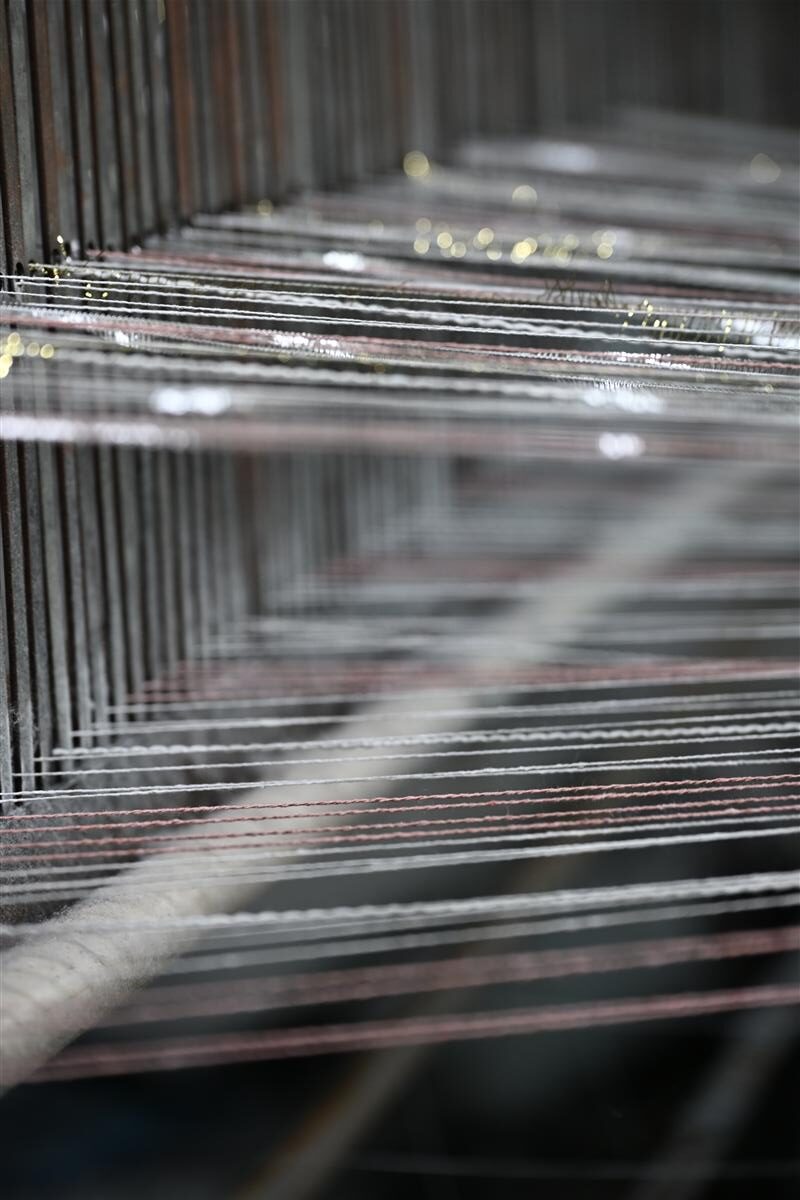
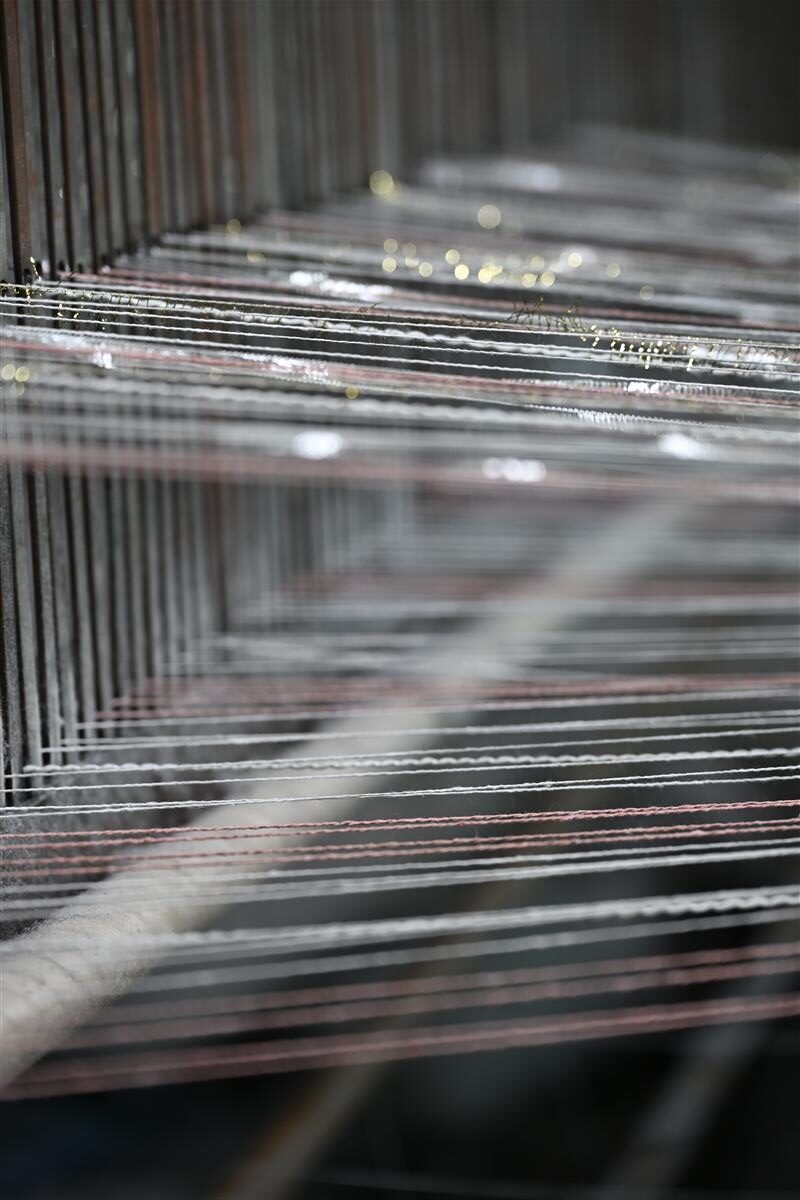
- Weeks 2–4: Weaving/Knitting: The actual loom or knitting machine time. For 1000m of tweed at 40–60 ends/cm, this is a 5 to 7 day run on standard rapier looms. Delays in this phase usually trace back to the previous order overrunning, not your fabric — ask the mill to confirm their machine schedule by week.
- Week 5: Finishing & Inspection: Brushing, steaming, width setting, and final visual QC. A proper mill runs AQL 2.5 sampling before packing. Budget operations skip this step entirely and rely on end-of-line checks, which is how defect rates climb past 5% without anyone flagging it.
- Week 6: Packing & Loading: Carton labeling, barcoding if required, and container loading. If 3rd-party inspection (SGS or Bureau Veritas) is scheduled, insert 2 to 3 extra working days here. Book the inspection slot before the fabric leaves the loom, not after.
The on-time delivery rate target is 95% or higher across a rolling 12-month window. Anything below 90% means you’re gambling with your launch date on every order. A 95% rate sounds safe, but it actually means 1 in 20 shipments misses the committed window. Ask the supplier to define ‘on time’ precisely — is it ex-factory date, vessel departure, or arrival at destination port? Without that definition, the number is marketing fluff. A serious mill quotes ex-factory or FOB loading date, because those are the gates they control.
The fastest path available through this mill isn’t custom at all. In-stock tweed and knit fabrics — held at 100m minimum, shipping in 3 to 7 days — bypass every stage above. For a designer who needs 200m for a capsule collection and can’t afford a six-week wait, stock-lot purchasing shaves a month off the timeline. The trade-off is color range: you choose from what’s on the shelf, not what’s in your Pantone book. For many emerging brands, that trade is well worth making.
Red Flags: Middleman vs. Real Mill
A broker adds 10–25% to your fabric cost without adding a single thread of quality.
Plenty of suppliers on Alibaba and trade platforms list themselves as ‘manufacturers’ but have never set foot on a factory floor. They operate from offices in Guangzhou or Yiwu, forwarding your requirements to real mills and pocketing the difference. The problem is not just the price markup. A broker cannot answer technical questions about weaving density, cannot guarantee dye lot consistency, and cannot expedite your order when deadlines tighten.
- Vague or recycled photos: Reverse image search their product photos. If the same image appears on five other Alibaba listings, you are dealing with a trader pulling from a shared catalog. Real mills photograph their own production, often with inconsistent lighting and visible factory background.
- No factory video tour: A mill that refuses a live WeChat video walkthrough is hiding something. Ask them to show the looms running, the yarn storage area, and the QC inspection table. Traders will stall, make excuses, or send a pre-recorded clip from a mill they visited once.
- Missing or mismatched certificates: Request OEKO-TEX Standard 100, ISO 9001, or GOTS certificates where the company name matches the supplier’s business license. Traders often show certificates belonging to the mills they source from—not their own operation.
- Third-party QC refusal: If a supplier rejects an AQL 2.5/4.0 inspection by SGS or Bureau Veritas at their cost or yours, walk away. Real mills accept third-party QC as standard practice. Traders fear it because they have zero control over what leaves the mill.
Real mills live on the factory floor and document it daily. Check their social media—WeChat Moments, Douyin, or Instagram—for consistent production footage. A feed showing yarn arriving, looms operating, and rolls being packed signals a working facility. Some mills now print QR codes on cartons linking to batch production data. If the supplier cannot produce original factory-floor content, you are paying a broker.
The broker premium runs 10–25% above mill-direct pricing. On a 1000m order of 70% wool tweed at $7.50/m FOB, that is $375 to $938 in pure intermediary cost. Brokers also cannot guarantee technical specs. Ask a trader what ends/cm their tweed uses and you will get silence. A real mill answers immediately: 40–60 ends/cm. Below 30 ends/cm, the fabric will pucker and shrink 2–3% in width after washing.
Conclusion
Getting a reliable tweed supplier means asking about more than price. The real test is whether the mill backs up their claims—fiber content by weight, a maximum defect rate, and a Delta-E color tolerance under 2.0. Most fabric labeled “wool” hides 30% polyester in the fine print. Real mills in China weave at 40–60 ends/cm to prevent that 2–3% width shrinkage after washing.
Cross-check your next supplier against this checklist before committing to a purchase order. The right questions expose middlemen before they expose your collection to deadline risk and unexpected cost.
Frequently Asked Questions
Do you offer customization?
Yes, full customization on tweed fabrics is offered with a 1000-meter minimum order. You can develop exclusive textures, colors, and yarn blends through the in-house R&D team. Share your vision and a physical swatch will be delivered within 7
Can I mix and match colors to hit MOQ?
Yes, most manufacturers allow you to combine multiple colors to reach the total MOQ, so you aren’t locked into a single shade. Usually there is a per-color minimum, such as 200 meters. Confirm the exact per-color MOQ before finalizing your color palette.
What is the 3-3-3 rule for clothes?
The 3-3-3 rule is a sustainable fashion guideline: a garment should be worn at least 3 times, styled 3 different ways, and kept for 3 years to justify its environmental impact. Use this rule as a filter when sourcing durable, versatile fabrics.
Is Ralph Lauren made in China?
Yes, Ralph Lauren produces certain garments and accessories in China, along with other manufacturing locations such as Italy and the USA. Each item’s label specifies the country of origin. Check the label — origin varies by collection and season.
How to tell if tweed is authentic?
Authentic tweed has a dense, felted texture with visible slubs and is typically a wool-rich blend of 60-80% wool. It should weigh between 300 and 400 grams per linear meter. Request a fiber composition certificate and test the fabric’s drape and weight.
Authoritative References

Related Insights
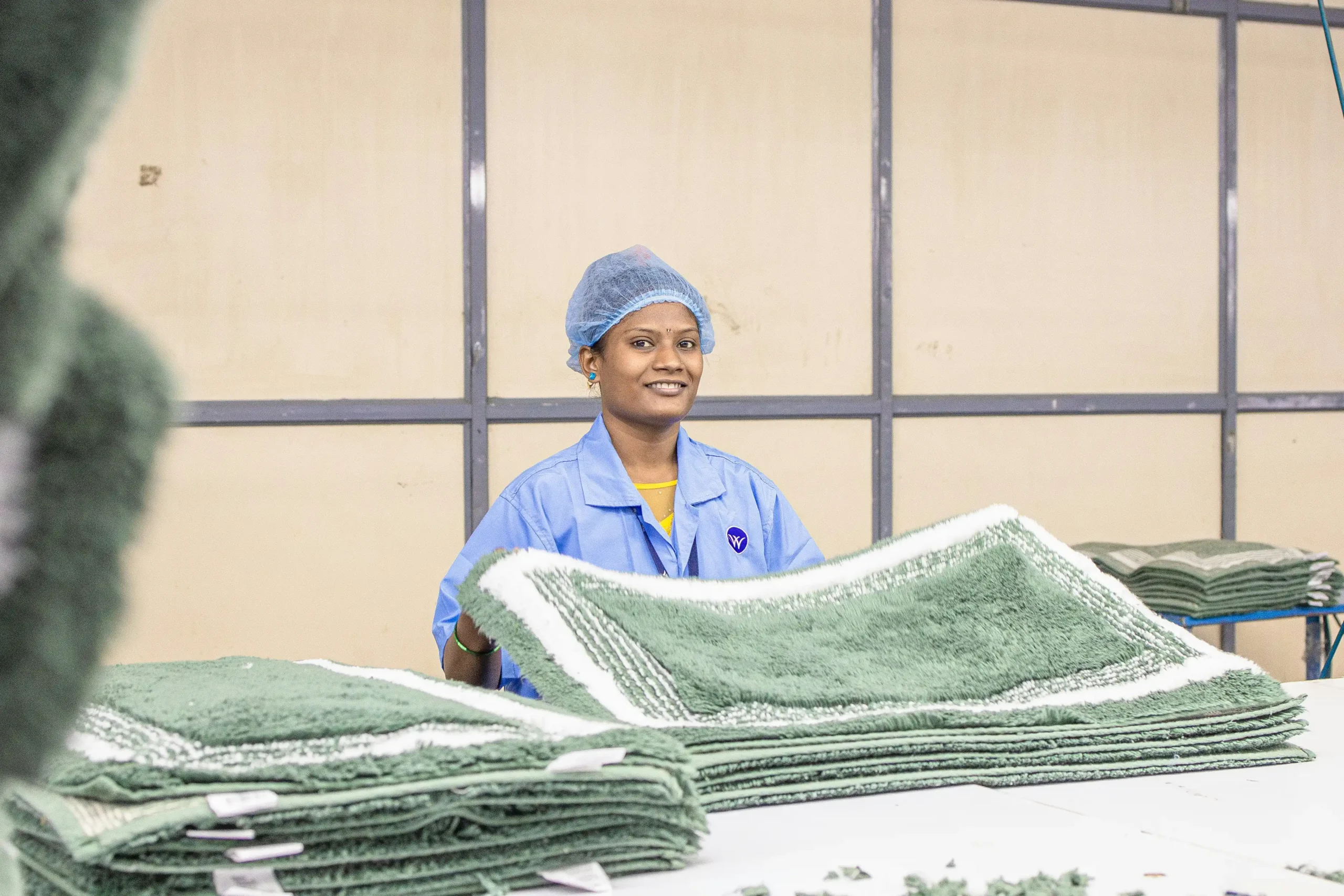
Factory Audit Checklist for Knit Fabric Suppliers: 15 Points
Fabric Factory Audit Checklist: 15 Points for Knit Suppliers Before you commit to a bulk...
RFQ Template for Tweed and Knit Fabric: 12 Fields for Accurate Quotes
An incomplete fabric RFQ wastes everyone’s time. The mill quotes based on assumptions, the buyer...
How to Evaluate a Tweed Mill for Quality Fabric
, “datePublished”: “2026-07-23T21:52:11-08:00”, “dateModified”: “2026-07-25T02:10:59-08:00”, “publisher”: { “@type”: “Organization”, “name”: “Fursone”, “logo”: { “@type”: “ImageObject”,...