Before you commit to a bulk fabric order from a new supplier, you need to know what you are actually buying into. A factory audit is not just a compliance checkbox. It is the single most effective tool for predicting whether a supplier will deliver on time, at the right quality, and at the quoted price. Yet most fabric buyers either skip the audit entirely or conduct one so superficial that it catches nothing.
This checklist covers 15 audit points organized across four categories: production capability, quality systems, compliance, and commercial reliability. Each point includes what to look for and what a red flag looks like. Use it during your next supplier visit or virtual walkthrough.
Category 1: Production Capability (Points 1-5)
1. Loom count and utilization rate
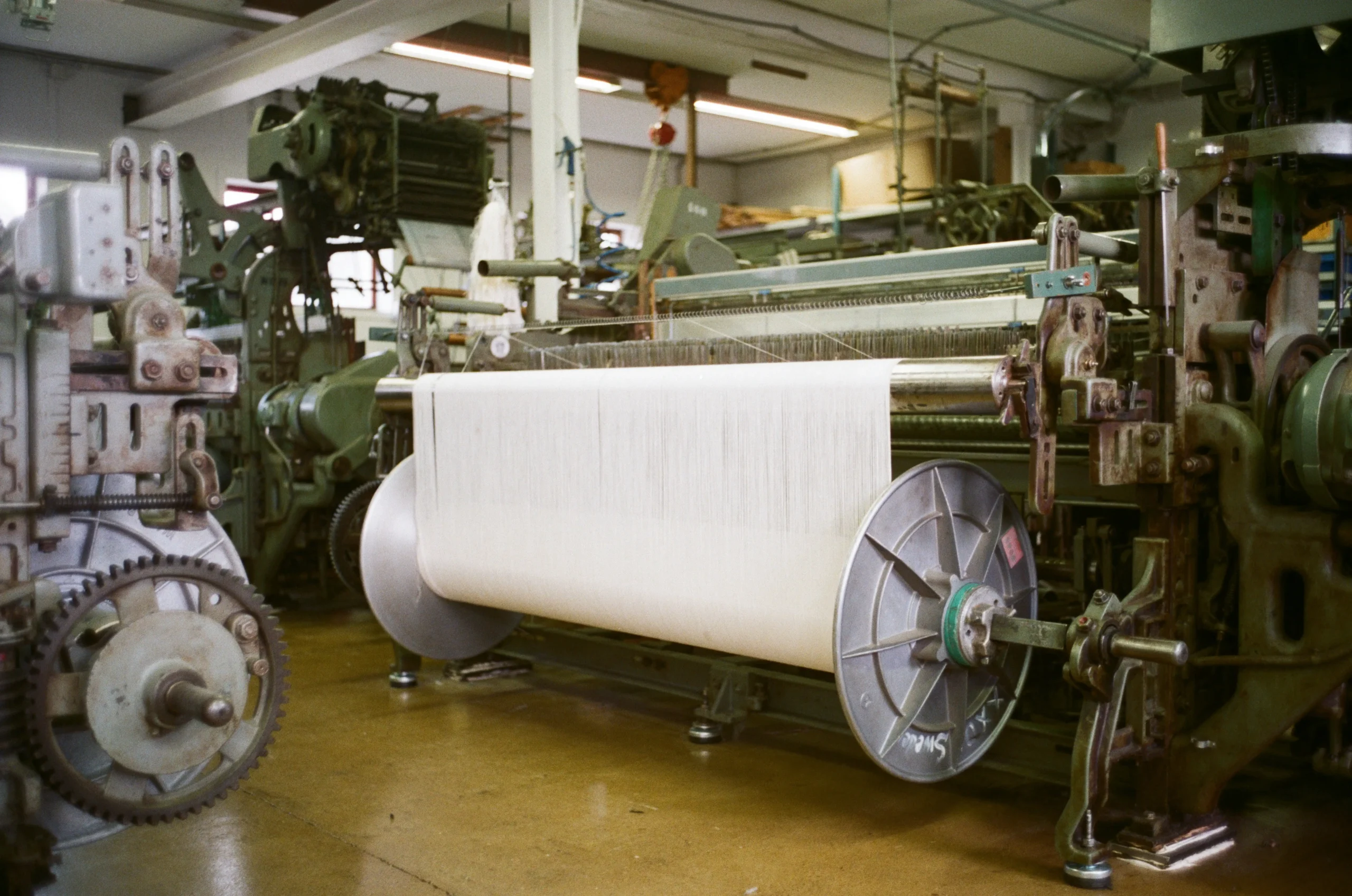
Ask how many looms the factory operates and what percentage are currently running. A mill with 300 looms running at 85% utilization has real capacity for your order. A mill with 300 looms at 40% utilization may have cash flow problems or quality issues driving customers away. At Fursone, we operate 300+ looms with typical utilization of 80-90%.
2. Loom type and age
Modern rapier and air-jet looms produce fabric at higher speed with better consistency than older shuttle looms. Ask for the make, model, and year of the primary loom fleet. Factories that invested in equipment within the last 5-8 years typically have better tension control and fewer fabric defects.
3. Vertical integration level
Does the mill own its dye house? Its yarn spinning facility? Its finishing range? Each outsourced step adds a hand-off point where quality can drift and lead times can slip. A vertically integrated mill (yarn to finished fabric) controls the full chain. At minimum, confirm that dyeing and finishing are done in-house or at a dedicated partner facility. Fursone’s custom manufacturing service runs yarn dyeing, weaving, and finishing on one site, so the audit trail stays inside a single facility.
4. Monthly production capacity
Ask for output in meters per month for the specific fabric type you need. A 300-loom tweed mill typically produces 150,000-250,000 meters per month depending on fabric weight and complexity. If a factory claims 500,000 meters from 100 looms, the numbers do not add up.
5. Workforce size and skill structure
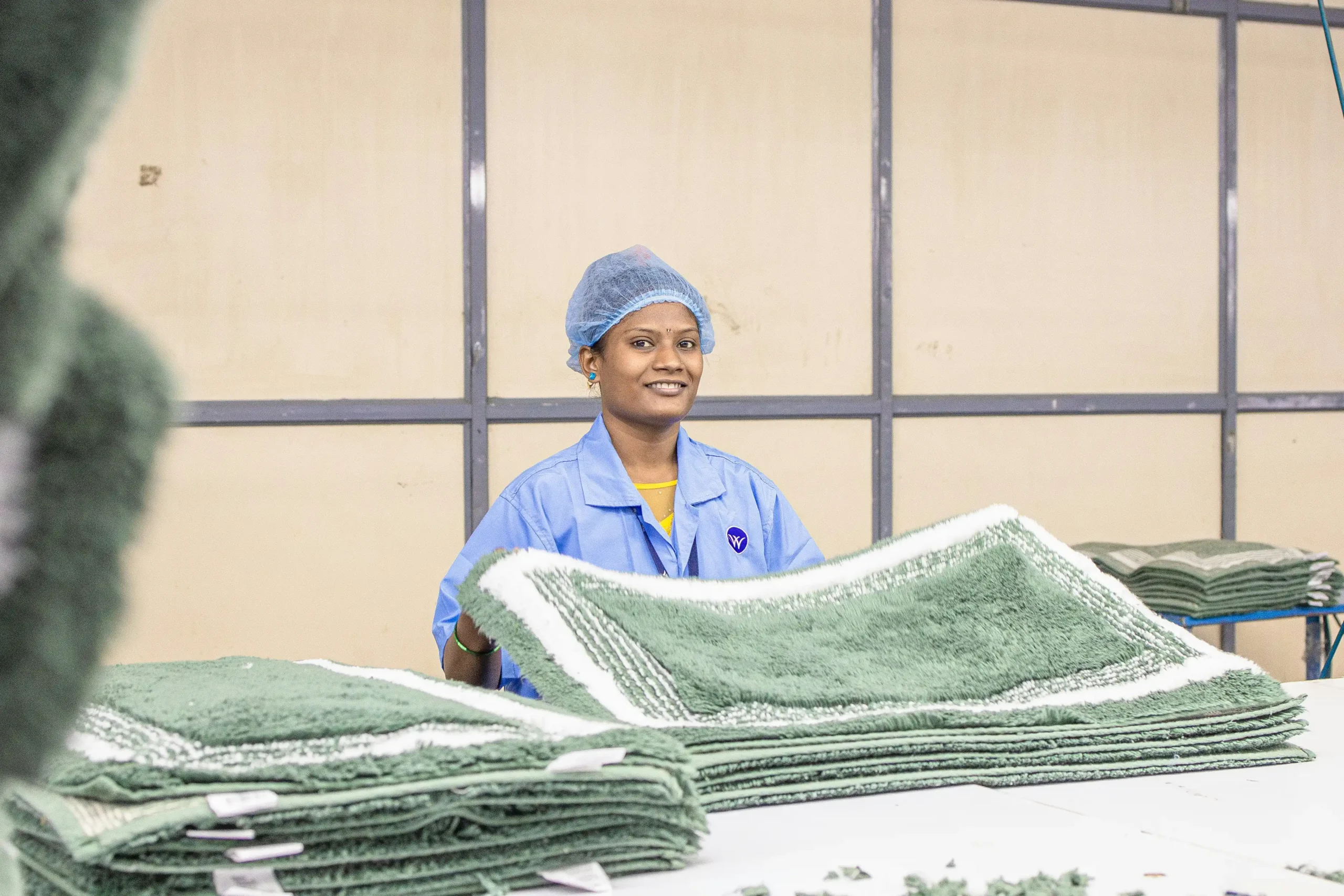
How many weavers, technicians, and QC staff are on the floor? A typical 300-loom operation needs 80-120 weavers plus 15-20 QC inspectors. If the factory shows you a clean showroom but the production floor is understaffed, the real capacity is lower than claimed.
Category 2: Quality Systems (Points 6-9)
6. In-line inspection protocol
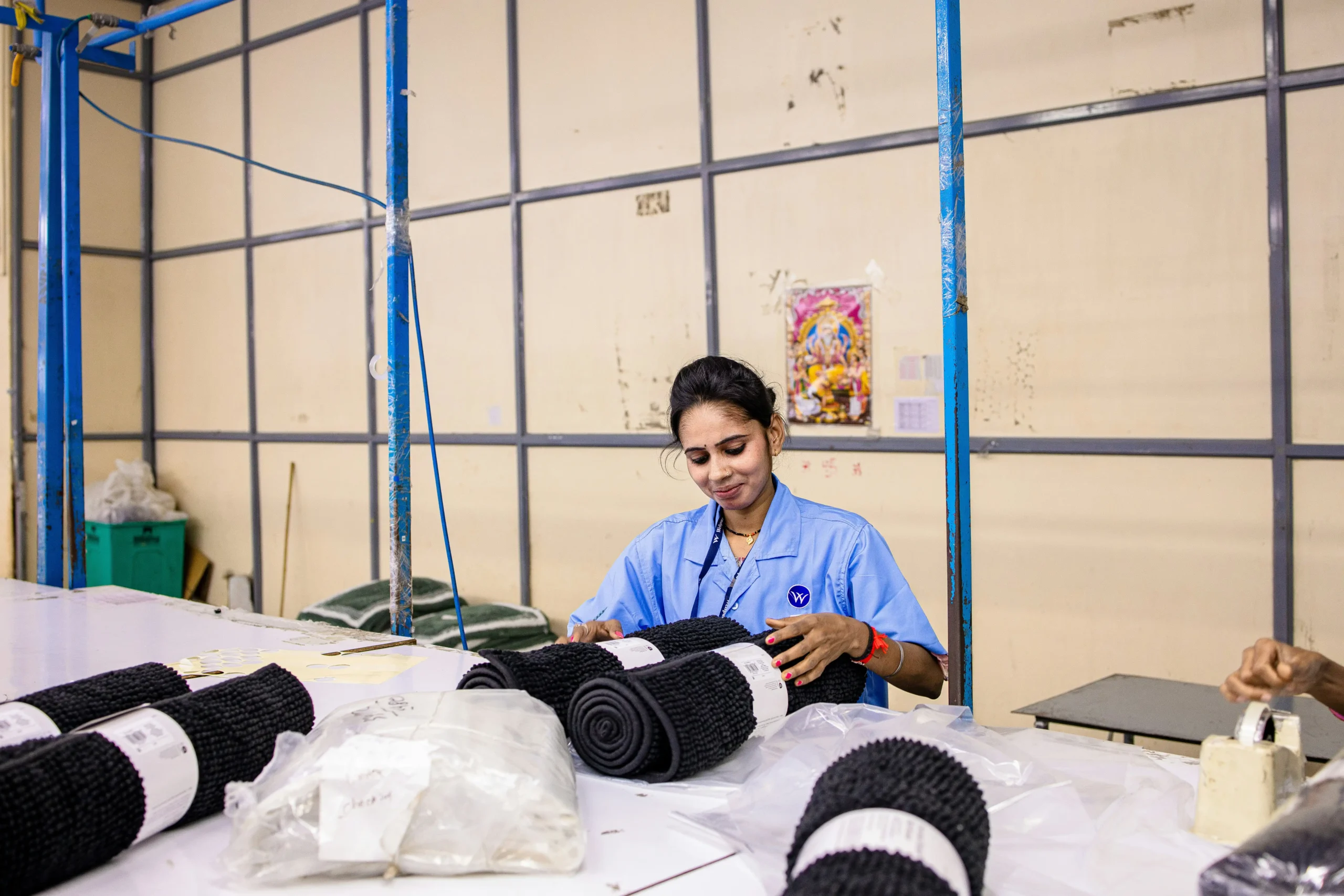
Ask to see the in-line inspection records from the last production run. A proper system checks fabric every 50-100 meters on the loom, recording defects by type (broken end, missing pick, oil stain, etc.) on a defect map. Factories without in-line inspection ship seconds and call them firsts.
7. Lab testing capability
Does the factory have an on-site lab for basic tests (GSM, shrinkage, color fastness, pilling)? Or do they send every sample to a third-party lab? On-site labs can run tests in hours; third-party labs take 3-7 days. A factory that tests in-house catches problems before shipping. At Fursone, our lab runs crocking (ISO 105-X12), pilling (ISO 12945-2), and shrinkage tests on every production lot.
8. Defect rate and tolerance
Ask for the factory’s average defect rate (measured in defects per 100 meters or the 4-point system). A well-run mill targets below 3 defects per 100 meters on the 4-point system. If the factory cannot quote a defect rate, they are not measuring it, which means they are not controlling it.
9. Sample approval process
How does the factory handle lab dip and quality sample approvals? Is there a documented process with sign-off stages? Or does approval happen by WhatsApp message with no paper trail? A structured sampling process (see our RFQ template) correlates strongly with consistent bulk quality.
Category 3: Compliance (Points 10-12)
10. Environmental compliance
Does the factory hold a valid wastewater discharge permit? In China, textile dye houses must comply with GB 4287 (Discharge Standard of Water Pollutants for Dyeing and Finishing of Textile Industry). Ask to see the permit and the most recent monitoring report. Factories without proper discharge permits risk shutdown by environmental inspectors, directly threatening your delivery timeline.
11. Social compliance
Has the factory been audited under BSCI, Sedex/SMETA, or a brand-specific code of conduct? Request the most recent audit report. Key items: working hours compliance, fire safety exits, chemical storage protocols, and age verification for workers. A factory that cannot produce a social audit report from the last 12 months is not ready for brand-level supply chains.
12. Certifications
Verify all claimed certifications independently. Oeko-Tex Standard 100, GRS, GOTS, RWS. Each has a public certificate database. Ask for the certificate number and check it on the OEKO-TEX website or the GOTS database. Expired or fabricated certificates are more common than buyers expect.
Category 4: Commercial Reliability (Points 13-15)
13. On-time delivery record
Ask for on-time delivery percentage over the last 12 months. A reliable mill targets 90%+ on-time delivery. Below 80% indicates systemic production planning problems. Request specific examples of late orders and the root cause. This reveals whether the factory learns from failures or repeats them.
14. Reference customers
Ask for 3-5 current customer references, ideally brands in your market segment. Contact them. Ask about quality consistency, communication responsiveness, and how the factory handles claims. A factory that cannot provide references, or provides only domestic customers with no export experience, is a higher-risk partner.
15. Financial stability indicators
How long has the factory been in operation? Fursone has operated since 1995. Longevity in textile manufacturing is a strong signal of financial stability. Also check: are they investing in new equipment? Expanding their facility? Factories that are investing in growth are typically financially healthy. Factories deferring maintenance and cutting staff are not.
How to Conduct a Virtual Audit Effectively
Not every supplier evaluation requires a physical visit. A well-structured virtual audit can cover 60-70% of the checklist effectively, particularly the document review and compliance verification points. Here is how to maximize a virtual audit:
- Request live video tours, not pre-recorded videos. Ask the factory to walk the production floor in real time via WeChat Video or Zoom. Direct the walkthrough: ask to see specific loom models, the in-line inspection station, the lab equipment, and the warehouse. Pre-recorded videos can be staged; live tours reveal the actual working conditions.
- Verify certifications in real time. During the video call, ask the factory to produce their original certificates. Read the certificate number aloud and check it against the OEKO-TEX database or the GOTS public database while they watch. This eliminates the possibility of fabricated documents.
- Request production records from the last 30 days. In-line inspection logs, dye batch records, shipping schedules. These documents reveal actual operational patterns better than any tour. A factory that cannot produce these records within 24 hours of your request has documentation gaps.
Virtual audits work well for initial screening and annual re-qualification of established suppliers. But for new suppliers and orders above USD 50,000, plan at least one physical visit. The tactile assessment of equipment condition, fabric quality on the floor, and warehouse organization cannot be replicated through a screen.
Red Flags That Should Stop Your Order
Some audit findings are disqualifying. If you encounter any of these, walk away regardless of how competitive the price is:
- No wastewater discharge permit. In China, dye houses without a valid permit face random shutdowns by environmental inspectors. Your bulk order will be delayed or confiscated.
- Fabricated or expired certifications. If a factory claims GRS certification but cannot produce a valid Transaction Certificate, or if the certificate number does not appear in the GOTS database, they are either lying or incompetent. Neither is acceptable.
- Inability to quote their own defect rate. A factory that does not measure defects cannot control them. This is not a negotiation point. It is a fundamental management failure.
- Reluctance to provide customer references. Established mills with export experience have no reason to hide their customer list. If they refuse, assume their reference base is weak.
FAQ
How long does a proper factory audit take?
A thorough on-site audit of a textile mill takes 1-2 days. This includes a floor walkthrough, document review, interviews with production and QC managers, and a closing meeting. Virtual audits can cover documents and video tours in 4-6 hours but cannot replace physical inspection of equipment and warehouse conditions.
Should I hire a third-party audit firm?
For first-time supplier qualification, yes. SGS, Bureau Veritas, and Intertek all offer textile factory audit services. Cost is typically USD 800-1,500 per audit day. For ongoing monitoring, annual third-party audits combined with your own quarterly visits give the best coverage.
What is the most important audit point?
If you can only check one thing, check the in-line inspection records (Point 6). This single document reveals whether the factory actually controls quality on the production floor or just inspects finished goods before shipping. The difference between these two approaches is the difference between consistent quality and firefighting.
Can I audit a factory remotely?
Partially. Document review, certification verification, and video floor tours work remotely. But you cannot assess equipment condition, workforce skill, or warehouse organization through a video call. Plan at least one on-site visit before committing to a bulk order above USD 50,000.
A 15-point audit takes the guesswork out of supplier selection. If you want to see what a well-run 300-loom tweed factory looks like from the inside, read our factory walkthrough. For help preparing your sourcing documents, review our MOQ guide or start with the complete sourcing guide.

Related Insights

RFQ Template for Tweed and Knit Fabric: 12 Fields for Accurate Quotes
An incomplete fabric RFQ wastes everyone’s time. The mill quotes based on assumptions, the buyer...
How to Evaluate a Tweed Mill for Quality Fabric
, “datePublished”: “2026-07-23T21:52:11-08:00”, “dateModified”: “2026-07-25T02:10:59-08:00”, “publisher”: { “@type”: “Organization”, “name”: “Fursone”, “logo”: { “@type”: “ImageObject”,...
Direct Mill vs Wholesaler: Cut Fabric Sourcing Risk
, “datePublished”: “2026-07-22T11:36:09-08:00”, “dateModified”: “2026-07-25T02:11:02-08:00”, “publisher”: { “@type”: “Organization”, “name”: “Fursone”, “logo”: { “@type”: “ImageObject”,...