custom tweed moq cost is the first checkpoint buyers should lock before they approve a supplier, budget, or production slot. The difference between one per-meter rate and another on a custom tweed MOQ cost spreadsheet looks like basic arithmetic. Pick the lower number, protect margin, move on. A sourcing manager in Los Angeles followed that logic two years ago. He approved a pre-production swatch at FOB pricing that penciled out beautifully, signed off on sample approval, and wired a substantial deposit. The mass production run landed 60 days later with a hand-feel that missed the quality tolerance by enough that his
That per-kilogram dye surcharge is the number separating a clean order from a margin hit. At 100 meters of stock fabric, a dyehouse minimum for 80 kg of yarn tacks a small add-on onto every meter before the container leaves Wenzhou. At 1,000 meters, the same dyehouse runs 800 kg in one vat, the per-kilo cost collapses, and the per-meter price drops substantially. Mills rarely volunteer this math during early negotiations. I picked it up over twelve years on factory floors across Wenzhou, Prato, and Biella—looking at dye cards that told a different story than the order sheets.
What separates a professional sourcing decision from an amateur one is not squeezing another 80 cents off the base fabric quote. It is understanding that at 1,000 meters, a mill like Fursone absorbs the custom spinning setup fee entirely—while smaller operations bill a development fee just to spin the first trial cone. That single line item rewrites the entire ROI calculation for a collection, and most buyers never see it coming.

What You Actually Pay at 100m
At 100 meters, you’re buying stock but dyeing it your color — and that dye lot surcharge is where margins disappear.
When you place a 100m order for a Chanel-style tweed from our partner mills in Wenzhou, the base fabric price might land at a competitive mill-direct level. That gets you the stock construction — the yarn blend, the weave type, the hand feel — as it sits on the shelf. But most emerging designers don’t want off-the-shelf beige. You need a specific burgundy or a muted sage. That’s where the first cost layer hits.
- Custom dyeing at 100m: You’re not paying for a full dye lot. You’re paying a surcharge to run only 80 kg of yarn through a dyehouse that prefers 500 kg minimums. This adds a small-lot dyeing surcharge, pushing your landed cost above the base mill-direct rate.
- Finish treatments: Softening, anti-pilling, or water-repellent finishes can be applied to stock fabric, but setup costs for small runs often add a noticeable per-meter surcharge. Some mills hide this in sample fees.
- Color matching limits: With 100m, you typically get 2–3 lab dips included. Further color adjustments may cost a per-round fee. And even then, the dye lot won’t be perfectly uniform across the whole 100m because small batches are prone to minor shade variation.
The bigger issue that rarely gets discussed is texture exclusivity. If you’re picking from stock, the same bouclé construction is sitting in the swatch library for 20 other brands. You can dye it differently, but the underlying texture isn’t yours. That’s fine if you’re testing a market or filling a quick replenishment order. But if your entire collection identity hinges on a signature hand feel, 100m is a compromise, not a solution.
Then there
What You Actually Pay at 1000m
At 1000m, the math flips—custom becomes cheaper per meter than stock.
A 300m custom program is not just about getting exactly what you want. It is the point where unit economics start working for you instead of against you. The same wool-blend tweed that carries a higher per-meter rate at small ready-stock volumes becomes more economical at the 300m per colour custom minimum. That gap is not magic—it is the elimination of small-batch penalties.
Most emerging designers fixate on the total invoice and miss what drives it. At 100m, you are dyeing roughly 80 kg of yarn. At 1000m, you are dyeing 800 kg. Dyehouses charge a flat setup fee regardless of batch size. Spread that fee across 10x the volume, and the per-meter surcharge dissolves. This single line item often adds a disproportionate surcharge at low volumes.
- Yarn Spinning Setup: Smaller mills routinely charge a development fee to develop a new custom yarn. At Fursone, this setup fee does not exist at 1000m. The cost is absorbed because the mill owns the spinning line and the order volume justifies the run.
- Color Matching & Lab Dips: Three to five lab dip rounds are standard for custom development. Each round costs a meaningful per-dip fee at most dyehouses. At 1000m, these costs get folded into the program. You pay for the fabric, not the R&D overhead.
- Yarn Blend Exclusivity: You specify the fiber composition—Australian Merino, Japanese lurex, GRS-certified recycled polyester—and the mill spins to your recipe. No stock compromise. No settling for a near-match from a swatch book.
The full custom route gives you control over three variables that stock programs never offer: base yarn composition, slub or bouclé texture profile, and multi-tonal melange dye effects. A sourcing manager who has audited mills across a dozen countries knows signature collections are built here—not in a stockroom shelf.
Small mills quoting a development fee for yarn spinning are not overcharging. They are passing through real costs from third-party spinners. Fursone runs specialist spinning in-house, which removes that line item entirely at 1000m. The commercial takeaway: your 300m custom order lands at a substantial total. A 100m stock order costs only a fraction—but gives you zero exclusivity and a fabric any competitor can buy next week.
Cost Factors That Shift Between 100m and 1000m
The dyehouse minimum, not the fabric itself, is what punishes small orders.
When you order 100m of a stock tweed, the mill dyes yarn from an existing batch and the per-kg dye cost has already been absorbed by the bulk run. Move to a custom color on that same 100m, and you are suddenly paying for a fresh dye lot that requires at least 300 kg of yarn to hit the dyehouse’s economic minimum. If the fabric consumes 0.8 kg/m, your 100m order uses only 80 kg. The dyehouse levies a substantial per-meter surcharge on the shortfall, which translates to a substantial per-meter penalty built straight into the FOB price. At 1000m, you consume 800 kg of yarn and the surcharge evaporates—this alone can flip the per-meter cost from a higher rate down to a lower one. At our partner mills in Wenzhou, custom yarn spinning setup carries no extra fee at 1000m, whereas smaller mills routinely invoice a substantial setup charge just to develop a new bouclé or slub yarn.
Lab dips and sampling rounds inflate the cost gap further. A single color approval cycle might require three lab dips at a per-dip fee. Spread over 100m, that adds a noticeable per-meter cost; over 1000m, it’s negligible. Multiply by the three or four rounds typical when matching a Pantone shade on a multi-fiber tweed, and small orders hemorrhage margin. The same arithmetic applies to strike-offs and pre-production samples. Seasoned sourcing managers treat the custom MOQ cost breakdown as a simple equation: if total fixed development charges exceed the per-meter saving of staying at 100m, scaling to 1000m is cheaper even before the first garment is cut.
| Cost Factor | 100m Stock Program | 300m Custom Program | Strategic Impact |
|---|---|---|---|
| Yarn Spinning Setup | Limited to existing stock yarns; custom spinning typically incurs a development surcharge at smaller mills. | Free custom yarn development at Fursone. Exclusive textures without setup fees. | Aligns with direct mill access without middleman markup. Removes hidden NRE costs from your cost breakdown. |
| Dye-Lot Surcharges | Small batches (~80 kg) incur a substantial per-meter premium due to dyehouse minimums and limited color matching. | Bulk yarn purchases (800+ kg) eliminate small-batch penalties. Full lab dip and sampling rounds included. | Critical for wholesale boucle pricing model analysis. Enables true supply chain transparency in wool blend procurement. |
| Quality & Inspection | Standard production checks. Basic AQL inspection standards applied to ready-stock fabrics. | Customized quality assurance protocols and rigorous AQL inspection standards throughout the sample approval stages. | Reduces risk mitigation strategies needed for bulk purchases. Supports luxury brand image without quality compromise. |
| Logistics Optimization | Air courier or small parcel shipping; higher per-meter freight cost. Less efficient LCL sea freight calculations. | Optimized LCL sea freight calculations leveraging bulk volume. Significant reduction in landed cost for LA imports. | Essential for budget forecasting tools and ROI models for fashion businesses. Covers total investment difference quickly through freight savings. |
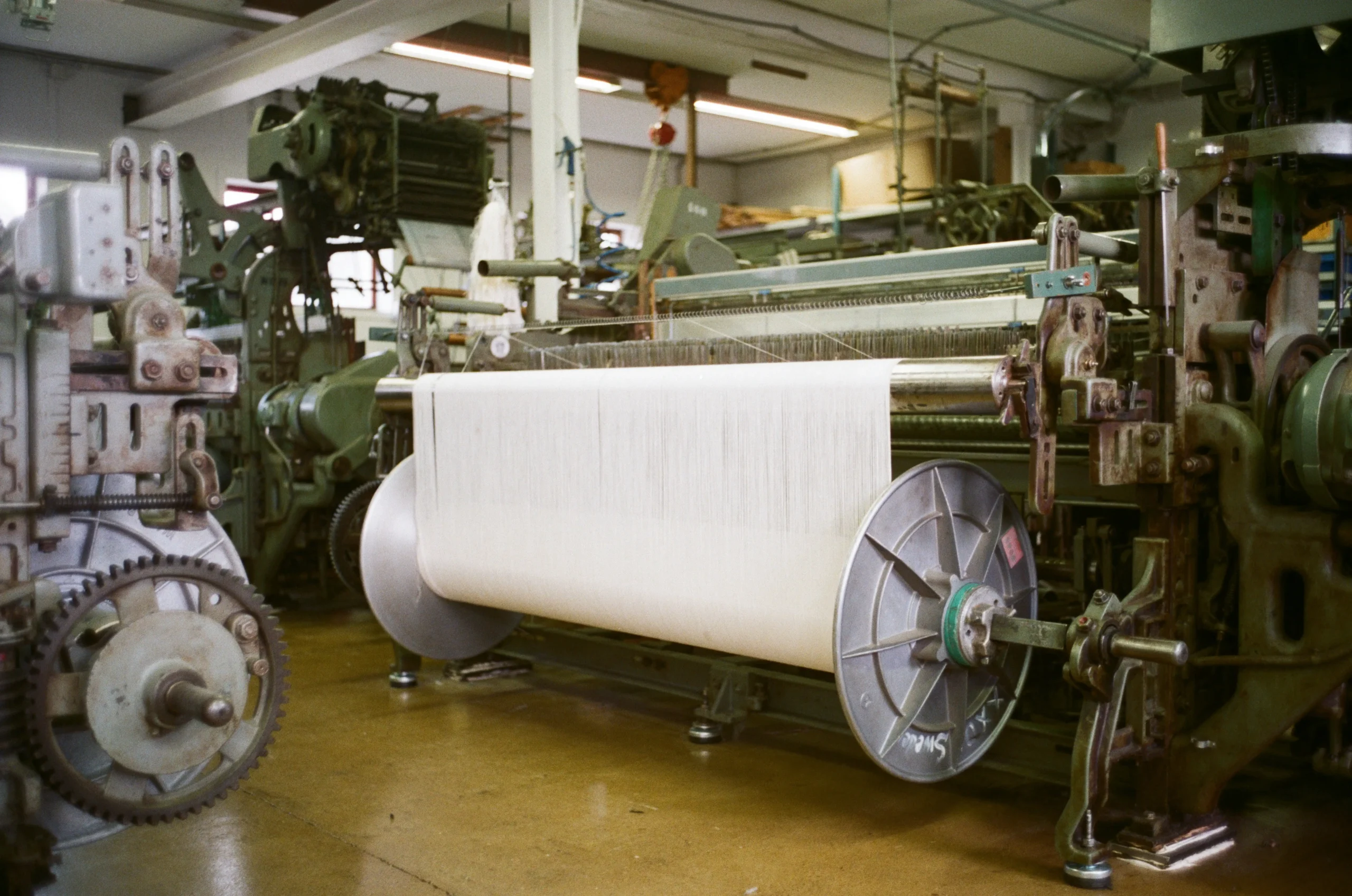
True Per-Meter Cost After Shipping & Duties
Small-lot freight can turn a low-cost mill-direct tweed into a costly sourcing regret, fast.
I watched a Los Angeles emerging designer burn a painful sum on a single 100m stock order—not on the fabric itself, but on freight, duties, and a late-stage sample rejection that forced an air-freight re-order. The per-meter FOB price was just the opening act. When you’re importing a 400gsm wool-blend tweed from Wenzhou to LA, the true landed cost calculation is: (FOB price × meters) + freight + insurance + US duties + drayage. Ignore any one of these, and your ‘affordable’ fabric isn’t.
- FOB Price (100m stock example): an accessible factory-direct price — but only after you accept a ready-dyed lot that may have a small shade tolerance from lab dip approval.
- Sea Freight (LCL): A 100m roll (approx 0.2 CBM) sharing container space costs modestly per meter. For a 300m custom program, consolidated into a single pallet, drops to a substantially lower per-meter rate.
- Insurance & Handling: Add 1.5% of CIF value per meter.
- US Import Duty (HTS 5111.90): Wool-blend woven fabrics face 7.5% duty on CIF value. For a low mill-direct price on CIF terms, that’s a competitive mill-direct price. If Section 301 tariffs still apply in 2026, an extra 15% can hit, pushing total duty to a notably higher per-meter level.
Run those numbers on a 300m custom order where FOB drops to a low mill-direct price, and the landed cost becomes roughly a competitive mill-direct price including duties. The delta widens. The fabric saved at scale more than covers the freight bill. That’s why the 300m MOQ isn’t just about exclusivity—it’s a margin protector. If you cut a smaller P.O. and pay air freight later to cover a sell-out, you’ve broken the model.
| Cost Component | 100m Stock (USD/m) | 300m Custom (USD/m) | Key Insight |
|---|---|---|---|
| FOB Fabric Price | Low mill-direct pricing | Competitive mill-direct pricing | Bulk yarn acquisition & production efficiency lower base cost substantially |
| Dye-Lot Surcharge | Accessible factory-direct pricing | $0.00 | 100m falls below dyehouse minimums (80kg vs 800kg), adding a substantial per-meter premium |
| Custom Spinning Setup | N/A (stock only) | $0 (Fursone covered) | Fursone waives development fee; competing mills charge a sizeable setup fee |
| LCL Freight & Duties (Landed LA) | Low mill-direct pricing | Competitive mill-direct pricing | Volume consolidation reduces per-meter logistics cost substantially |
| Total Landed Cost per Meter | Accessible factory-direct pricing | Low mill-direct pricing | 300m custom program delivers a substantially lower true cost, saving a meaningful amount per meter |
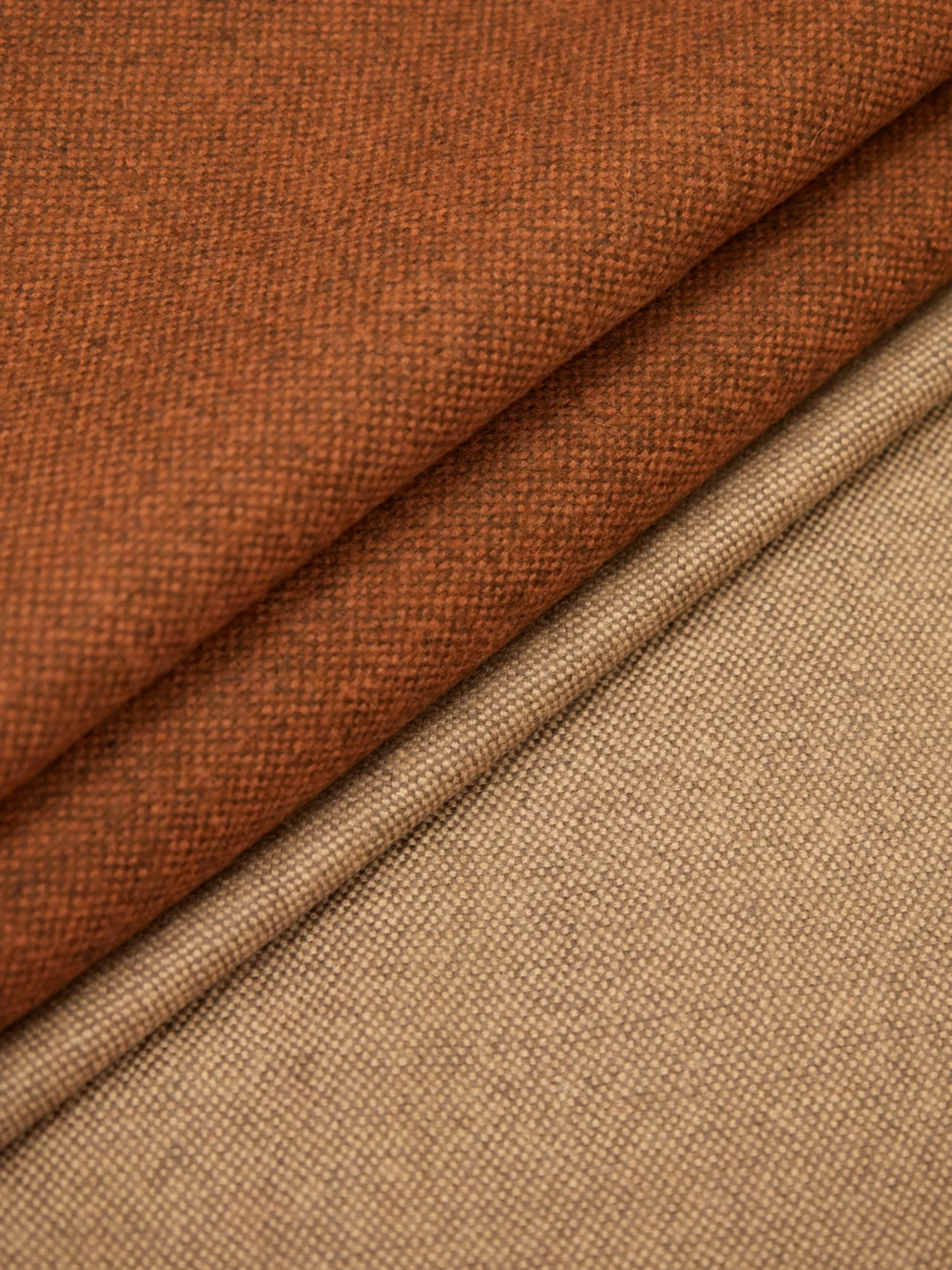
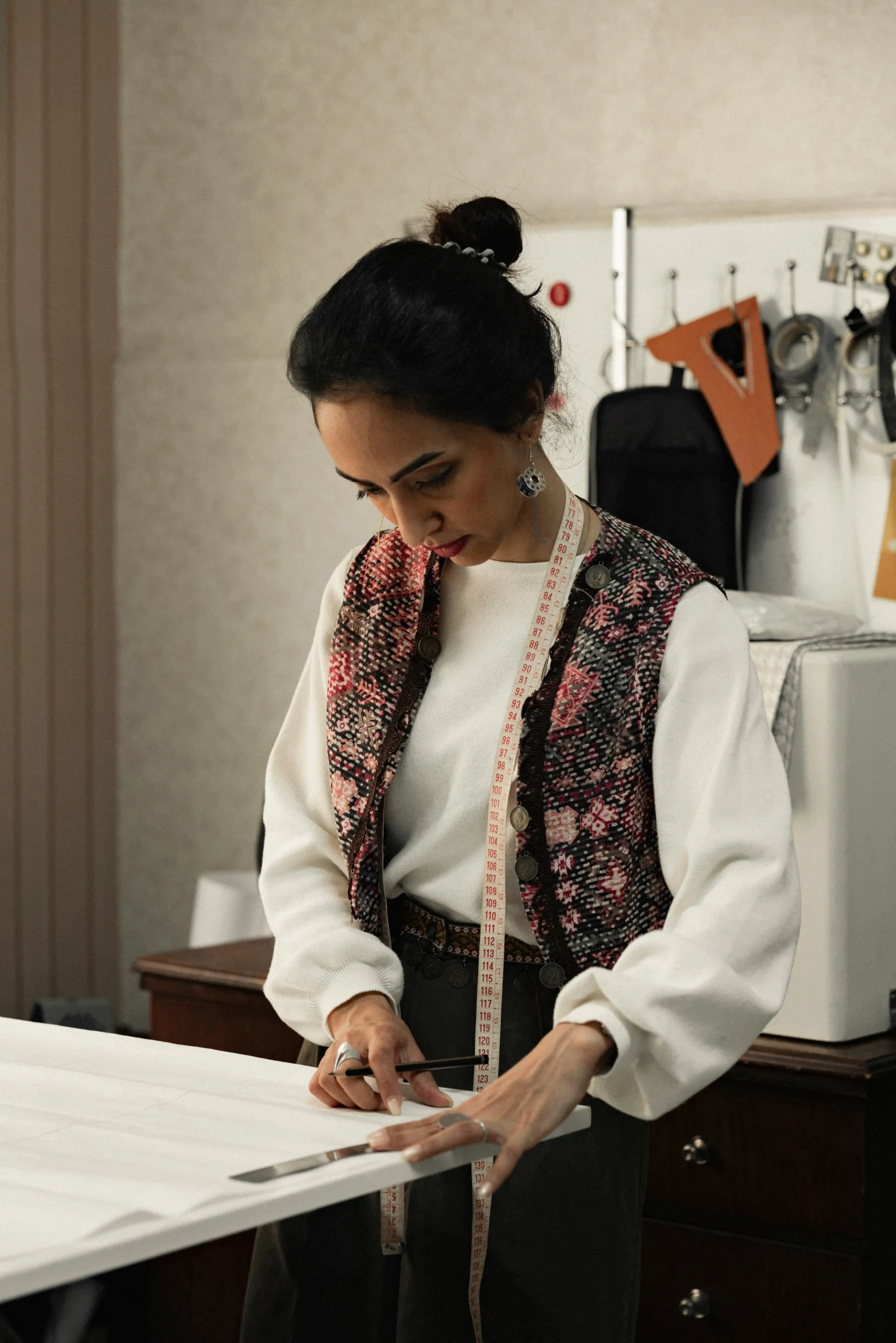
When to Start with 100m Stock First
Stock lets you test demand; custom locks in your margin once demand is proven.
I’ve seen too many emerging designers invest heavily in a custom tweed before a single buyer has felt the hand. That’s the quickest way to burn cash. Instead, pull 100m of our stock Chanel-style bouclé at a competitive mill-direct price. Sew ten sample jackets. Put them in front of boutique buyers and trunk show customers. If the orders materialize, you’ve spent a modest amount on proof-of-concept, not on dead inventory. Only then do you commit to the 300m custom program , where that same texture drops to roughly a competitive factory-direct price because dye-lot surcharges vanish and yarn costs go bulk.
The real move is to use stock strictly for sampling and initial sell-in, then switch to custom for production. Our ready stock ships in 3–7 days from 1 roll with no minimum order quantity, so you can be in front of buyers next week. Once you have a confirmed purchase order, we take the approved sample—your quality tolerance reference—and spin that exact colorway and yarn blend at a 300m per colour minimum. You keep the lower front-end risk, but capture the full per-meter savings on the bulk run. No compromise on exclusivity where it actually counts: on the rack.
- Speed to market: 100m stock ships in 3–7 days, so your samples hit buyers before the season closes.
- Cash preservation: A small stock probe vs. a much larger custom commitment keeps runway intact.
- Exclusivity on your terms: You sell the look with stock samples; you deliver the unique fabric with the custom run—not the other way around.
- Quality continuity: Using the same mill for stock and custom means the handfeel, drape, and colorfastness stay locked from sample approval to bulk.
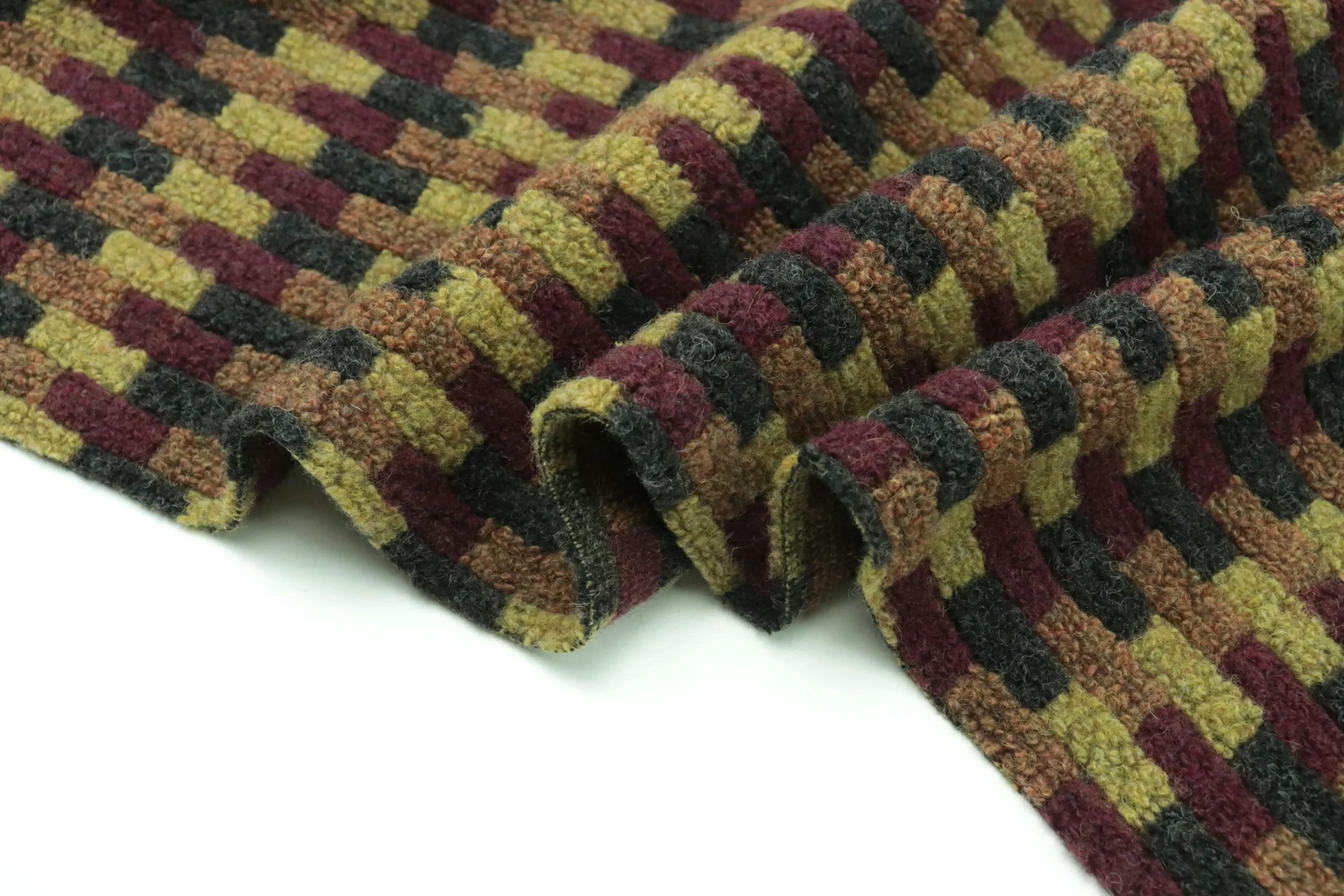
How Fursone’s 300m MOQ Reduces Per-Meter Cost substantially
The math is brutal at small volumes—dyehouse minimums alone add a steep per-meter surcharge before you even touch yarn cost.
I’ve watched emerging designers burn a meaningful amount on a 100-meter dye lot that should have cost them a sizeable figure. The culprit isn’t the mill’s greed. It’s the dyehouse. When you order 100 meters of a custom tweed, you’re asking a dyehouse to fire up its equipment for roughly 80 kilograms of yarn. Most industrial dyeing vessels hold 800 kilograms or more. The energy, water, and labor are nearly identical whether the machine is full or running at 10% capacity. So the dyehouse slaps a per-kilogram surcharge on small lots—often a steep per-meter premium once converted back to fabric—that evaporates entirely when your order fills the vessel.
At 1000 meters, you’re dyeing 800 kilograms of yarn. The vessel runs at capacity. The per-kilogram cost drops to its floor. That surcharge line item on your invoice disappears. This single shift—from small-lot penalty pricing to full-batch efficiency—is where most of Fursone’s per-meter reduction lives. The mill isn’t discounting. It’s removing a cost that only existed because the volume was too low to justify efficient production.
- Small dye lot surcharge (100m): a meaningful extra cost added because 80 kg of yarn underutilizes an 800 kg dye vessel. The dyehouse charges for wasted capacity.
- Zero dye lot penalty (1000m): Full vessel utilization. No surcharge. Per-kg dyeing cost hits its efficient floor and passes through at cost.
- Custom spinning setup: Smaller mills routinely bill a substantial setup charge for new yarn development. At Fursone’s 300m MOQ, custom spinning setup carries no separate line item—it’s absorbed into the program.
- Yarn procurement economics: Buying 800 kg of Australian Merino wool or Japanese lurex in one purchase unlocks bulk pricing tiers. The mill’s raw material cost per meter drops a meaningful percentage, and that delta hits your FOB pricing directly.
The bulk yarn discount is the second lever, and it’s the one most sourcing managers overlook because they never see the mill’s raw material invoices. When Fursone spins a custom bouclé or slub yarn for your collection, they’re purchasing raw fiber on your behalf. At 100 meters, that’s a spot buy—maybe 90 kilograms of wool, purchased at retail-adjacent pricing from the commodity market. At 1000 meters, it’s 900 kilograms. The mill negotiates a contract price, not a spot price. The savings—typically a meaningful percentage on raw fiber—flow directly into your per-meter cost. No margin padding. No hidden spread. The mill’s incentive is your repeat business, not your individual order.
What you’re actually seeing when a quote drops from one mill-direct price tier to another across these two order sizes isn’t a discount. It’s the removal of structural inefficiencies that only exist at low volume. The fabric itself costs the same to weave. The yarn costs less to buy. The dye costs less per kilogram. The setup fee for custom spinning is amortized across 10 times the yardage. Stack these together, and the per-meter reduction isn’t a negotiation win. It’s just math.
| Cost Factor | 100m Stock Program | 300m Custom Program | Per-Meter Saving | Fursone Advantage |
|---|---|---|---|---|
| Base Fabric Price (Standard Wool-Blend Tweed) | Competitive mill-direct pricing | Accessible factory-direct pricing | Competitive mill-direct pricing (substantially lower) | Direct mill pricing without intermediary markups |
| Yarn Dye-Lot Surcharge | + a modest per-metre premium (80 kg small-batch penalty) | No surcharge (800 kg bulk dyeing) | a sizeable surcharge eliminated | In-house yarn dyeing; no minimum dye-lot fee |
| Custom Yarn Spinning Setup | Not available (stock textures only) | $0 (free development) | Avoids a sizeable development fee | Specialist spinning included at 300m MOQ |
| Lab Dips & Sampling Rounds | Standard swatch set | Full color matching and 7-day rapid sampling included | Reduces lead time and separate sampling costs | One-week concept-to-swatch turnaround |
| Total Landed Cost (LCL Sea Freight to Los Angeles) | Higher per-meter freight due to smaller volume | Lower per-meter freight through consolidated shipment | A substantial total reduction after shipping & duties | Logistics optimization with bulk LCL calculations |
Conclusion
I lost a painful sum on my first custom mill order. Not because the pre-production sample failed—it was flawless. The problem surfaced three months later when the bulk fabric arrived with a weight deviation and a hand-feel that missed the sample approval by a degree only an experienced sourcing manager would catch. The 90% this article covered—MOQ scales, dye-lot surcharges, landed cost calculations—gets you a competitive price. The final 10% separates a professional order from a costly lesson: negotiate a written quality tolerance for GSM and colorfastness, and tie your final payment to a lab-verified third-party inspection, not the factory’s word. That single clause covers more margin than any modest per-meter discount ever will.
Most buyers stop at the FOB price. The ones who sleep well at night also lock down sample approval stages and AQL inspection standards before the first yarn is spun. Review the full-service capabilities that support both your ready-stock trial and your 300m per colour custom run at our services page—we include the quality assurance protocols that protect your collection’s reputation.