

“Recycled” on a fabric label is not a single claim. The source of the recycled fiber our GRS eco knit athleisure case study matters, both for performance and for which certification standard applies. Pre-consumer recycled yarn comes from factory waste that never reached a consumer. Post-consumer recycled yarn comes from garments or textiles that have been used, collected, and reprocessed. The two feedstocks produce yarns with different fiber lengths, strength profiles, and price structures.
If your brand is moving toward recycled content, whether for GRS certification, retailer compliance, or sustainability reporting, you need to understand what each type actually delivers on the loom. This article covers the technical differences, the certification implications, and what to specify when you order.

What Pre-Consumer Recycled Yarn Actually Is
Pre-consumer recycled fiber, also called post-industrial or factory scrap, comes from the textile manufacturing process itself. Cutting room waste, selvedge trimmings, rejected fabric rolls, and spinning noil all fall into this category. The material has never been worn, washed, or exposed to consumer use.
The key advantage: fiber length is relatively well-preserved. Cutting waste from woven fabric retains the original staple length (or filament length). Spinning noil from worsted combing is shorter (typically 20-40 mm) but still uniform because it comes from a controlled process. This means pre-consumer recycled yarn can achieve counts in the Nm 2/10 to Nm 2/20 range with tensile strength within 80-90% of virgin fiber equivalents.
Common pre-consumer feedstocks for tweed and knitwear:
- Worsted combing noil (merino, crossbred wool)
- Cotton cutting waste from garment factories
- Wool selvedge trimmings from weaving mills
- Acrylic tow waste from fiber production
What Post-Consumer Recycled Yarn Actually Is
Post-consumer recycled fiber comes from products that have completed their useful life. For wool and cotton textiles, this means garments collected through take-back programs, sorted by composition, mechanically shredded back to fiber, and then re-spun. The mechanical shredding process shortens fibers significantly. Average staple length drops to 15-35 mm for wool and 10-20 mm for cotton.
This fiber shortening has direct consequences for yarn performance. Post-consumer recycled yarn typically achieves lower counts (Nm 2/6 to Nm 2/12 is the practical limit for wool) and shows 15-30% lower tensile strength than pre-consumer equivalents. The yarn is hairier, pills more, and has lower abrasion resistance.
However, post-consumer recycled yarn carries a stronger sustainability narrative. It diverts waste from landfill and reduces demand for virgin fiber. Most major certification schemes weight post-consumer content more heavily than pre-consumer in their scoring.
Certification: GRS, RCS, and GOTS
Two certification standards dominate recycled textile claims:
| Standard | Full Name | What It Covers |
|---|---|---|
| GOTS | Global Organic Textile Standard | Organic fiber content + chemical inputs + social compliance |
| GRS | Global Recycled Standard | Recycled content + chemical inputs + social compliance + environmental management |
| RCS | Recycled Claim Standard | Recycled content verification only (no chemical or social requirements) |
Under GRS, both pre-consumer and post-consumer content count toward the recycled percentage. However, the Textile Exchange guidelines note that post-consumer content receives preferential weighting in brand sustainability scorecards. A fabric with 50% post-consumer recycled wool scores higher on the Higg Index than the same fabric with 50% pre-consumer content.
For brands targeting GOTS certification, note that GOTS covers organic fiber, not recycled. GOTS and GRS are separate certifications. A fabric can hold both if it contains organic recycled fiber, but the certifications do not overlap.
Performance Comparison on the Loom
| Property | Virgin Yarn | Pre-Consumer Recycled | Post-Consumer Recycled |
|---|---|---|---|
| Avg staple length (wool) | 60-100 mm | 30-60 mm | 15-35 mm |
| Achievable count (Nm) | 2/8 to 2/32 | 2/6 to 2/20 | 2/6 to 2/12 |
| Tensile strength (cN/tex) | 22-30 | 18-26 | 14-20 |
| Pilling (ISO 12945-2) | Grade 3-4 | Grade 2-3 | Grade 2 |
| Cost vs virgin | Baseline | -10 to -20% | -5 to -15% |
| Color consistency | High | High (if single-source) | Variable (depends on feedstock sorting) |
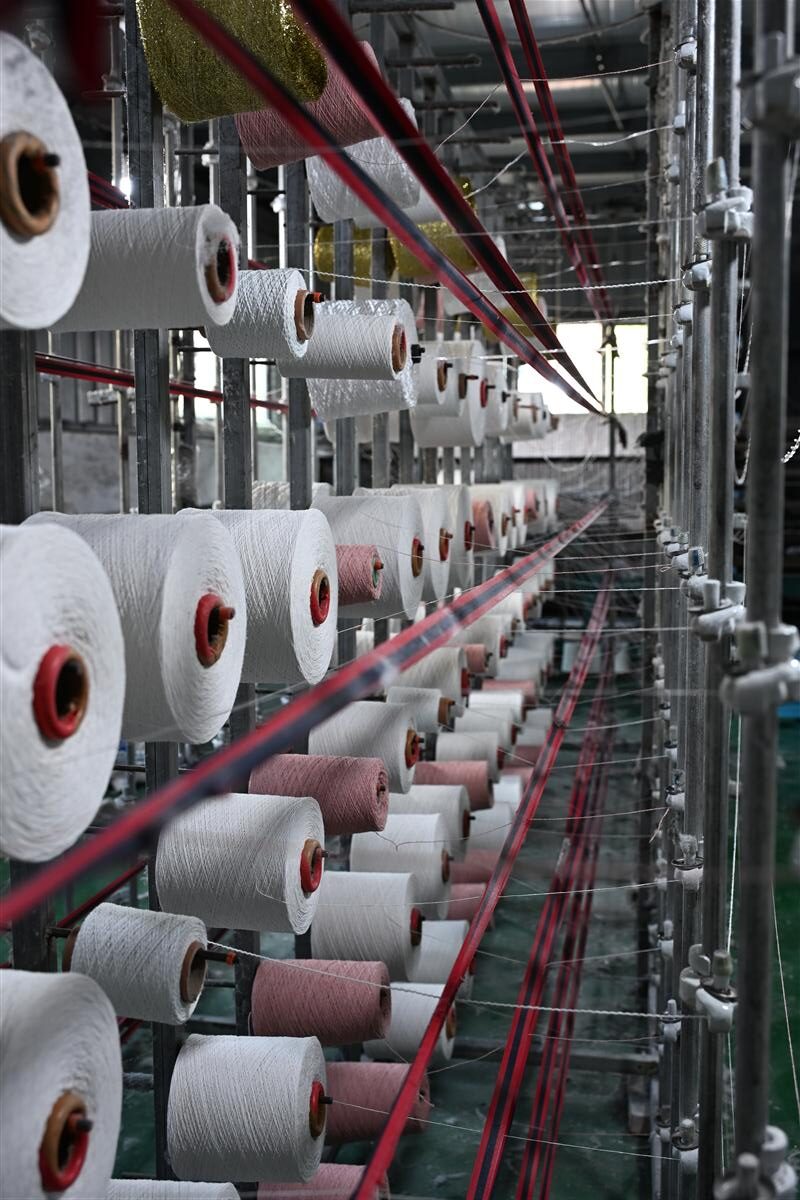
The cost picture is counterintuitive. Post-consumer recycled yarn is not always cheaper than pre-consumer. The collection, sorting, and shredding infrastructure for post-consumer material adds cost. Pre-consumer waste, by contrast, is generated on-site at the factory and is essentially free feedstock, just the cost of re-processing.
What to Specify in Your RFQ
When you request a recycled yarn or fabric from a mill, specify three things beyond the usual fiber content and count:
- Source type: Pre-consumer or post-consumer (or a blend ratio).
- Certification: GRS, RCS, or both. GRS requires a Transaction Certificate (TC) for each shipment.
- Performance floor: Minimum tensile strength and pilling grade. Without this, the mill may deliver fabric that meets the recycled content claim but fails your garment’s durability requirements.
At Fursone, we run both pre-consumer and post-consumer recycled wool and cotton yarns under GRS chain-of-custody, and our sustainable tweed fabric program documents the source split for every lot. Our GOTS vs GRS guide covers the certification decision in more detail. For most fashion brands, a 30-50% post-consumer blend with virgin fiber gives the best balance of sustainability narrative and fabric performance. For a deeper look at dye chemistry and the questions to put to your mill, see our guide on low-impact dyes for wool and knits.
Blending Strategies: Combining Pre-Consumer and Post-Consumer
Most recycled yarns in commercial production are blends, not 100% single-source. A typical blend for tweed might be 40% pre-consumer recycled wool (from combing noil), 20% post-consumer recycled wool (from shredded garments), and 40% virgin merino. This combination preserves fiber length from the pre-consumer component, adds the sustainability narrative of post-consumer content, and uses virgin fiber to maintain tensile strength and spinning performance.
The blend ratio depends on your performance requirements. For outerwear and coats where durability matters, keep post-consumer content below 30% to maintain pilling resistance above Grade 2-3. For fashion knitwear where the garment has a shorter expected lifespan, post-consumer content can reach 50% without significant quality loss. The key is testing each blend ratio before committing to bulk. Request a blend sample at 20%, 30%, and 50% post-consumer content, then run pilling and tensile tests to find the optimal balance for your program.
Sustainability Reporting and the Higg Index
For brands that report sustainability metrics through the Higg Index or similar frameworks, the source of recycled content affects your score. The Higg Materials Sustainability Index (MSI) assigns different environmental impact values to pre-consumer and post-consumer recycled fiber. Post-consumer recycled wool scores approximately 15-20% lower on environmental impact than pre-consumer recycled wool because it displaces virgin fiber that would otherwise be produced and diverts waste from landfill.
However, the Higg MSI also accounts for processing energy. Post-consumer fiber requires additional mechanical shredding, which adds energy cost. For wool, the net environmental benefit of post-consumer over pre-consumer is approximately 10-15% on a per-kilogram basis. For cotton, the gap is wider (20-25%) because cotton shredding is more energy-efficient than wool shredding due to cotton’s lower fiber cohesion.
When preparing sustainability reports, document both the percentage of recycled content and the source split. A fabric with 50% recycled content (all pre-consumer) tells a different story than 50% recycled content (30% post-consumer + 20% pre-consumer). The latter scores higher on most sustainability frameworks and provides a stronger narrative for consumer-facing marketing. For more on certification requirements, see our GOTS vs GRS certification guide.
FAQ
Can post-consumer recycled yarn be used for fine-gauge knitwear?
It is difficult. Post-consumer fiber averages 15-35 mm staple length, which limits spinning to coarser counts (Nm 2/12 and below). Fine-gauge knitwear typically requires Nm 2/20 or finer, which needs longer fiber. Blends of 30% post-consumer with 70% virgin can reach Nm 2/16.
Does recycled yarn affect dye uptake?
Yes, slightly. Pre-consumer wool that has been stored for months may show slightly slower dye uptake due to fiber surface oxidation. Post-consumer fiber can carry residual dye or finishing chemicals that cause uneven dyeing. Mills typically add 0.5-1% extra dye to compensate.
Is recycled wool as warm as virgin wool?
Thermal insulation depends on fiber diameter and yarn loft, not whether the fiber is recycled. If the recycled fiber maintains similar micron count and the yarn is spun to comparable bulk, insulation performance is equivalent.
What is the minimum recycled content for GRS certification?
GRS requires a minimum of 20% recycled content for certification. Products with 50% or more recycled content can use the GRS logo on consumer-facing labels. Below 20%, you can only claim RCS (Recycled Claim Standard) if the content is at least 5%.
The Role of Traceability in Recycled Yarn Supply Chains
As recycled content claims face increasing scrutiny from regulators and consumers, traceability has become a critical requirement. The European Commission’s proposed Ecodesign for Sustainable Products Regulation (ESPR) will require digital product passports that document the source and processing history of recycled fibers. Brands that cannot trace their recycled yarn back to the original feedstock source will face compliance gaps.
Pre-consumer recycled fiber is inherently easier to trace. The feedstock comes from a known manufacturing process at a known facility. The mill can document the source of cutting waste or combing noil with batch-level precision. Post-consumer fiber is harder to trace because the collection, sorting, and shredding stages involve multiple handlers. A garment collected in Germany may be sorted in Poland, shredded in Italy, and re-spun in China.
For brands serious about traceability, work with mills that participate in certified supply chains. GRS requires chain-of-custody documentation at every step from feedstock to finished fabric. Each facility in the chain must hold a valid GRS certificate and issue a Transaction Certificate for each shipment. This documentation creates an auditable trail from the original feedstock to the finished garment. When evaluating a fabric supplier for recycled programs, ask to see their complete TC documentation chain before placing your first order.
Recycled yarn sourcing does not have to mean guessing at quality. Fursone produces GRS-certified recycled wool and cotton yarns with full Transaction Certificates. Compare recycled vs virgin wool performance or explore our RWS responsible wool guide for virgin fiber certification options.
Related reading: Sustainable Fabric Sourcing Checklist for Fashion Brands.
For how to reduce fabric cutting waste and what drives marker efficiency, see how to reduce fabric cutting waste and what drives marker efficiency.

Related Insights

Fiber Content Labels for Tweed and Knit: Reading Composition Percentages Right
A composition label is a legal document, a marketing claim and a care instruction all...
Fabric Waste in Cutting: How Much Your Collection Throws Away
Every collection throws away fabric twice: once in the cutting room, where markers never fit...

Lyocell Knit Blends: Sourcing, Blend Ratios and Verification for Buyers
Lyocell has moved from a niche fiber to a standard line item on knit buyers’...