Every sourcing guide tells you to compare price per meter across suppliers. That advice is dangerous when you’re weighing a direct mill vs wholesaler because it misses the real cost: the risk of a substantial order unraveling when bulk production doesn’t match the pre-production sample. I’ve seen it happen. A buyer approved a swatch from a wholesaler, assumed the FOB pricing on the proforma invoice was the final number, and then watched the first 300 meters arrive with a dye lot shift that ruined their entire collection. The pre-production sample approval had been done on stock fabric from a different mill source—and the wholesaler never disclosed it.
The real answer isn’t just about whether you can buy fabric from mill without middleman. It’s about control over quality tolerance from sample to shipment. Direct mills own the yarn, the dyeing, and the looms. Wholesalers mix inventory from three different factories and call it “consistent.” For a sourcing manager, that difference turns a straightforward cost comparison into a decision about whether you can trust the entire production run. The industry-specific scenario isn’t theoretical—it’s the difference between a season saved and a season written off.
The True Cost of Middlemen: Direct Mill vs. Wholesale Pricing
Wholesalers add 15–30% markup for no added value.
Here’s the blunt math: when you buy from a wholesaler, you’re paying for someone to forward your order to a mill and collect a margin. The typical wholesale markup on fancy tweed and knit fabrics runs between 15% and 30% per meter, depending on volume and rarity. That margin does not improve your fabric — it simply funds a middleman’s warehouse and sales team. A sourcing manager who buys the same Chanel-style tweed directly from a Wenzhou mill at $18/meter will see the wholesaler’s counter at $23 to $26/meter. On a 1000-meter production run, that’s significant pure overhead you could have spent on better yarns or faster sampling.
- FOB Pricing Breakdown: A direct mill’s FOB price includes raw material (yarn), weaving, dyeing, finishing, and standard packaging. A wholesaler’s price includes all those costs plus their inbound freight, warehousing, broker fees, and a profit layer. There is no quality advantage — only a logistics toll.
- Risks of Buying Through Distributors: Wholesalers often source from multiple mills to keep shelves full. If your order spans multiple dye lots from different mills, you risk visible shade variation — a failure mode that direct mills avoid by controlling the entire production chain. One designer I worked with lost a substantial order because the pre-production sample from a wholesaler matched a different mill’s run than the bulk.
- Private-Label Cost Trap: When you ask a wholesaler for a private-label fabric with custom yarn spinning, they either say no or quote a 40% premium because they must subcontract the specialty work. A direct mill with in-house spinning capabilities (like custom slub or bouclé yarns) can do it at a fraction of that surcharge while keeping your design exclusive.
The cost difference between mill and wholesaler fabric is not just about per-meter price — it’s about what you lose in flexibility and consistency. If you want to buy fabric from a mill without middleman involvement, you need to verify that mill has direct export experience and can handle your MOQ. Many emerging designers assume that a 1000‑meter minimum is required for direct mill access, but some mills—especially those in Wenzhou—offer custom programs starting at 100 meters for stock fabrics and 1000 meters for exclusive textures. That lower barrier lets you capture the 15–30% savings earlier in your brand’s growth.
| Factor | Direct Mill | Wholesaler | Cost Impact |
|---|---|---|---|
| Per-Meter Price Markup | 0% middleman markup – mill price | 15–30% added markup for distribution | Save $3–$9 per meter on premium tweeds |
| Minimum Order Quantity (MOQ) | From 100m stock or 1,000m custom | Often 500m–2,000m minimum | Lower risk with smaller initial commitment |
| Sampling Speed | 7-day rapid sampling from concept | 2–4 weeks (multiple approval loops) | 3–6 week faster launch window |
| Bulk Quality Consistency | Single-source dye lots, no lot shifts | Mixed mill sources – invisible dye lot shifts | Eliminates costly color re-matches and returns |
| Design Exclusivity & IP | Custom yarn spinning + exclusivity clauses | Off-the-shelf fabrics, no IP protection | Protects brand identity, prevents market duplication |
Quality Gaps: Sample Transparency vs. Bulk Consistency Risks
A perfect sample means nothing if your bulk lot comes from a different factory line.
You signed off on a 0.5m swatch that had exactly the hand feel and multi-tonal melange you wanted. Then the 1,000m delivery arrived — and the weave was looser, the colors flatter, the bouclé loops less pronounced. This isn’t bad luck. It’s the structural risk of sourcing through a wholesaler who buys sample-yardage from one mill and bulk from another to hit a lower FOB. The sample becomes a mirage.
- Dye-Lot Shifts: Wholesalers routinely blend rolls from multiple mills to keep stock full. Two rolls from the same color code can differ by 1.5–2 ΔE under D65 light — invisible on a swatch card but obvious across a garment run. A direct mill controls the entire dye vat from a single yarn lot, holding color tolerance under 0.8 ΔE.
- Yarn Substitution: The sample you felt used a specific Australian Merino / recycled polyester blend at a 70/30 ratio. Bulk production from a distributor may shift that ratio to 60/40 or swap the recycled source to save $0.12/m. The result: stiffer hand, less loft. Only a direct mill with in-house proprietary spinning — like our Wenzhou facility — locks the yarn bill of materials from sample approval through to the last meter.
- Quality Tolerance: Sample approval sets a standard of, say, ≤3 defects per 50m. A wholesaler who sources from three different mills for one PO cannot enforce that tolerance uniformly. One mill may ship at 2 defects/50m, another at 5 defects/50m. The weighted average might hit your contract, but the variation disrupts cutting yield. Direct mills assign a single QC team to one production line, guaranteeing consistent defect density roll-to-roll.
- Choose a direct mill if: Your collection demands dye-lot consistency above 1,000m, you need exclusivity clauses on custom yarns (e.g., a signature chenille that your competitors cannot buy), and you are willing to commit to fabric mill minimum order quantities vs wholesaler’s open stock. The payoff: zero surprise re-dyes and a 3–6 week faster time to market on repeat orders.
- Choose a wholesaler if: You need 50m of a standard SKU tomorrow for a sample line, you have no color-critical repeat orders, and you accept that each batch may vary slightly. The trade-off for speed and low MOQ is the risk of invisible shifts that can derail a production run.
The hidden markup that wholesalers apply — 15–30% on cost difference between mill and wholesaler fabric — often comes from exploiting these quality gaps. They chase the lowest price per meter across suppliers, and the batch suffers. If you want to buy fabric from mill without middleman and guarantee that the first yard matches the last, you need a direct fabric mill vs distributor relationship where every spec is baked into the production order — not just the sample card.

Speed to Market: Direct Mill Sampling vs. Wholesaler Delays
Direct mill sampling cuts 3–6 weeks off your launch timeline.
Every week you wait on a sample is a week your competitor spends selling. The real delay isn’t fabric production—it’s the middleman’s approval loops and inventory juggling. Here’s the concrete timeline difference.
- Wholesaler path: You request a stock sample. Wholesaler pulls from their warehouse (2–3 days). You approve, place bulk order. They then order from the mill (who may not have that dye lot anymore). Mill produces, ships to wholesaler (2–4 weeks). Wholesaler inspects, repacks, ships to you (3–5 days). Total: 4–7 weeks before bulk arrives.
- Direct mill path: You request a sample from the mill’s current production run. Our Wenzhou mill ships approved swatches in 7 days (from our 100M meter stock). You approve, we cut bulk from the same dye lot and ship FOB within 10–15 working days. Total: 3–4 weeks to bulk delivery.
- Choose direct mill if: your collection has a fixed launch date, you need consistent dye lots across bulk, or you’re developing a custom texture that wholesalers can’t stock.
- Choose wholesaler if: you need less than 100 meters for a one-off sample run and don’t care about future repeat orders matching the same color exactly.
The hidden killer: wholesalers often blend fabric from multiple mill sources to maintain inventory. Two rolls from the same wholesaler can have invisible dye lot shifts—visible only after your garments are sewn. Direct mill sourcing guarantees bulk consistency because every meter comes from the same production run, same yarn batch, same quality tolerance.
For a 1,000-meter custom tweed program, direct mill sampling lets you go from concept to sealed sample in 7 days, then straight to production. No waiting for a trading company to relay your feedback to a third-party factory. You approve the sample, we spin the custom yarns and weave. That’s 3–6 weeks shaved off the traditional wholesaler timeline.
Exclusivity & Innovation: Why Direct Mills Protect Your Design Identity
A design copied on day one is a collection ruined for seasons.
The moment you hand your fabric swatch to a wholesaler, you lose control over where that design ends up. Wholesalers aggregate inventory from dozens of mills — and they’ll happily sell the identical tweed in Guangzhou, Milan, and New York simultaneously. I’ve audited supplier warehouses where the same bouclé pattern was stacked under three different brand labels. That’s your launch look becoming a commodity before you even cut the first garment.
- Exclusivity clause: Direct mill: Negotiable. You can lock a pattern for your territory or collection. Wholesaler: Not available. Their model depends on volume duplication.
- Yarn origin: Direct mill: Custom-spun from raw fiber – slub, bouclé, chenille – each batch is traceable. Wholesaler: Buys finished fabric from multiple mills; you can’t verify the yarn source or consistency.
- Dye-lot risk: Direct mill: Single-lot production with full colorfastness logs. Wholesaler: Often blends lots from several suppliers; you may see visible shifts only after 500m of cutting.
- Pattern protection: Direct mill: Proprietary jacquard programs and custom weaves are destroyed after your run unless you renew. Wholesaler: Patterns are stock samples; any competitor can request a price quote on the same SKU.
- Choose the direct mill if: Your collection relies on a unique textured knit or a custom fancy-yarn blend. You need a signed exclusivity agreement and want to avoid dead-stock duplication by competitors.
- Choose the wholesaler if: You need 50m of a generic base fabric next week and don’t care about long-term design protection. For commodity purchases, speed and low MOQ matter more than exclusivity.
The real cost of buying through a middleman isn’t just the 15–30% markup — it’s the erosion of your brand’s uniqueness. A sourcing manager told me she found her signature Chanel-style tweed on a fast-fashion site three weeks after her own launch. The wholesaler had sold the same material to a low-cost producer who undercut her significantly. Direct mills prevent this by controlling the entire production chain, from proprietary spinning of Australian Merino or Japanese lurex to final sample approval.
Sourcing Decision Framework: When to Choose a Direct Mill Over a Wholesaler
Buying from a wholesaler is renting fabric.
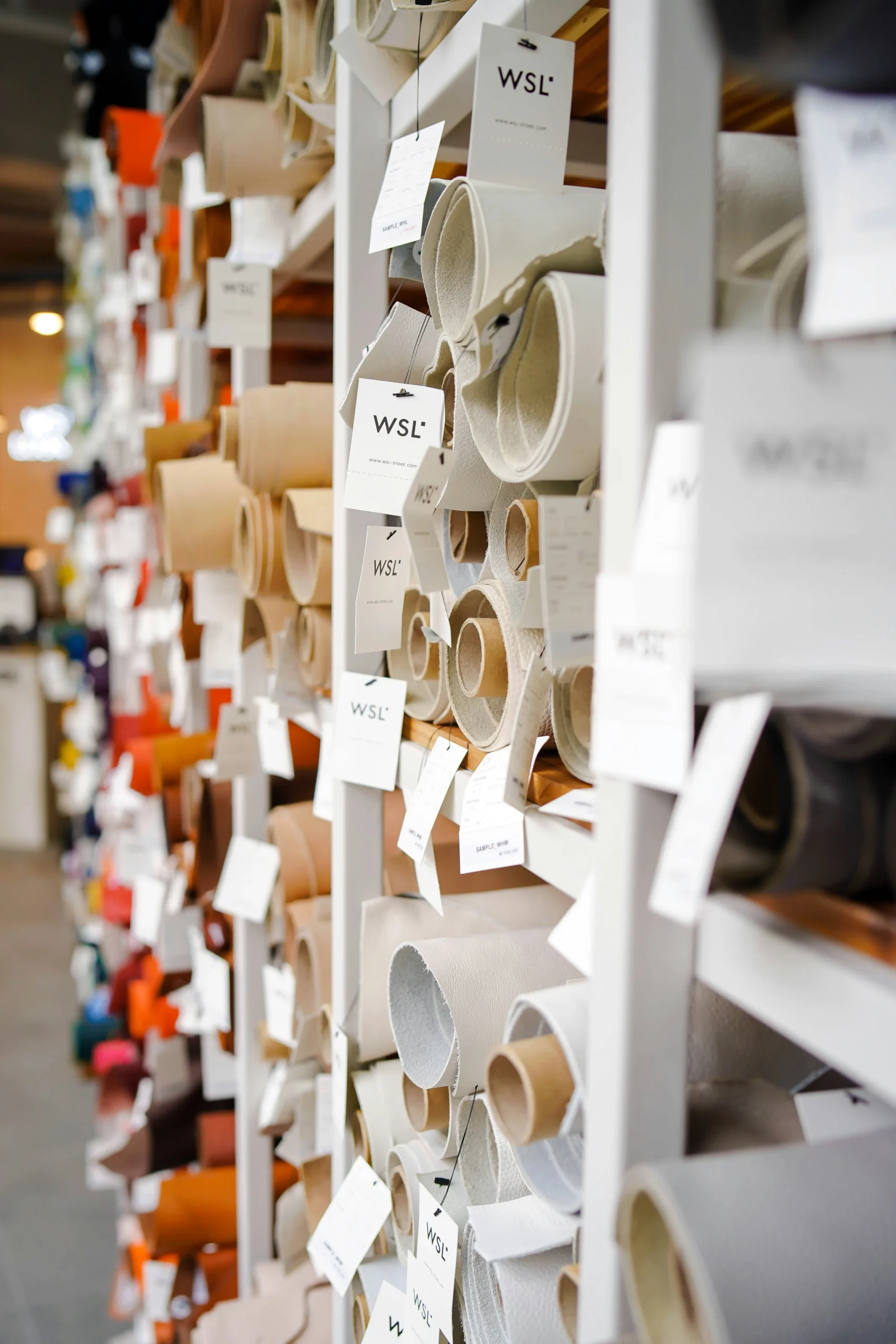
You’ve got a substantial order sitting in a container at the port, but once it hits the cutting table, the color doesn’t match the pre-production sample. The yarn weight is off. The hand-feel is wrong. This is the exact scenario observed with brands who went through a wholesaler. The hard truth: a wholesaler is a pass-through entity. They don’t control the loom, the dye bath, or the yarn spin. When a supplier audit reveals multiple mill sources in one wholesaler’s inventory, your quality tolerance becomes a gamble.
We deal in Chanel-style tweeds and structured cable knits, and the difference between mill-direct and wholesale sourcing isn’t subtle—it’s structural. The buying decision boils down to four dimensions that matter to any sourcing manager protecting their brand’s margin and consistency.
- Per-Meter Cost: Direct mill: No middleman markup. Expect 15–30% savings below typical wholesale FOB pricing. Wholesaler: Adds 8–12 points minimum, often masking higher margins behind ‘convenience.’ The cost difference between mill and wholesaler fabric becomes glaring when you run the math on 1,000 meters.
- Sample-to-Bulk Reliability: Direct mill: The sample comes from the same looms and dye lot as your production. Your sample approval is predictive. Wholesaler: They pull from different mill batches. The ‘bulk consistency’ is a fiction once the dye lot shifts. I’ve flagged lot mismatches in audits that would have ruined a substantial run.
- Time to Market: Direct mill: 7-day sampling from concept to swatch. One approval chain. Wholesaler: You’re at the mercy of their supplier communication loop. That loop alone adds 3–6 weeks of lag time. For a collection launch, that’s the difference between leading the season and chasing it.
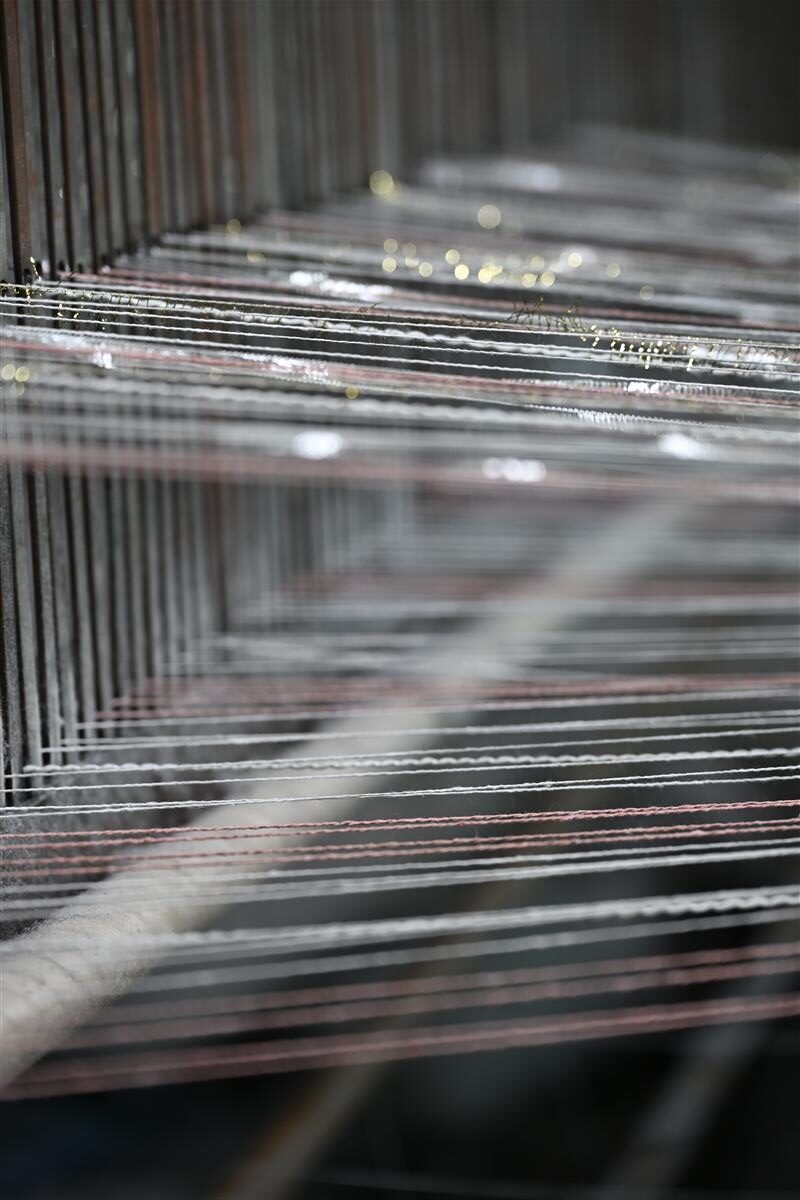
- Exclusivity & Innovation: Direct mill: Exclusivity clauses are a negotiation. Custom yarn spinning—slub, bouclé, chenille—is standard. Wholesaler: You get what the market already has. They can’t protect proprietary textures because they don’t own the R&D. If you ask them about direct mill exclusivity agreement for custom fabric, they’ll likely say it’s not in their model.
- Choose a direct mill if: You need cost advantage at scale (1,000m+), require exclusivity for a signature collection, or cannot tolerate dye lot variation across bulk runs. Also the right call when building a private label fabric line with custom yarn blends—that’s where our 7-day rapid sampling closes the time gap.
- Choose a wholesaler if: You’re sampling below 100m, need immediate off-the-shelf delivery, and are willing to accept potential batch inconsistency for speed. But be clear-eyed: you are paying a premium for convenience, and you’re ceding control over your supply chain.
Here’s the benchmark I use: If your volume justifies a 1,000-meter program and you need a yarn composition that won’t appear on four other runways, a direct mill is the only viable channel. On the flip side, if you’re buying 100 meters for a one-off capsule to test market fit, a wholesaler’s stock service might get you there faster—but never mistake speed for quality control.
The benchmark I tell every sourcing manager to write down: a direct mill that can show you the yarn spinning facility, the dye lab batch records, and a GRS certification for eco-traceability is a partner, not a vendor. That’s the difference between building a collection on solid ground and sewing it on sand.
Conclusion
The cost difference between mill and wholesaler fabric isn’t just about per-meter markup—it’s about consistency, speed, and protecting your design. Direct mills eliminate the hidden dye lot shifts from mixed sources and deliver sample-to-bulk alignment that wholesalers can’t guarantee. The industry benchmark: sourcing managers who shift to factory-direct channels typically see significant savings on FOB pricing while gaining exclusive yarn development and 7-day sampling.
If you’re evaluating whether to buy fabric from a mill without middleman delays, start by comparing your current supplier’s sample approval process against a direct mill’s quality tolerance. Review how Fursone’s factory-direct model handles custom tweed programs, minimum order quantities, and rapid sampling at the service page.
Frequently Asked Questions
How much cheaper is a direct mill than a wholesaler?
Direct mills typically undercut wholesalers by 15–30% because they eliminate the middleman markup. For premium European-mill quality, direct sourcing can save you 30–50% off wholesale pricing. Always get a mill FOB quote and compare against your current distributor price.
Can a direct mill match a wholesaler’s low MOQ?
Yes, many direct mills offer stock programs with MOQs as low as 100 meters for immediate shipment. Custom runs still require higher commitments—typically around 1,000 meters—but are far more flexible than. Confirm whether you need stock or custom before asking about MOQ.
How fast is direct mill sampling compared to a wholesaler?
Direct mills can deliver physical samples in as few as 7 days, while wholesalers often take 3–6 weeks due to inventory and logistics handoffs. This speed lets you lock in. Always request a sample timeline in writing before placing a trial order.
Does a direct mill offer more design exclusivity than a wholesaler?
Yes, direct mills that custom-spin their own yarns—like bouclé and chenille—prevent market duplication, protecting your design identity. Wholesalers typically source from multiple mills. Ask the mill if they spin their own yarns and if they guarantee design exclusivity for your custom run.
What are the hidden risks of buying from a wholesaler?
The biggest hidden risk is bulk consistency—a perfect sample may come from a different factory line than your production lot, leading to color or hand-feel variations. Direct mills control the entire. Always request a bulk-run pre-production sample from the same production line.
Authoritative References
Related Insights
RFQ Template for Tweed and Knit Fabric: 12 Fields for Accurate Quotes
An incomplete fabric RFQ wastes everyone’s time. The mill quotes based on assumptions, the buyer...
How to Evaluate a Tweed Mill for Quality Fabric
{ “@context”: “https://schema.org”, “@type”: “Article”, “headline”: “How to Evaluate a Tweed Mill for Quality Fabric”,...
Tweed Fabric: A Buyer’s Guide to Supplier Vetting
{ “@context”: “https://schema.org”, “@type”: “Article”, “headline”: “Tweed Fabric: A Buyer’s Guide to Supplier Vetting”, “author”:...