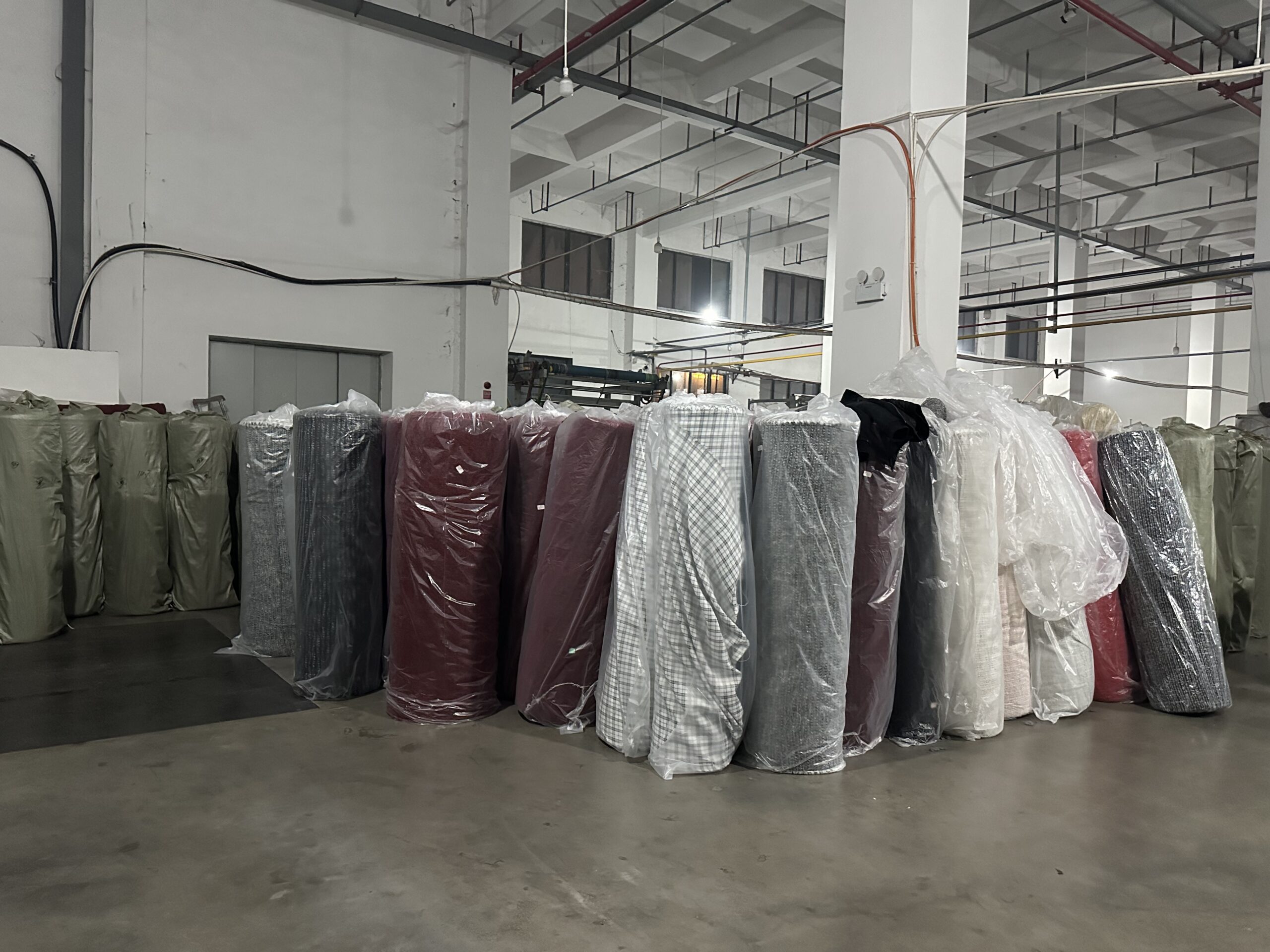
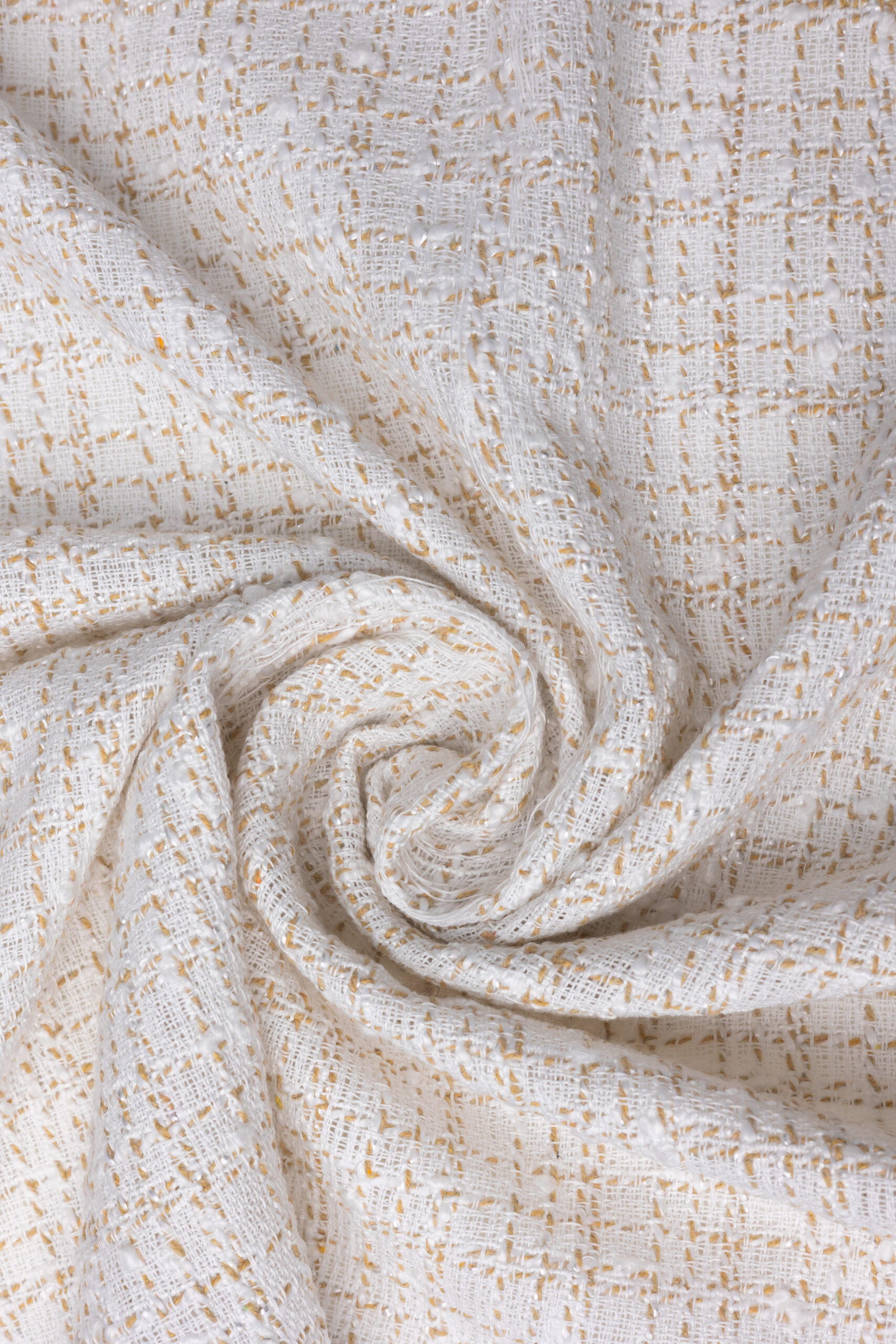
Every fresh collection starts the same way — finding a tweed supplier that delivers European mill quality without the European mill price. For a small label, each yard is a heavy bet. Too much cash tied up in MOQs. Too little time for sampling delays. The smart move is ignoring brand names and looking at the production floor instead.
The price gap isn’t about cutting corners on raw materials. The savings — around 40% — come from mills running the same Italian looms and yarns but with leaner overhead and longer production cycles. That cost advantage gets passed forward, not padded. The real win is finding a supplier who treats small runs as a craft, not a nuisance.
Why MOQ Matters for Small Fashion Brands
A standard 300m MOQ locks up significant capital on a single fabric. A 1-roll stock MOQ cuts that to a manageable outlay — cash you can actually afford to risk. The Standard 300m MOQ is a Capital Trap for Small Brands Most suppliers on Alibaba or trade directories will quote 1000m per color minimum. For an emerging brand working with a modest collection budget, that single line item sinks 25–35% of your working capital on one textile. You aren’t buying fabric — every yard you buy is a bet that the garment sells through. If it flops, you eat the yardage cost and storage fees. This is the main reason small labels don’t survive their first two seasons: they over-commit on raw materials before validating demand.
The 100m Stock MOQ Allows Market Validation Before Full Commitment
A supplier offering 100m in-stock MOQ flips the risk equation. At a competitive mill-direct price for factory-direct wool-nylon bouclé, your initial investment per fabric drops to a modest sum. That shifts cash strategy from “bet the farm” to “test the shelf.” Here’s how the numbers break down:
Prototype run: 100m yields roughly 25–30 garments at 3m per unit. Launch that capsule, collect sell-through data, reorder only the winner at full production volume.
Dead stock buffer: If a color underperforms, your loss is capped at a small sum versus a large one. You can make that mistake twice per season and still stay profitable.
Factory-direct suppliers with in-stock inventory ship in 3–7 days. That lets you reorder a winner inside two weeks — no waiting 4–6 weeks for a fresh mill run to start.
Smart emerging designers use the 100m MOQ to launch six test SKUs instead of gambling on one. Let the customer vote with their wallet. Then double down on the data.100m MOQ
Suppliers Hide MOQ in the Fine Print — Here’s Where to Check
The biggest trap is the “Hidden MOQ Bump.” A supplier quotes a 300m minimum but buries a “per color per batch” clause that forces you to order 1000m per shade across stock and custom lines. Another trick: a low MOQ on “stock fabrics” that aren’t actually in stock. They take your 100m order, wait for five orders to pool, then start production — so your lead time jumps from a promised 7 days to 6–8 weeks. Always verify ship-from-stock timelines and get a written breakdown of per-color minimums before putting down a deposit. That’s the only way to protect your quality, durability, and cost-effective timeline.
Sampling Speed: The 7-Day Advantage
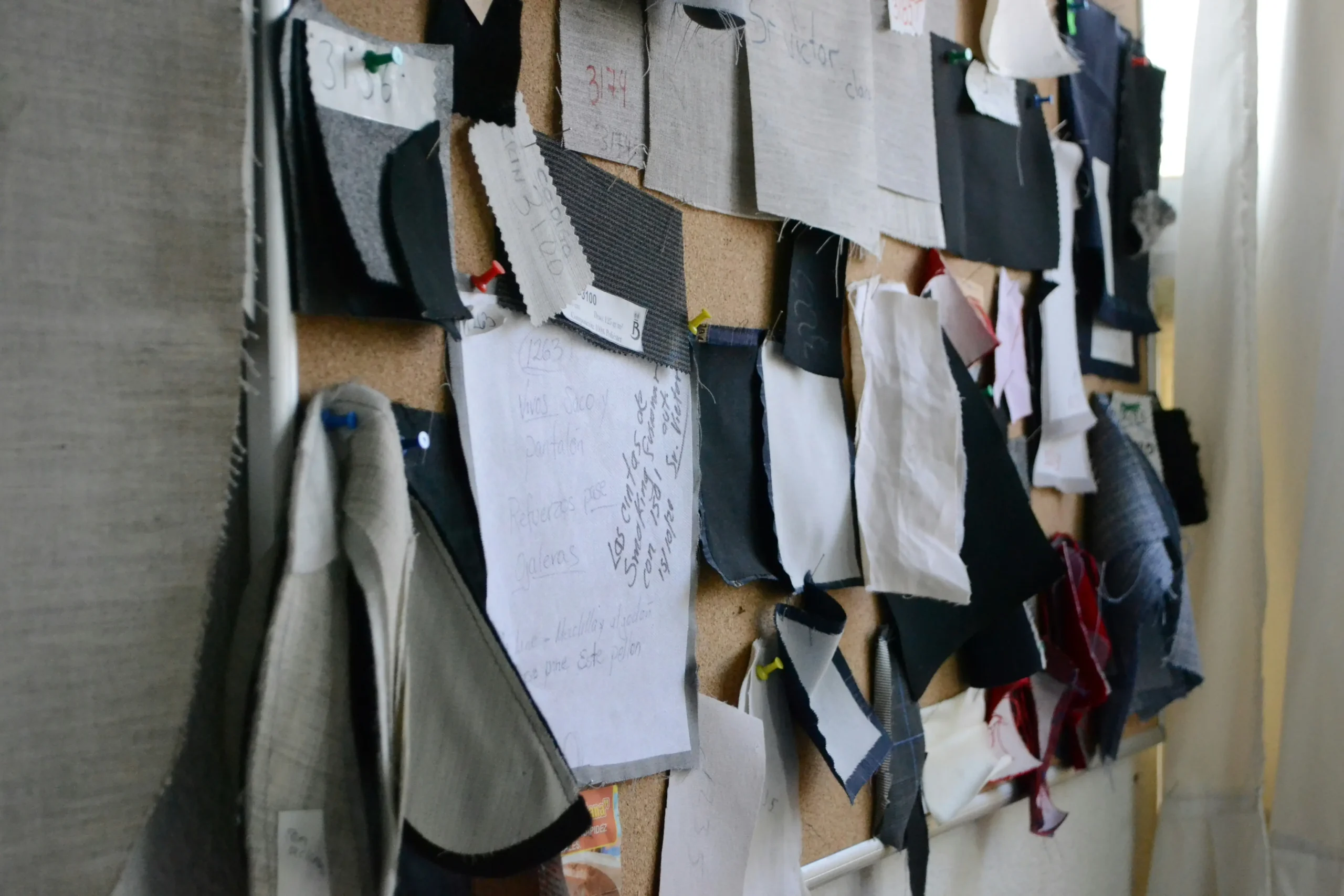
Seven business days from concept to physical swatch — built on pre-dyed yarn inventory and digital color matching, not expedited shipping.
The Cost of a 3-Week Sample Cycle
A 12-week collection calendar loses a full quarter of its development window just waiting for sample fabric from most tweed suppliers. The typical 2–4 week sampling cycle exists because mills spin and dye yarn to order — they don’t weave until the yarn batch is complete. For a small label on tight seasonal deadlines, that three-week gap crushes every subsequent step: pattern making, first fitting, production scheduling. The result? Rushed decisions, quality compromises, or a missed launch window entirely.
Why 7 Days Works: Pre-Dyed Yarn and Partner-Mill Loom Capacity
Our 7-day sampling isn’t a premium rush service — it’s the standard operating speed at our partner mills in Wenzhou. We eliminated the longest bottleneck in the sampling process. We hold a standing inventory of pre-dyed yarns covering the core palette used across our 100m stock fabrics. When you submit a sample request, production pulls from that inventory the same day, bypassing the 7–10 day yarn dyeing step that slows competitors down. Because we run spinning, dyeing, and weaving under one roof — vertical integration since 2020 — there are zero handoffs between separate facilities. The team that manages yarn inventory weaves your sample on the same looms that run bulk production. That continuity means your sample swatch reflects the exact handfeel, weight, and drape of a production run — not a one-off approximation. It’s quality and durability you can trust in a cost-effective package.vertical integration
Digital Color Matching: One Round, Not Three
The second major time saver is spectrophotometer-based color matching. Instead of mailing a physical reference swatch and waiting 10–14 days for a lab dip iteration, we scan your target color digitally. The system reads the spectral data and calculates the precise yarn blend ratio — down to the percentage of white, black, or colored fibers needed — before a single meter is woven. This eliminates 2–3 physical iteration rounds. What typically requires three weeks of back-and-forth between designer and mill gets condensed into a single 7-day cycle. For a tweed fabric supplier with fast sampling, this isn’t just a speed advantage — it’s a cost advantage. Fewer iterations mean lower sample charges and faster confirmation of your production fabric, which directly impacts your cost per yard and your confidence in the final product.tweed fabric
Factory Verification: Protecting Your Line
A 15‑minute video walkthrough of the production floor can reveal whether your supplier owns the looms or just the phone number.
The Fake Mill Problem: Reselling Imported Cloth at a Premium
The most common trap for emerging designers is the “importer masquerading as a mill.” These suppliers have no looms, no dye house, and no quality control logs. They buy standard rolls from stock‑and‑sell traders, often at a meaningful markup, and rebrand it as “exclusive mill output.” The proof is almost always in the dye‑lot consistency. When you reorder a color from a reseller, you frequently get a visible shade variation because they purchase from different wholesale batches. A genuine factory‑direct supplier? Every yard of a production run carries the same dye‑lot number, tracked end to end.
Physical Assets That Distinguish a Real Factory‑Direct Supplier
A legitimate manufacturer controls the three stages that define quality and cost: spinning, dyeing, and weaving. Under one roof, you get consistent yarn twist — that prevents pilling on wool‑nylon bouclé above 350 gsm — and repeatable color fastness across lots. A reseller has none of that. They cannot fix a shade problem because they do not own the dye vats. They cannot adjust weave tension because they do not own the rapier looms. Any supplier worth calling a factory will eagerly schedule a video audit of their weaving floor and QC logs. If they hesitate or offer a “showroom” instead, walk away.
What a Video Audit Should Verify
When you ask for a video walkthrough, request three things. First, the weaving floor with operational looms running your fabric type. Second, a dye‑house batch log showing batch numbers, dye formulations, and temperature records. Third, a QC station with measurement gauges and grading records. Most resellers cannot produce these because they do not exist. Ask them to zoom in on the loom model plates and dye‑vat serial numbers — a genuine facility has no reason to hide those. Any real factory will show its full production chain, no editing, no delay. That infrastructure is what makes consistent 100m stock orders and 7‑day sampling possible.
Explore Our Premium Product Collection.
Browse our curated selection of products built for quality and wholesale value.
Bouclé vs. Traditional Tweed: Sourcing the Right Texture
The real difference between bouclé and classic twill tweed isn’t just texture—it’s how yarn structure affects cost, weight, and drape. Factory-direct sourcing changes the math entirely.
Cost Comparison: Why Bouclé Wins on Price Per Meter
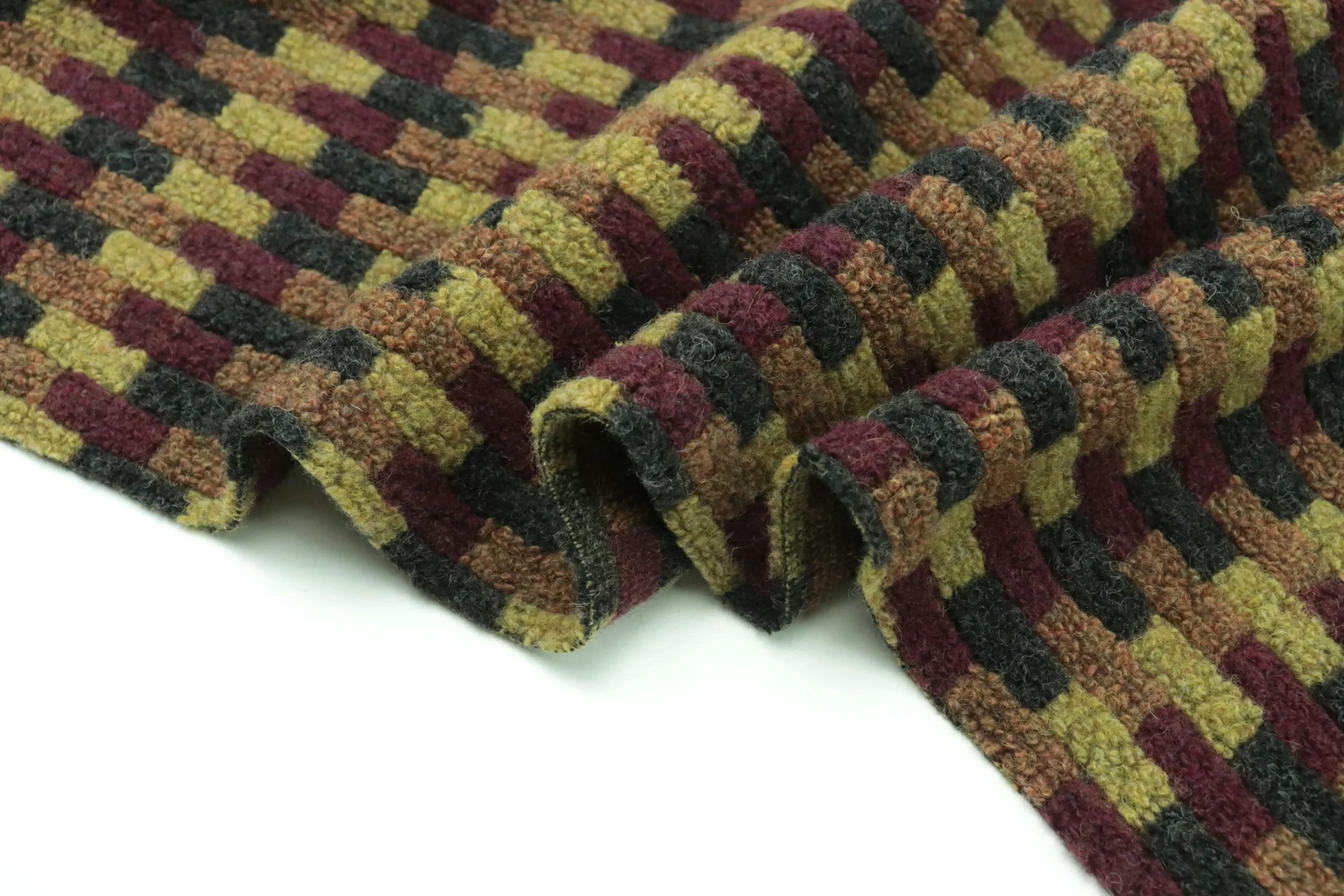
Traditional twill tweed, like Donegal or Harris Tweed, uses 100% pure wool from European mills. That heritage carries a premium: a high European heritage-mill rate from a UK or Italian mill, with a 300-meter minimum per color. Bouclé is different. It uses looped yarn construction that allows strategic blending. Most affordable bouclé tweeds — including ours — combine wool with nylon or polyester. The polyester adds bulk without adding fiber cost, and the nylon improves abrasion resistance. The result: a competitive factory-direct price, or roughly one-fifth to one-third less than comparable European twill. That is cost‑effective without cutting corners on durability.
Where does that saving come from? Not from lower quality yarn. Wenzhou mills achieve this price by vertically integrating spinning, dyeing, and weaving under one roof. That eliminates 2–3 layers of markup layers in the European supply chain. The same grade of 58s Merino wool costs half when you buy direct from a factory that controls every step. For an emerging designer working on a capsule collection, the difference means an extra 150 meters of fabric for the same budget — or a retail margin that actually makes sense.
Weight and Handfeel: Matching Fabric to Your Silhouette
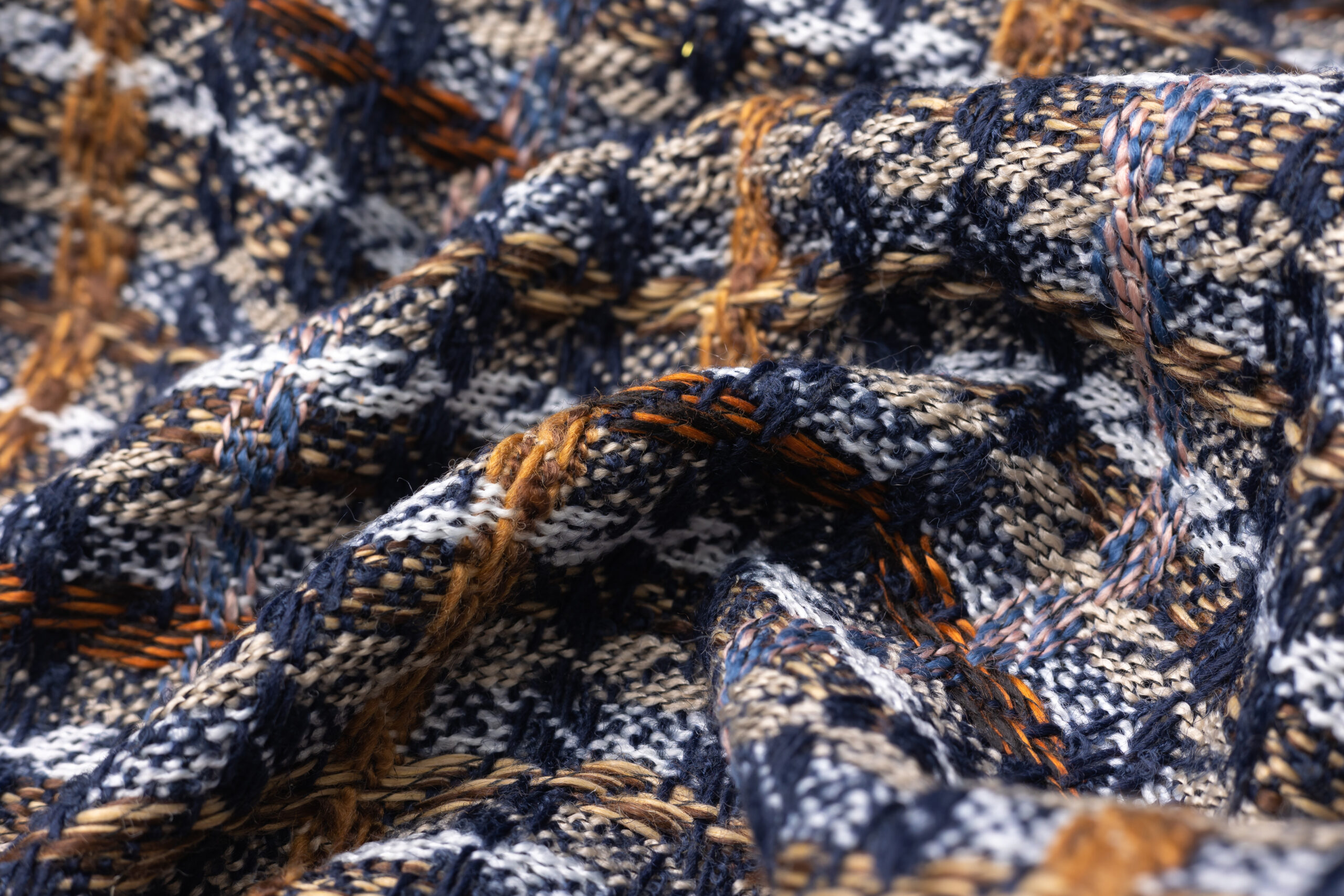
Classic twill tweed is dense and structured. It typically weighs 400–500 gsm with a firm, almost stiff handfeel from the tight 2/2 twill weave. Great for outerwear and structured blazers. Terrible for draped skirts or soft‑shouldered jackets. Bouclé is looser and springier. The looped yarns create air pockets, so a 350–450 gsm bouclé feels lighter than a 400 gsm twill. That makes it more comfortable for lined jackets and dresses — it moves with the body rather than fighting it. One is rigid, the other is built for motion. It feels different. That is the point.twill weave
The handfeel difference between twill and bouclé comes down to yarn twist. Twill uses tight twist for a firm, smooth surface. Bouclé uses under-twisted effect yarn to form loops. A quality bouclé needs a stable core yarn—usually nylon or polyester—with a wool blend wrapped around it. That core prevents loops from pulling out after a few wears. Budget suppliers often skip the core to save cost, but that kills durability and quality. Result: pilling in under 20 wears. At Fursone, every bouclé uses a twisted core with a wool-nylon sheath. We provide OEKO-TEX Standard 100 certification on request. That’s quality and durability at a cost-effective price.OEKO-TEX Standard 100 certification
Chanel-Style Bouclé: Exact Specs That Matter for Sourcing
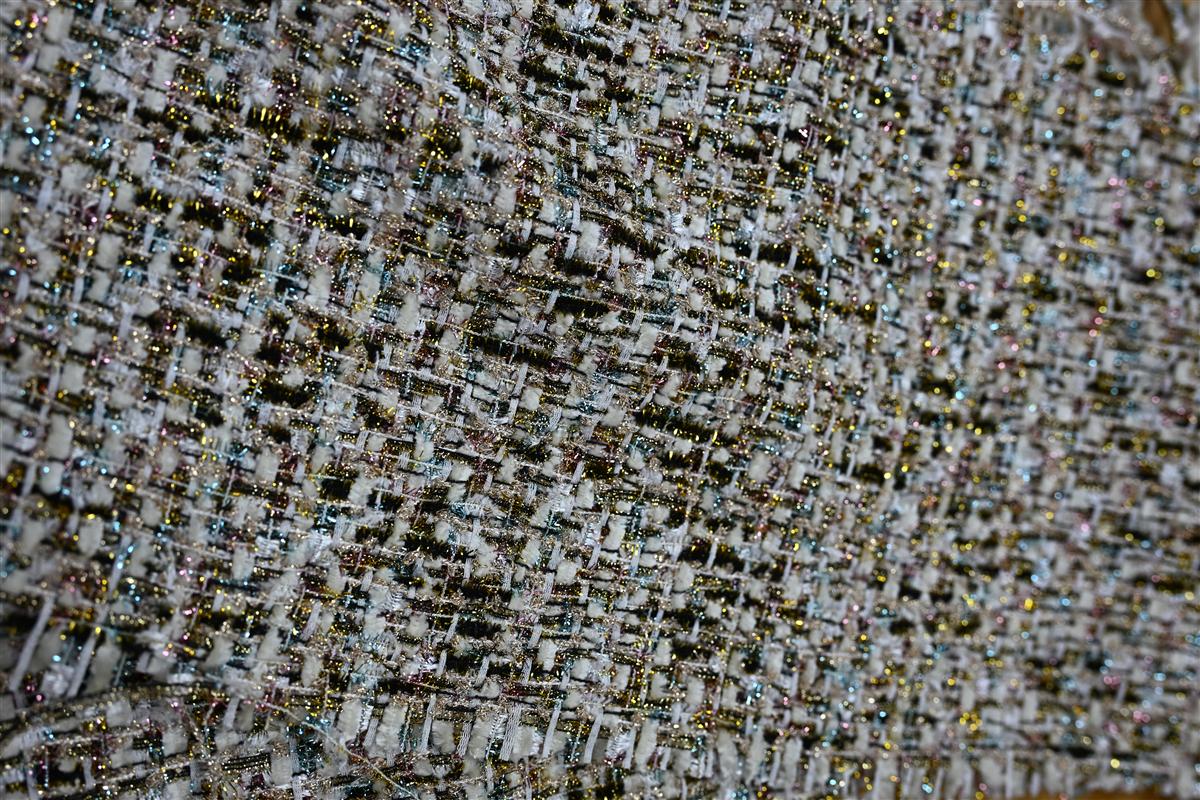
Looking for true Chanel-style bouclé? The kind with a nubby textured surface, flecks of color, maybe metallic thread? Then these specs aren’t optional. Here’s what we use in production for that iconic quality.Chanel-style bouclé
Composition: 50–70% wool for premium quality handfeel; 20–40% nylon or polyester for durability; 5–10% effect yarn (slub, chenille, or metallic) for texture.
Weight: 350–450 gsm — light enough for a four-season jacket, heavy enough to hold shape. A cost-effective sweet spot for garment cutting.
Width: 140–150 cm — standard for garment cutting.
Yarn count: Core yarn 2/48 Nm, effect yarn 1/8 Nm. The thickness gap creates the signature loop. Consistent counts ensure quality and loop durability.
Finish options are brushed on one side for softness, or left unbrushed if you want a more pronounced texture. It’s about handfeel—and whether you want that soft touch or a more structured surface.
Most resellers can’t guarantee consistent dye lots or repeatable texture. They buy from multiple mills. A factory-direct supplier like Fursone controls the entire run from fiber selection to finishing. That means your reorder from the same batch matches within 0.5 ΔE. When you’re scaling a style from 100 meters to 1000 meters, that consistency is everything. Need a custom color? Our 7-day sample turnaround lets you approve a lab dip and have 100 meters of in-stock fabric ready to ship in 3–7 days. No more eyeballing samples for two weeks.factory-direct supplier
Budget vs. Quality: Sourcing Affordable Luxury
The roughly one-fifth to one-third cost advantage is real—it comes from vertical integration and local wool sourcing, not from cutting corners on yarn quality.
How Wenzhou Mills Deliver the Price Differential
The real cost story is in the supply chain structure, not the sales pitch. A European tweed mill sources raw fiber through a broker, ships it to a separate spinner, then to a dyer, then to a weaver. Each handoff adds a markup. A vertically integrated Wenzhou factory like ours puts spinning, dyeing, and weaving under one roof. That structural difference alone accounts for 15–20% of the price gap. It’s not magic—it’s just fewer middlemen.
The rest of the savings comes from raw material sourcing. Local Chinese wool—specifically fine-grade wool from Inner Mongolia and Xinjiang—costs noticeably less than imported Australian Merino or British Cheviot. And it delivers comparable staple length and tensile strength for blended bouclé and tweed constructions. For a standard wool-nylon bouclé at 350–450 gsm, the fiber cost difference sits at the affordable end of the mill-direct range. A factory running 24 looms can also recycle scrap clippings back into lower-layer weft yarns, recovering another 3–5% of raw material cost that European mills typically landfill. Waste is wasted money.
Common Cost Traps That Erode Margins
A frequent mistake among emerging designers is paying a premium for branded fiber certifications when a functional generic wool would pass the same abrasion and pilling tests. Specifying “100% Merino” for a heavy outerwear tweed that never sits against the skin adds a competitive mill-direct premium with zero performance benefit. A 30,000 Martindale rub test on a 60/40 wool-nylon blend will outlast a 100% Merino tweed of the same weight. That’s where over-spec kills margins.
Over-specifying finishing is the second trap. European mills often apply a multi-pass softener and anti-shrink treatment that adds to the cost. For a structured jacket tweed, that level of finishing is unnecessary. A single-pass open-width steaming and decatising achieves the same handfeel at half the cost. Always ask your supplier: “Is this finishing cosmetic or functional for the end-use?” You’d be surprised how often the answer is cosmetic.
Cost Comparison: European Mill vs. Factory-Direct (Equivalent Blends)
Wool-Nylon Bouclé (350 gsm): France/Italy mill — a premium European luxury rate. Wenzhou factory-direct — a high European heritage-mill rate.
Donegal-Style Tweed (400 gsm): Ireland mill — an accessible factory-direct price point. Wenzhou factory-direct — a lower mill-direct price point.
Herringbone Wool Tweed (450 gsm): UK mill — a top-tier European mill rate. Wenzhou factory-direct — a premium European luxury rate.
Heritage Cable Knit (wool-acrylic blend): Scotland mill — a high European heritage-mill rate. Wenzhou factory-direct — a top-tier European mill rate.
These aren’t cheap knockoffs. The Wenzhou variants use the same yarn twist counts — typically 400–600 tpm for bouclé — and hit the same Martindale ratings (25,000–35,000 cycles). What you’re paying for with the European mills is the broker, the wholesaler, and the imported fiber premium. The fabric quality and durability are equivalent.
Conclusion
Vertical mills in Wenzhou eliminate 2–3 wholesale layers. Same cost-effective construction, half the price. A 100m in-stock MOQ lets you test a season without tying up capital. And the 7-day sampling turnaround beats the industry standard by weeks.7-day sampling
Review the full tweed collection for in-stock colors, exact composition specs, and per-meter pricing. Or request a sample kit to feel the bouclé handfeel against your next collection board.
Frequently Asked Questions
Where does the best tweed come from?
Historically, the finest tweed originates from traditional mills in Scotland and Ireland, where centuries of craftsmanship define the fabric. However, modern manufacturing expertise, like that at Fursone in Wenzhou, now replicates that same European mill quality—using premium raw materials and advanced looms—at roughly one-fifth to one-third less cost. Our production ensures consistent texture, colorfastness, and hand feel that meet the highest standards of global fashion brands, making Wenzhou a new hub for top-tier tweed.
Which is better, Donegal Tweed or Harris Tweed?
Both Donegal and Harris tweed are iconic, but the choice depends on your design intent: Harris Tweed is strictly produced in the Outer Hebrides with pure virgin wool, while Donegal offers a more varied color palette and slubbier yarns. At Fursone, we provide tweed that matches or exceeds both in quality—engineered to the same heritage specs—while eliminating import lead times and premium pricing. Our European-mill-equivalent fabrics give you the artisan aesthetic without geographic constraints, and with our 300m custom MOQ you can blend the best traits of both traditions.
What are the disadvantages of tweed fabric?
Traditional tweed can be heavy, less breathable, and prone to pilling if made from lower-grade wool; it also requires dry cleaning, which adds care costs. However, Fursone’s manufacturing precision addresses these drawbacks—our yarns are sourced for lightweight yet durable bouclé and knit constructions, with anti-pilling finishes applied. By combining European mill quality with modern textile engineering, we mitigate the classic disadvantages, offering affordable luxury that suits contemporary high-end collections.
Is there fake tweed?
Yes, counterfeit tweed exists—often made with synthetic blends or poor twist that lacks the natural luster and durability of authentic wool tweed. At Fursone, we develop genuine wool-based tweed using specialist spinning and weaving techniques that mirror premium European mills, ensuring authenticity in every meter. Our fabrics pass rigorous testing for wool content, colorfastness, and abrasion resistance, so clients receive true artisan tweed—not imitation—at a roughly one-fifth to one-third the price cost than traditional European sources.
What is the most famous tweed company?
Brands like Harris Tweed Hebrides and Loro Piana are among the most recognized names for luxury tweed, known for heritage and exclusivity. Fursone, however, partners directly with fashion houses to deliver equivalent quality—our tweed is used by global luxury brands for collections, yet our cost structure reduces margins by nearly half. With 100m ready stock and 7-day sampling, we are becoming the go-to source for designers who want the fame of premium tweed without the inflated price.