
tweed vs worsted wool is the first checkpoint buyers should lock before they approve a supplier, budget, or production slot. Did the last tweed jacket you sampled actually match the production run? I ask because I still remember the call from a designer who had just unpacked a large order where the mass-produced suits bore only a passing resemblance to the approved swatch. The weight was off, the drape was stiffer, and the color depth was flat. This isn’t a rare mill error—it’s a structural reality of tweed vs worsted wool that most standard specification sheets fail to capture. Getting the comparison right before you commit to a cutting ticket is the difference between a collection that sells through and one you discount at the end of the season.
My teams run supplier audits across dozens of facilities, and the single most overlooked variable in the sourcing equation is how the yarn itself is born. Worsted wool goes through a brutal combing process that aligns the long fibers parallel and removes short ends before spinning a tight, smooth twist. Tweed throws out that rulebook. We card the wool, leave the fibers in a deliberately chaotic arrangement, and spin them with a lower twist that traps air. That trapped air is why a 400 g/m² tweed jacket can feel warmer than a 350 g/m² worsted suit, yet it’s also the lever we pull to engineer modern mobility. By adjusting the twist on custom-spun slub yarns and tightening the weave density at the mill, we deliver a 350 g/m² tweed that drapes with a fluidity most designers reserve for their super 150s worsted. The old assumption that tweed is always heavy and boxy dies the moment you control the yarn specification.
Your FOB pricing will reflect these choices directly. A standard worsted might land at a predictable cost per meter because you’re buying a commodity with few surprises in the sample approval process. Custom lightweight tweed costs more per meter up front, but the quality tolerance parameters shift in your favor. Tweed’s open structure hides minor weaving inconsistencies that would scream on a flat worsted surface. The natural soil resistance also cuts downstream costs—brands marketing to eco-conscious consumers with GRS certified tweed can credibly claim their garments need dry cleaning half as often, which resonates when buyers scrutinize the total ownership cost of a luxury suit. Ignore these mechanical distinctions, and you’ll burn time and budget correcting problems that should have been designed out of the yarn stage. You can either keep fighting the same mismatch headaches, or you can source a fabric that performs exactly as the swatch promised.
Tweed vs. Worsted: Foundational Differences
The difference starts 6 inches above the loom — in the spinning frame.
Tweed and worsted are not just different fabrics; they are the result of two incompatible spinning philosophies. Worsted yarn is combed. Long fibers are aligned parallel, short fibers are discarded, and twist is inserted tightly — typically 18–22 twists per inch for suiting-grade 2/60s yarn. This creates a smooth, dense, low-hairiness thread that reflects light evenly and resists pilling. Tweed yarn, by contrast, is carded — fibers are crisscrossed, short fibers stay in, and twist is deliberately kept low, often 8–12 twists per inch, to preserve air pockets and slub character. When a designer asks for a ‘tweed that drapes like worsted,’ they are asking the spinner to break the rules. At our partner mills in Wenzhou, we engineer hybrid yarns: carded wool blended with long-staple acrylic or GRS-certified recycled poly, then spun with variable twist — tighter in the core, looser on the surface. This produces a 350 g/m² twill-back tweed with noticeably less bulk than a traditional Harris Tweed and drape comparable to a mid-weight worsted flannel.
- Worsted (Combed Yarn): Fiber length >60mm, parallel alignment, high twist (18–22 TPI). Surface: smooth, low-hairiness. Suits: formal, boardroom, high-luster. Typical weight: 220–280 g/m² for tropical; 300–380 g/m² for year-round.
- Tweed (Carded Yarn): Mixed fiber lengths, random orientation, low twist (8–12 TPI). Surface: textured, nep-rich, slubby. Suits: casual, sport coat, modern relaxed tailoring. Typical weight: 350–500 g/m², but engineered lightweight versions now reach 320–380 g/m² with custom spinning.
The weave structure amplifies this divergence. Worsteds rely on plain weaves, twills, and satins with a high thread count — 60 ends per cm or more — to create a closed, uniform face. Tweed uses looser weaves: 2/2 twills, hopsacks, and occasionally leno or mock leno, with 25–40 ends per cm. The openness not only traps air for warmth but also creates the characteristic ‘dry hand’ that designers prize for sport coats. However, an open weave brings a risk: poor recovery after sitting or bending. Traditional tweed jackets can bag at the elbows. To counter this, we incorporate a small percentage (3–5%) of polyamide filament into the wool blend during spinning, then set the fabric with a controlled crabbing and decating finish. The result: a tweed with wrinkle recovery close to a standard super 100s worsted.
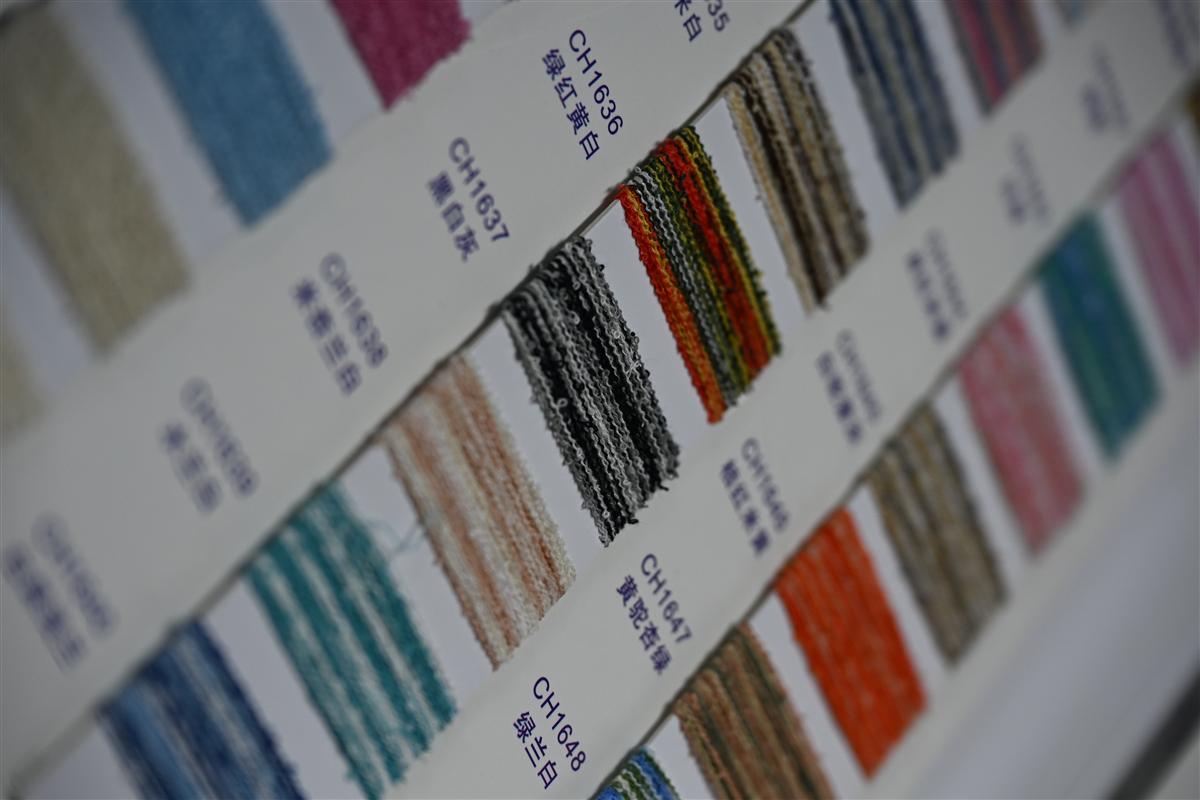
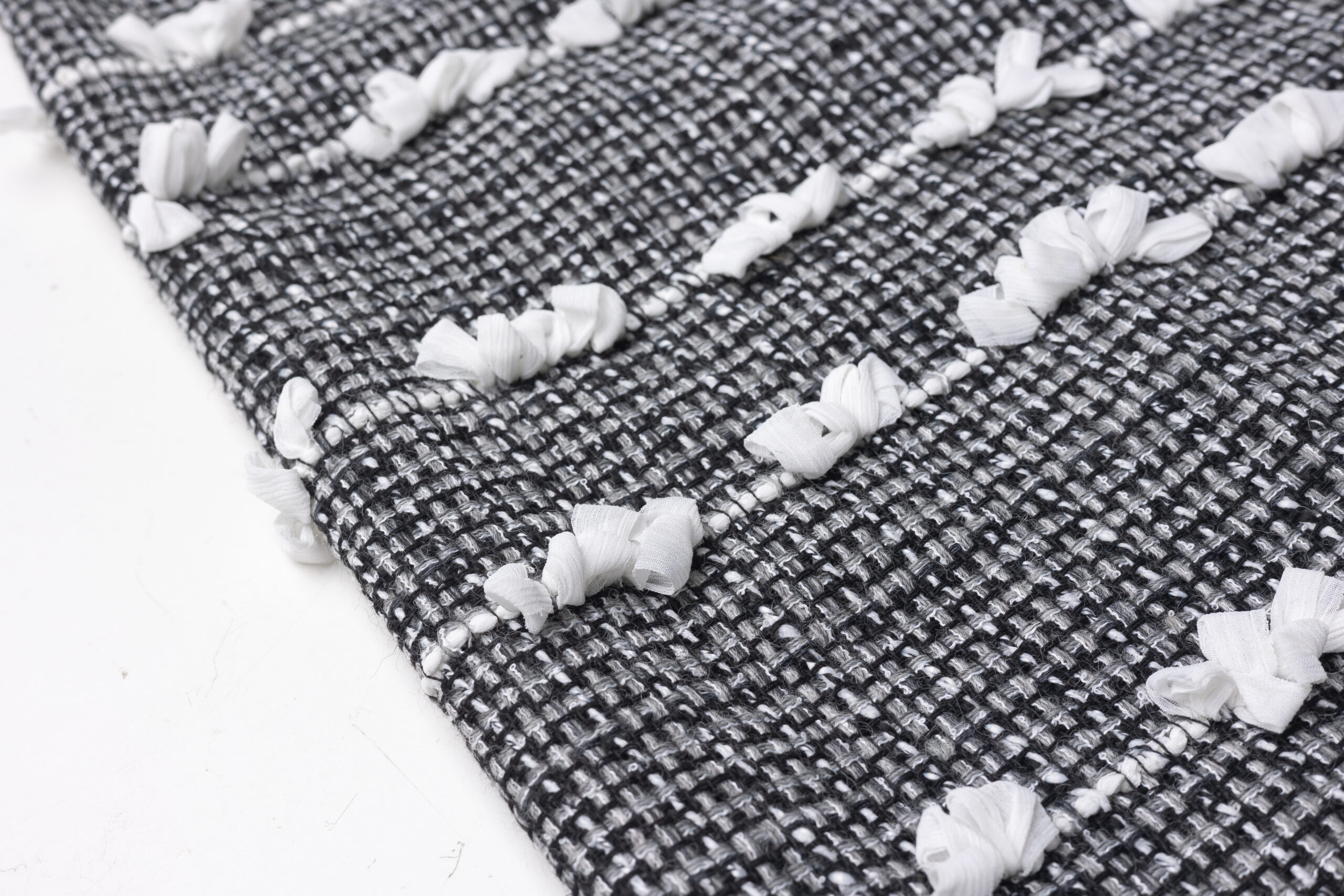
One critical distinction rarely discussed in mills: surface texture is not just aesthetic — it determines how light behaves on a garment. A worsted suit reflects light as a single plane, which makes wrinkles and cheap linings visible. Tweed scatters light across its slub peaks and valleys, hiding minor creases and lending a three-dimensional depth that photographs exceptionally well. This is why luxury houses pay a premium for exclusive bouclé or knop yarn effects that competitors cannot copy. When sourcing mill-direct, request a swatch card under 5500K showroom lighting to evaluate color depth and neppiness — what looks like a rich melange under office lights can turn muddy on a runway if the spin is inconsistent.

Weight and Drape: Engineering Modern Suit Performance
Spec sheets lie.
I’ve inspected many fabric shipments across a dozen countries. The gap between what a swatch card promises and what a 1,000-meter roll delivers usually comes down to one variable: weight. A tweed that feels substantial and structured at 480 GSM behaves entirely differently than a 350 GSM version cut from the same pattern. And yet most designers still spec fabrics by look, not by the numbers that determine how a jacket hangs on a body.
Worsted wool operates in a tight, predictable range. Super 110s through Super 150s typically land between 230–280 GSM — light enough for three-season wear, heavy enough to hold a crease through a 12-hour boardroom day. The fiber alignment from combing removes short fibers, which eliminates the fuzz and gives worsted its signature clean drape. A 260 GSM worsted jacket moves like water. It follows the shoulder line without resistance. No fight.
Tweed’s traditional GSM range starts where worsted ends — 350 GSM and climbs to 550 GSM or heavier. The old rule says anything under 400 GSM isn’t real tweed. That rule is dead. Mills that understand yarn engineering, including our partner mills in Wenzhou, now spin custom slub yarns at higher twist ratios to hit 350–380 GSM while preserving the signature nep and fleck that define tweed’s visual identity. The result is a fabric that breathes like a mid-weight worsted but reads as authentic tweed from across a room.
- 230–280 GSM Worsted: Formal suiting. Holds a sharp crease. Minimal texture. Three-season wear. Expect clean drape with zero bulk. Pair with half-canvas construction for best mobility.
- 350–400 GSM Lightweight Tweed: Modern sport coats and unlined blazers. Retains tweed’s surface interest without the armhole binding that plagues heavier weaves. Our custom-spun slub yarns in this range achieve worsted-level fluidity — the jacket opens and closes with body movement instead of swinging like a bell.
- 420–480 GSM Mid-Weight Tweed: The sweet spot for luxury menswear designers launching signature outerwear. Enough body to structure a shoulder without padding. This is where you see the 400–450 GSM range that brands like Drake’s and older-engineered Private White VC use to differentiate from the Super 150s uniformity flooding department stores.
- 500+ GSM Heavy Tweed: Overcoating and country wear. Not suitable for tailored jackets unless your client lives above the 55th parallel. At this weight, drape stops being a design choice and becomes a gravitational constant.
- Twist Multiplier: Specify 2.8–3.2 twist multiplier for soft-drape tweed in the 350–400 GSM range. Demand twist consistency certificates across dye lots. If the mill cannot provide them, find a mill that can.
- Weave Type Verification: Request a weave structure diagram or magnified surface image during sample approval. An open hopsack weave at the same GSM as a tight plain weave will behave completely differently. Visual confirmation eliminates ambiguity that GSM numbers alone cannot resolve.
- Pre-Production vs. Bulk Drape Test: Store the approved pre-production swatch. When bulk arrives, cut a 30cm x 30cm square from both, drape them over a rounded surface, and photograph the hang profile. If they differ, reject. No factory argument survives photographic evidence.
The real engineering challenge isn’t hitting a GSM target — it’s controlling what that weight does once it’s cut and sewn. Worsted achieves drape through fiber length and combing. Tweed achieves it — or fails to achieve it — through weave density and yarn twist. An open weave tweed at 380 GSM can drape better than a dense 340 GSM version because the interstitial space between yarns creates a hinge effect. The fabric flexes at the weave points rather than resisting as a solid sheet.
I learned this the expensive way on an order for a Milan-based label. Pre-production samples arrived at 410 GSM with a fluid hand-feel. The buyer approved them. The bulk production landed at the same 410 GSM but read stiff and cardboard-like. Same weight. Different drape. The issue was twist — the sample run used yarns with lower twist per inch, creating softer fiber bloom and better drape. The bulk run tightened the twist for ‘consistency’ and killed the hand. We caught it at incoming QC because we now spec twist multiplier alongside GSM on every purchase order. Most buyers never ask for twist data. They should.
Open-weave tweed structures — hopsack, barleycorn, some herringbone variants — offer a practical advantage that closed-weave worsteds cannot match: they shed wrinkles during wear. The same air gaps that create the hinge effect also allow the fabric to recover from compression. A tweed jacket worn on a five-hour flight looks presentable at landing. A Super 130s worsted jacket worn on the same flight looks like a used napkin. For brands marketing to men who travel hard and dry-clean rarely, this difference alone justifies the fabric switch.
The designers who win in the 2026 market are the ones who stopped treating tweed like a heritage material that requires compromise and started treating it like an engineered textile that can be dialed in. Weight defines the category. Drape defines the sale. And if you’re sourcing without specifying both, you’re gambling with your collection’s margins — and your reputation at the wholesale table.
Practical Suitability: Wear, Care, and Formality
Woolen tweed needs far less dry cleaning than worsted suits—a real sustainability edge.
Walk into a Milan showroom in August wearing a 500 g/m² tweed jacket and the stiff, damp discomfort tells you everything about seasonality. Tweed gets labeled a cold-weather fabric, but that generalization ignores how much the weight and weave have evolved. I’ve seen a 400–450 g/m² open-weave tweed breathe nearly as well as a tropical worsted, especially when the yarn contains a touch of linen or high-twist merino. Wrinkle recovery is where worsted traditionally wins—its smooth, parallel fibers spring back after sitting. Tweed’s textured yarns hold creases less predictably. That said, if a tailor cuts a tweed jacket with a slightly relaxed chest and a soft shoulder, the fabric’s natural body hides minor rumples. It reads as character, not sloppiness.
The care story flips the script. Tweed’s lanolin-rich wool and open structure naturally resist soil and odor. A suit in a 380 g/m² worsted may need dry cleaning after four wears in a city. The same jacket in a 420 g/m² tweed often brushes clean and hangs fresh for a dozen wears. Multiply that across a collection marketed to eco-conscious consumers, and you gain a genuine reduction in lifetime chemical cleaning. For a brand founder, that’s a compelling marketing hook: luxury that ages gracefully without constant chemical maintenance.
- Lightweight tweed for suits (350–400 g/m²): Custom-spun slub yarns with reduced twist mimic worsted drape and allow three-season wear, not just autumn/winter.
- Mid-weight tweed (400–450 g/m²): Optimal balance of texture and mobility. Many luxury menswear designers use this range for unstructured sport coats that differentiate from smooth worsted.
- Heavyweight tweed (>500 g/m²): Best for outerwear and country coats. Avoid for tailored suit jackets unless you’re designing for a Northern European winter.
When it comes to formality, worsted owns the boardroom. A super 150s navy suit projects power and precision. Tweed in that setting looks like a deliberate statement—too rustic unless you’re running a creative agency. But contemporary menswear has fractured the old rules. A charcoal tweed suit with a fine herringbone pattern, cut slim, sits comfortably in a modern office where worsted uniformity would fade into the background. I’ve seen creative directors commission a 380 g/m² tweed suit with a half-lining and wear it to client pitches. The texture signals taste and individuality, without screaming ‘country estate.’ The key is keeping the silhouette sharp and the shoulder clean—no patch pockets, no throat latch. That’s the difference between heritage cosplay and a forward-looking collection.
Worsted still dominates black-tie and formal ceremonies. You won’t replace a midnight-blue barathea dinner jacket with tweed. But for the growing market of ‘polished relaxed’ suiting—the kind tech founders and private wealth clients wear—a precisely weighted tweed outperforms worsted in memorability. It photographs richer, holds shape through travel, and leaves a tactile impression that smooth wool can’t match. One Milan-based brand I work with has shifted much of its suiting from worsted to custom-weight tweed over two seasons, not because it’s cheaper, but because their wholesale buyers report higher sell-through.
Sourcing Custom Tweed for Collections: What to Request
If your tweed supplier can’t engineer a 350 gsm cloth with fluid drape, you’re building a winter coat, not a modern suit.
The gap between a tweed that drapes like board and one that skims the shoulder comes down to two specifications: target weight and exclusive yarn construction. Most mills default to 500–600 g/m² tweed because it’s easier to weave. That’s exactly what kills mobility in a tailored jacket. When sourcing for a collection, specify 350–450 g/m² and demand the mill prove they can maintain the fabric’s body at that weight. This requires custom-spun slub or bouclé yarns with a higher twist than off-the-shelf versions. Without that, the cloth collapses on itself and loses the tweed’s signature texture. At our partner mills in Wenzhou, we spin yarns specifically for lightweight wool tweed for suits, achieving a 350 g/m² construction that delivers the visual depth of a heritage cloth with the fluidity fashion brands need to differentiate from smooth worsted uniformity.
Sampling timelines are where most factory-direct relationships break. The industry norm for a custom tweed lab dip and handloom sample is 14–21 days. We ship a physical swatch in 7 days, period. That delta means a creative director can lock in fabrics for a collection in one month instead of two. Push your supplier for a written sampling SLA—if they hesitate, you’re dealing with a trading company, not a mill. The second non-negotiable is certification. Ask for a current GRS scope certificate if you’re marketing sustainable tweed fabric sourcing claims, and request OEKO-TEX Standard 100 documentation for the exact yarn batch used in your order. These aren’t nice-to-haves. In 2026, EU and North American retailers are flagging shipments without chain-of-custody documentation, and a missing cert can freeze your product at customs.
- custom tweed MOQ: Demand an MOQ no higher than 1000m for custom blends. European mills often require far larger minimums. A 1000m minimum lets you test a new texture across a capsule collection without committing 18 months of inventory.
- Exclusive yarn blends: Confirm the mill spins its own slub, bouclé, and chenille yarns. If they buy commodity yarns, your ‘signature’ tweed will appear on Alibaba six months later. In-house spinning guarantees exclusivity.
- weight certification: Never accept a verbal g/m² assurance. Require a lab-certified cut weight test for both the approval sample and the first three meters of bulk production. We’ve seen shipments arrive noticeably heavier than the approved swatch because the weaver tightened the loom without notice.
- GRS certified tweed: If sustainability is part of your brand’s narrative, the mill must provide GRS transaction certificates for the specific order volume, not a generic mill-level certificate. This is what a buyer’s compliance team actually audits.
- drape assurance: Request a video of the fabric draped on a standard jacket form, not just a flat lay. You need to see how the cloth behaves in motion—this is the only way to validate that lightweight tweed can truly rival worsted’s fluidity.
Conclusion
I watched a buyer lose money on a tweed order because the pre-production sample arrived at 350 g/m² with a beautiful drape, but the mass production run clocked in at 420 g/m²—stiff, heavy, and unusable for modern suiting. No one had locked in a formal sample approval tied to a quality tolerance. When you’re negotiating FOB pricing on a 300-metre custom run, that missing clause is the detail that separates a professional purchase from a costly mistake.
Before you commit to your next bulk order, request a pre-production swatch with a written weight tolerance (about ±5%) and a sign-off protocol. A mill that delivers that swatch in 7 days and stands behind its consistency is the kind of partner you want for a collection built on precise tweed weights.
Frequently Asked Questions
Which fabric breathes better, tweed or worsted?
Worsted wool usually breathes better than traditional heavyweight tweed. Our custom lightweight tweeds, however, are engineered with open weaves to improve airflow and soft drape. Request a swatch of our lightweight tweed to feel the difference. What’s the minimum order for tweed fabric? Stock tweeds start from a single roll with no minimum order quantity; custom development programs start at 300 metres per colour. Order stock to test your market before scaling.
How fast can I get a tweed sample?
We ship physical swatches within 7 days from your concept brief. This includes custom yarn options if needed. Send your design brief now to start sampling this week.
Can I customize tweed weight and yarn for suits?
Yes, the partner-mill spinning team adjusts yarn count and blend to achieve your target drape and hand-feel. Custom runs require a 1000-meter minimum. Share your target GSM, and the team will spin a trial yarn in one week.
Authoritative References

Related Insights

Fabric Width and Selvedge Lines: Planning Cutting Efficiency Before You Order Tweed
Buyers compare tweed by weight, color and price, and then discover at the cutting table...
Reading Fabric Selvedge: Markings, Width and Quality Signals
The selvedge, the finished edge running along both sides of a fabric roll, is the...

Yarn Counts in Tweed: What 2/8 NM Means for Hand, Weight and Cost
Ask three suppliers to quote “a 400 gsm tweed for overcoats” and you will often...