
knit fabric vs tweed is a daily balance of cost, lead time, and tactile appeal when building a new line. For designers, minimums and samples eat time. The real goal is moving from mood boards to swatches without dead ends. That pressure appears in every line review. Map fabric attributes to your schedule now, so the choice doesn’t become a blocker later.
Ask for specific, testable documentation before signing: latest production capacity plan, current order backlog, and third-party tests proving colorfastness and seam strength. That paperwork turns vendors transparent. Even on tight windows, a 500-hour colorfastness report and a three-month run history expose bottlenecks. Ask for it up front. If a supplier balks, you have a clear signal to switch to a more dependable route before you lock in lines and fabric allocation.
Tweed vs Knit: The Core Difference
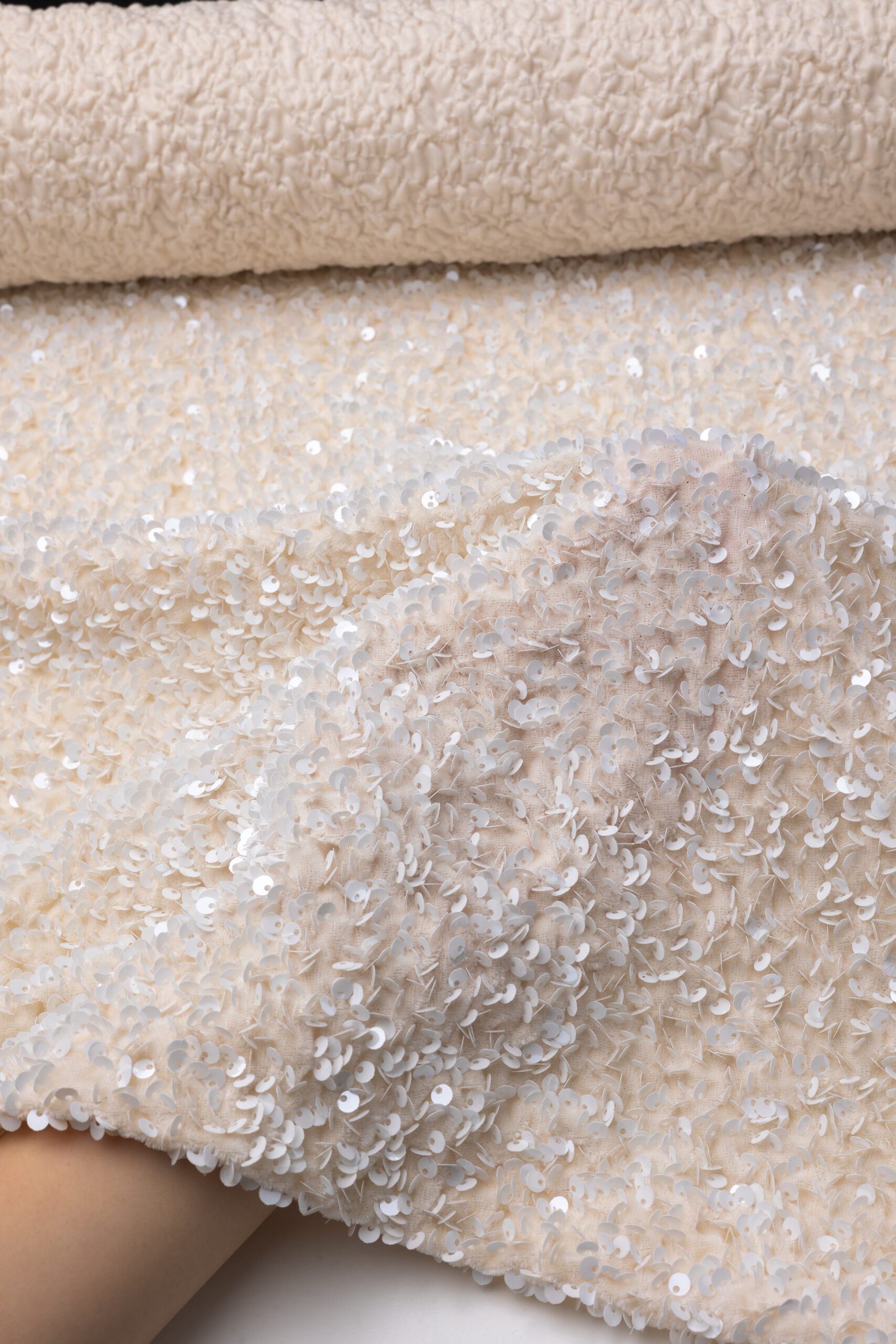
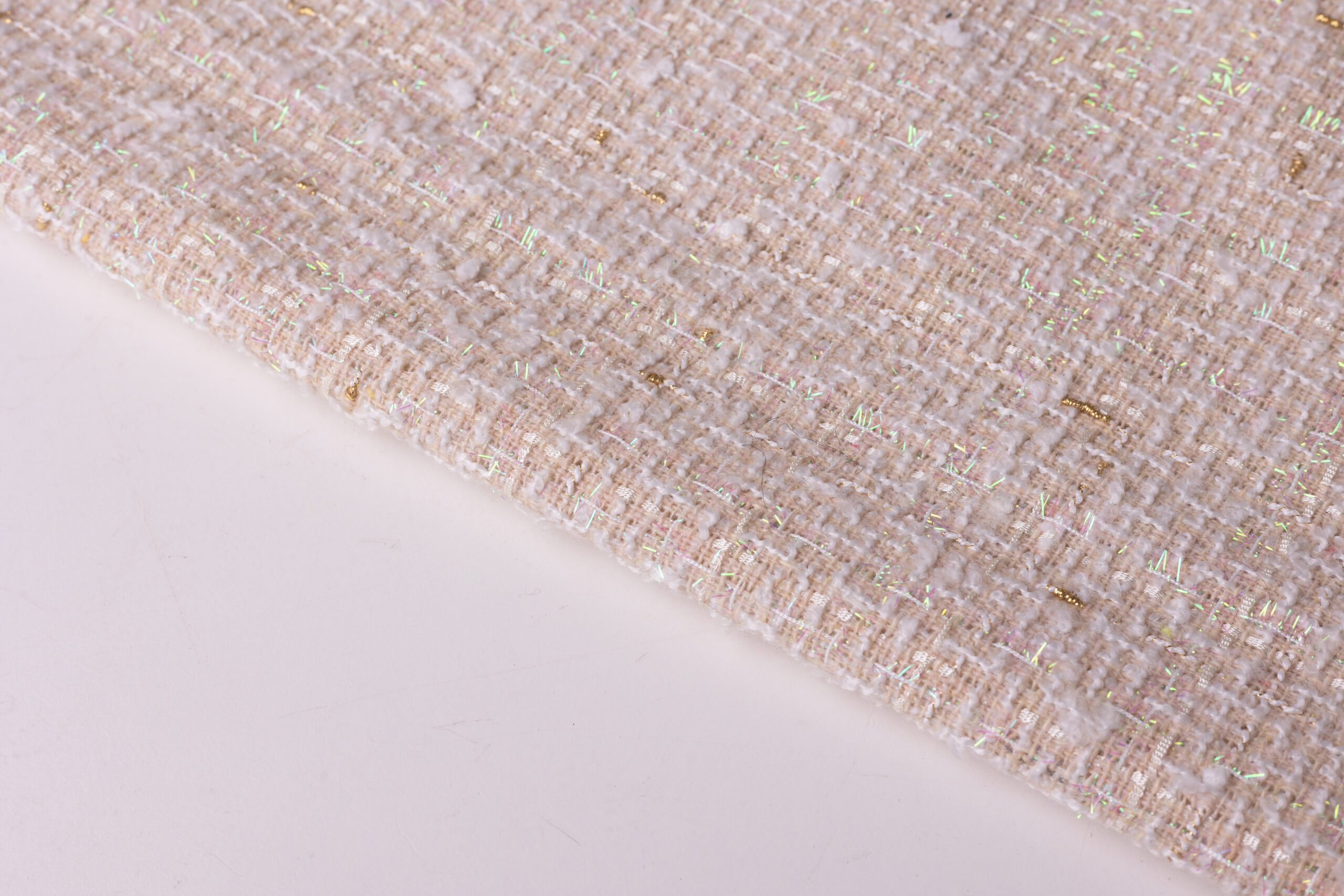
Tweed and knit differ at the moment of creation. Tweed is woven on a loom using warp and weft, delivering a stable, structured surface with minimal inherent stretch unless elastane is added. Knits are formed by interlocking loops, yielding inherent stretch, recovery, and a softer drape. The core distinction drives where each fabric performs best: tweed for tailored, angular lines; bouclé and knit textures for fluid, body-conscious silhouettes. Internal data show tweed stretch in the 0-5% range, while knits typically sit in the 10-40% range.
Definition and Core Difference
Tweed is woven from warp and weft, producing a stable, structured surface with minimal stretch unless elastane is added. Knits are formed by interlocking loops, resulting in inherent stretch, recovery, and a softer drape.
Analogy
Woven fabric is like a paper sheet—rigid and precise. A knit behaves more like a chain-link fence—flexible, with give in multiple directions.
Key Comparison Points
- Construction: Woven (warp & weft) vs knitted (interlocking loops).
- Stretch: Tweed 0-5% vs Knits 10-40% (intrinsic).
- Drape: Structured and crisp vs fluid and body-conscious.
- Edge Finish: Frays more easily in woven edges vs cut & sew friendly knits.
- Best For: Blazers/structured garments (tweed) vs dresses/cardigans/topwear/active jackets (knits).
Common yarns differ: tweed leans on wool blends and synthetic blends, while knits often use acrylic, cotton, and wool blends. Availability matters: in-stock options ship in 3-7 days, with low MOQs (100m in-stock; 300m custom) to accelerate time-to-market for small brands. Internal production data confirms these sequencing and timing dynamics, enabling designers to pick the path that aligns with their collection cadence.
Fabric Cost: Tweed vs Knit Pricing
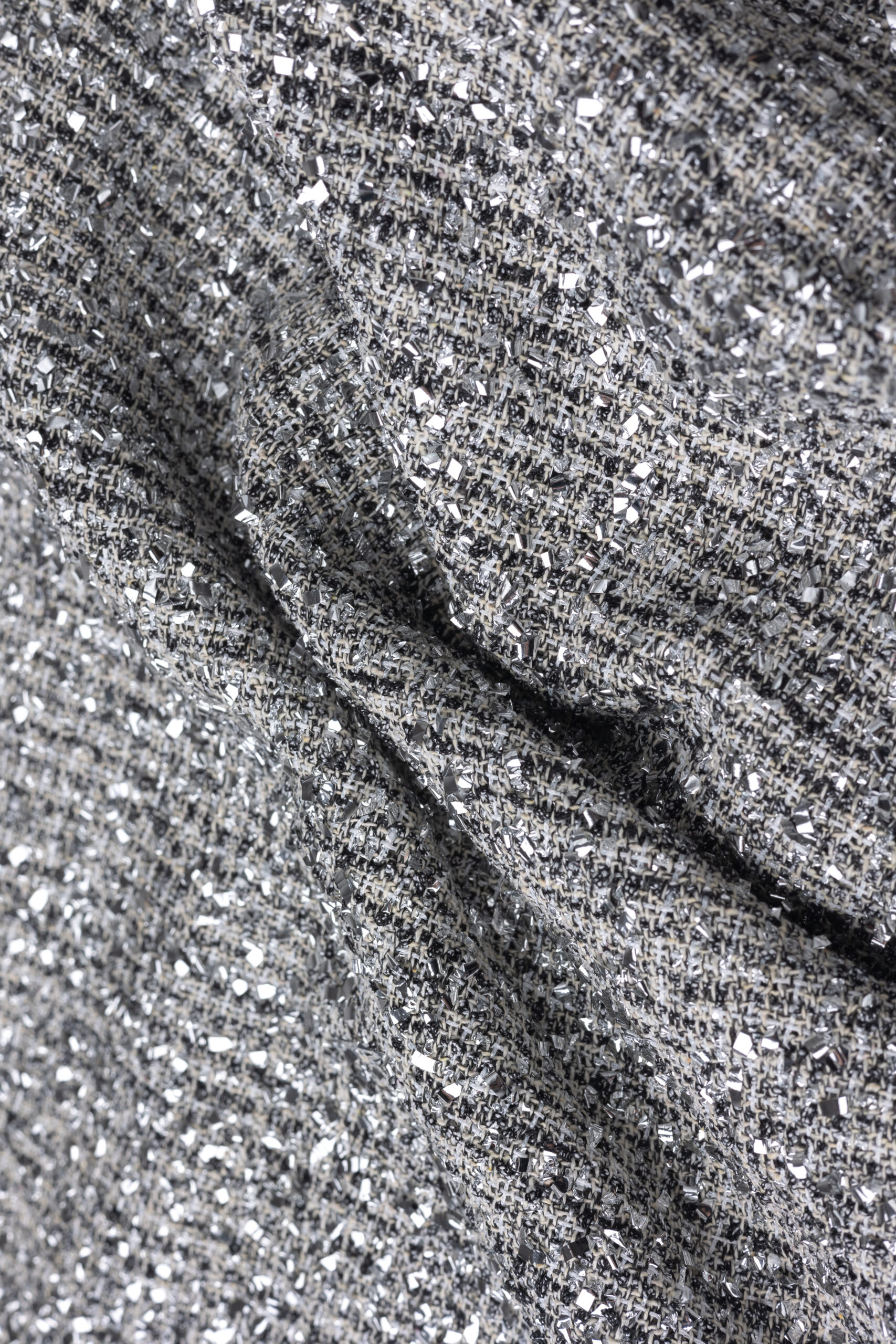
Knit is typically cheaper per meter, but final garment cost hinges on waste and MOQs; tweed adds value through yardage efficiency for small brands.
Acrylic Knit Price Range
- Acrylic Knit: $5-$12 per meter
Premium Wool Tweed Price Range
- Premium Wool Tweed: $25-$50 per meter
Wool Blend Tweed from Mills like Fursone
-
Aspect Tweed Pricing Knit Pricing Notes Price Premium vs Knit +30% to +50% (vs textured acrylic-wool knit) Baseline knit price (textured acrylic-wool blend) Tweed costs 30-50% more per meter than a textured acrylic-wool blend knit. MOQ for Custom Development 300m 100m Knit enables lower initial commitment; woven tweed typically requires larger MOQs. Origin Price Advantage China-made tweed costs significant savings than EU equivalent N/A Premium European-style tweed from China undercuts EU prices; source region impacts overall cost. Production Time Impact N/A 5-10% faster production time due to no fray Knit fabrics do not fray, reducing garment production time and associated costs. 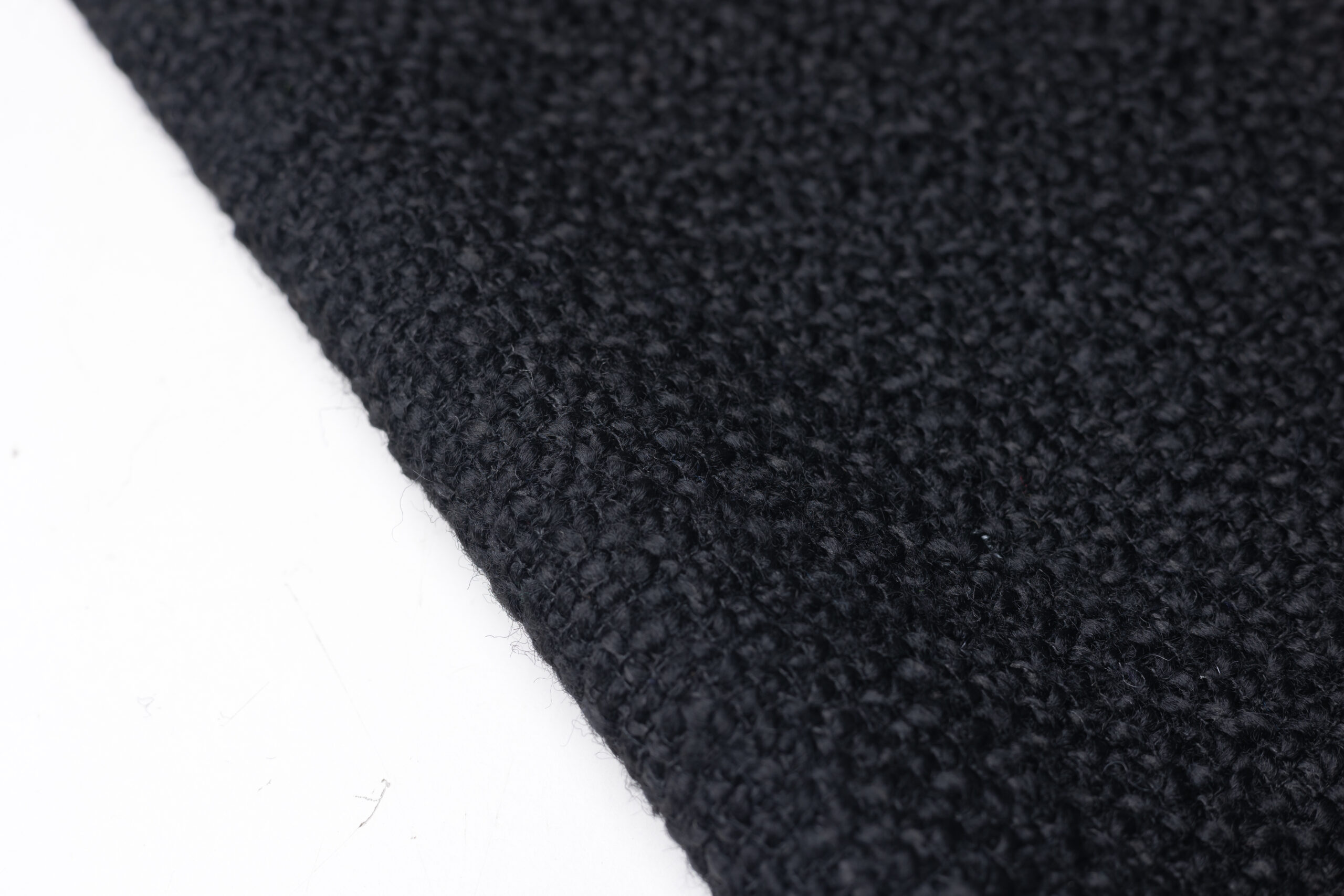
Sourcing MOQ: One vs One Thousand Meters
Low MOQs matter: woven tweed typically starts at 1,000m, while Fursone offers 100m in-stock for small runs and faster access.
Custom woven tweed MOQ tends to be 300 meters+ due to loom setup
Custom color and pattern development for woven tweed generally requires 300 meters or more. Loom changeovers, dye lot planning, and warp configuration drive the minimums, creating longer lead times and higher risk for small brands testing ideas. If your collection relies on seasonal hues or limited editions, the 1,000m threshold can stall approval and inflate landed cost. Plan around this constraint by layering options that fit shorter timelines this season.
Custom knit patterns (e.g., jacquard bouclé) can start at around 100 meters MOQ
Knitted bouclé and jacquard bouclé patterns are more scalable on MOQs. A starting point around 100 meters allows you to iterate texture and hand feel without committing large inventory. The setup is less loom-reconfiguration intensive than weaving, so sample turnaround is typically faster. This makes it a practical path for early-stage collections seeking a Chanel-inspired look with lower financial risk.
Fursone’s 100-meter in-stock program enables small runs and faster access
Fursone maintains 100 meters of in-stock premium tweed and knit textiles ready to ship. This program reduces the barrier to entry for new collections, letting you validate hand, drape, and colorways in weeks rather than months. In-stock fabrics ship quickly—typically 3-7 days—so you can move from concept to physical swatch with minimal delay. For ongoing lines, you can scale to larger custom orders later without sacrificing initial momentum.
Advice: Don’t let a high MOQ force you into a fabric you don’t love
If a selected fabric delivers the look but imposes a prohibitive MOQ, test alternatives with your supplier. Start with 100m in-stock options to confirm texture, hand, and drape before committing to larger runs. The goal is to secure the aesthetic you want at a sensible price and reliable lead times, not to chase the lowest MOQ at the expense of fit and finish. Pair a knit bouclé or a lightweight tweed with a flexible MOQ to keep your collection nimble and reduce risk.
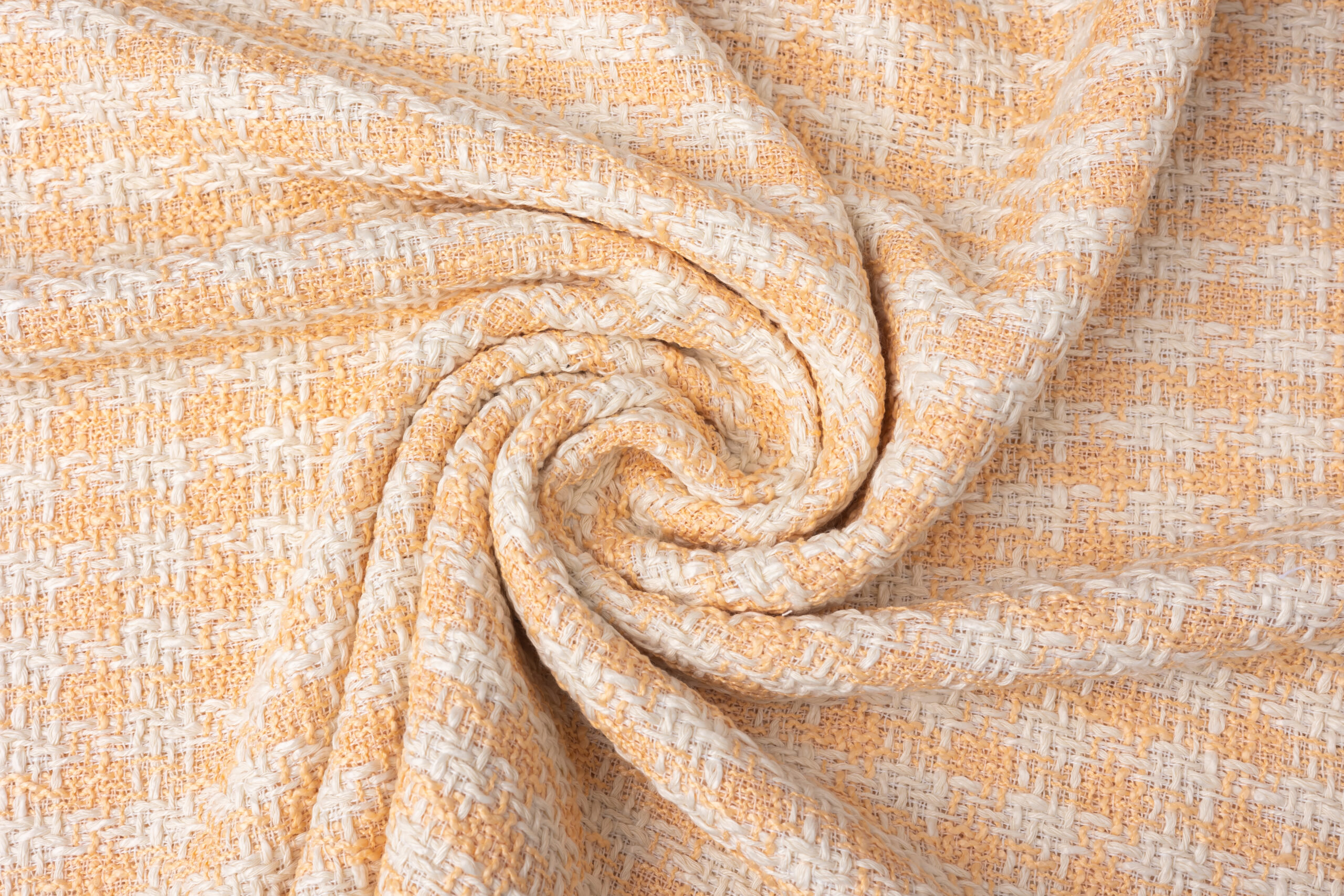
Sample Speed: 7 Days vs 3 Weeks
7-day sampling turns concepts into swatches; woven routes typically take 2–4 weeks.
Woven samples from yarn-dye to weaving typically require 2–4 weeks
Color development, dye-lot approvals, loom setup, and pattern repeat validation drive this timeline. If you’re developing a new colorway, budget multiple rounds before a final strike-off is approved.
Knit samples from in-stock yarn can be produced in 7–10 days
With pre-approved textures and gauge specs, a ready-for-market knit swatch can move from concept to test fit quickly. This pace hinges on having in-stock yarn ready and color approvals locked in.
Fursone 7-day rapid sampling as a unique value proposition
We maintain in-stock yarns and pre-approved texture libraries to compress lead times. For tweed textures, that means a swatch arrives in 7 days, accelerating design sign-offs and line-plans.
Sample process overview: woven vs knit sample process
- Woven sample path: From yarn-dye to loom, color development, lab-dip or strike-off, fabric weave, wash/finish checks, and final QC before packing.
- Knit sample path: From in-stock yarn, pre-approved color, gauge swatch, knitting, washing/finishing, seam and hand-feel checks, to final QC before packing.
Explore Bouclé, Tweed, and Knit: A Luxury Fabric Cost Guide.Compare Bouclé, Tweed, and Knit costs to estimate true TCO for luxury lines. See how Wenzhou sourcing delivers significant savings relative to European mills.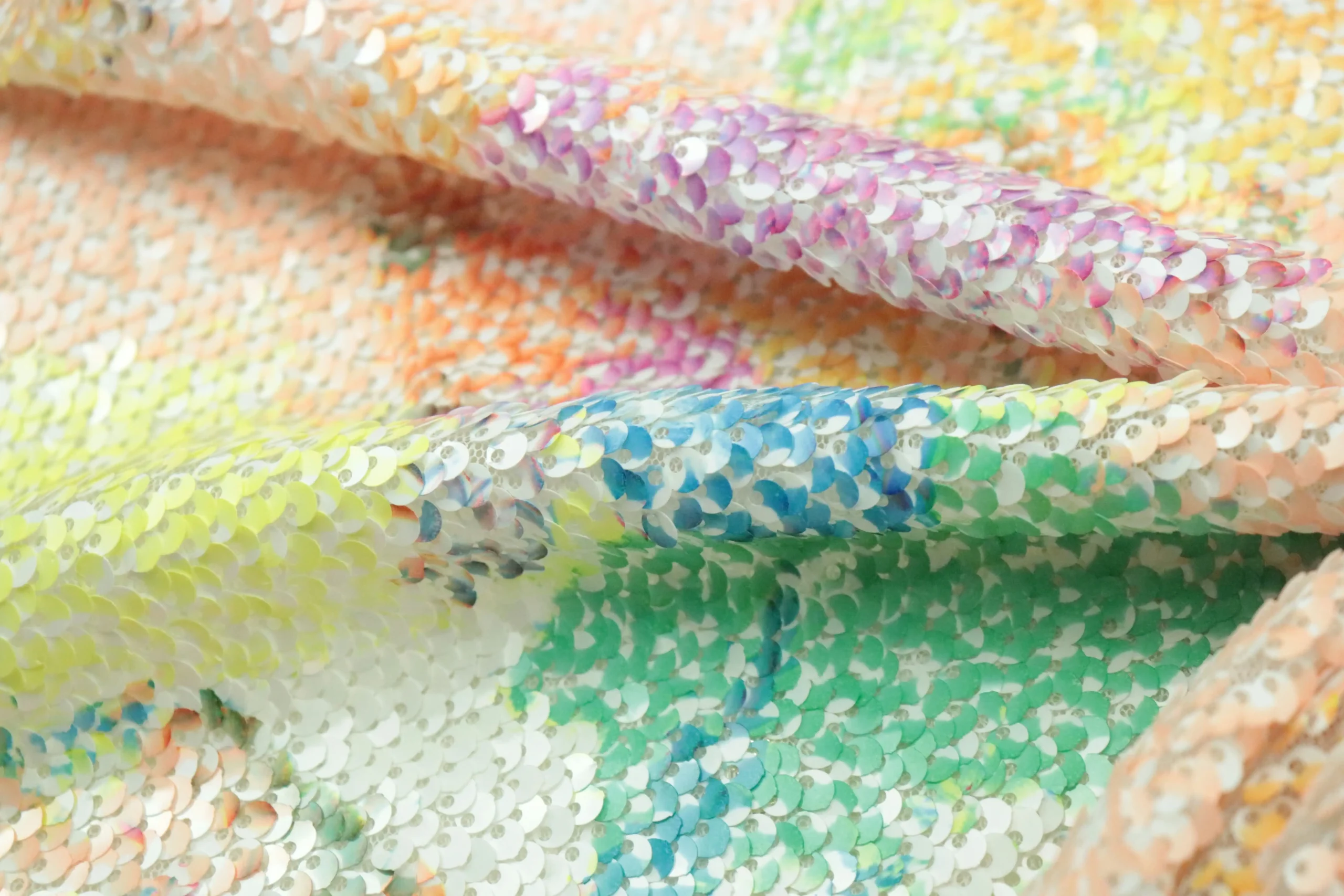
Garment Durability & Care
Care considerations
Tweed is typically dry-clean only to preserve bouclé texture and prevent shrinkage. Improper laundering can cause texture distortion, pilling, or color migration. For lining, a lightweight interlining helps maintain drape and reduces edge wear on jackets. For designers testing care performance, Fursone maintains 100,000 meters in stock and offers 7-day rapid sampling to validate care outcomes before full production.
- Tweed care: Dry-clean only is common; heat or aggressive agitation can shrink or distort texture.
- Knits care: Many bouclé knits are machine washable, but pills and snagging can occur; use gentle cycles and lay flat to dry to preserve shape.
Shape retention
Tweed tends to hold its silhouette well due to its woven structure, resisting droop over time. Knit recovery depends on yarn and construction: denser, tighter gauges with high-twist yarns recover shape more reliably after stretching. For jackets or dresses, choose tweed when you need sustained, crisp lines; opt for knit bouclé when a softer, body-conscious fit is required.
- Tweed: Maintains shape through wear and bending; less prone to sagging in structured garments.
- Knits: Recovery hinges on yarn twist, ply count, and gauge; higher density yields crisper edges and better drape retention.
Fraying
Tweed edges may fray if cut raw edges are not finished; finish with binding, overlock, or serging to preserve edge integrity. Knits generally do not fray but can snag or run if caught on sharp objects or pulled; reinforce boundaries with proper hems and resilient rib knits where stress is highest.
- Tweed edges: Fraying risk at exposed cut edges; recommend edge finishing for long-term durability.
- Knits edges: No fraying, but snag/run risk; use reinforced hems and careful handling in production.
Seasonality
Tweed is a Fall/Winter staple, delivering warmth and structure for outerwear and tailored pieces. Knits can be all-season depending on weight and construction; light bouclé knits suit transitional wear, while heavier knits are ideal for layering in cooler climates. Weight guidance helps: Tweed is typically 250-500 gsm; knits range from 200-400 gsm, influencing seasonal suitability and layering options.
- Seasonal use: Tweed tends toward Fall/Winter; knits offer year-round versatility depending on weight.
- Weight ranges: Tweed 250-500 gsm; Knits 200-400 gsm.
The Final Verdict: Decision Matrix
Woven tweed delivers structure for blazers and skirts. Knit fabrics flex for dresses and drape.
Woven Tweed for a Structured, Timeless Blazer
Structured blazers and classic skirts demand fabric that keeps its shape through wear. Woven tweed delivers crisp silhouettes and a premium hand that reads as timeless luxury. If you’re planning a 1,000-meter+ color or pattern program, tweed is the most reliable backbone.
MOQs for custom tweed typically start at 300 meters, ensuring batch consistency for color development. Fursone also maintains 100,000 meters in stock, enabling faster starts on new collections. Ready stock ships in 3-7 days, with 7-day rapid sampling for initial approvals.
Bouclé or Fine Wool Tweed for Chanel-style softness
For a Chanel-inspired jacket, softness and plush texture are non-negotiable. Bouclé textures exist in both knit and woven forms; bouclé knit generally offers a softer hand and easier drape with MOQs as low as 100 meters. A bouclé-woven tweed delivers refined texture with structure, suitable for tailored jackets while preserving weight balance. Your choice should align with lining, weight, and how you want the sleeve and chest to behave in wear.
Budget, MOQ, and production timeline are key deciding factors
Budget controls are non-negotiable for emerging brands. Premium wool tweed sourced from Europe often costs more per meter, while sourcing from Fursone can provide a 30-50% cost advantage versus equivalent EU mills. The decision also hinges on MOQ and timing: knits can start at 100 meters, while woven tweed programs commonly require 300 meters or more for color/pattern development. In-stock options and quick sampling reduce time-to-market pressure: 100,000 meters in stock, 3-7 day shipping, and 7-day rapid sampling.
- MOQs: Knits from 100m; woven tweed from 1,000m+ for color/pattern development
- Stock & Lead Time: 100,000 meters in stock; ships in 3-7 days; 7-Day Rapid Sampling
- Cost Advantage: Premium wool tweed up to significant savings than European EU mills
- Weight Range: Tweed 250-500 gsm; Knits 200-400 gsm
If still unsure, order a swatch of both fabrics
The fastest way to decide is to compare hand feel, weight, and drape side-by-side. Use the 7-day rapid sampling to receive swatches of both textures, test their performance in your target silhouettes, and assess how they pair with linings and inner structure. If the swatches behave as expected, you can move to a trial order with confidence and minimize risk in your first collection.
Conclusion
Knit fabric vs tweed frames two distinct routes for a textured line. Knit fabrics offer flexible drape and 4-way stretch, making them ideal for body-conscious dresses and cardigans. Woven tweed delivers the structured silhouette for jackets and skirts where shape retention matters most.
Review the Pillar Page to see how knit fabric vs tweed choices play out for jackets, dresses, and tailored looks. Request a swatch or sample kit to compare hand feel, drape, and cost in your own line, and learn more about the factory verification guide here: https://fursone.com/sourcing-tweed-fabric-wenzhou-factory-guide
Frequently Asked Questions
How to get a quote for Knit Fabric vs Tweed: Which Sourcing Route Fits Your Line?
You can leave your detailed requirements using the inquiry form below, and our sales team will provide a comprehensive quotation along with product specifications within 24 hours.
}, ]}Can I request samples before bulk orders?
Yes, we highly recommend testing samples first. Please contact our support team to arrange sample shipments to verify the product quality before confirming your large volume purchase.
Authoritative References
For the construction-level detail, see our cable knit vs Aran knit comparison.
For the construction-level detail, see our flat knit vs circular knit comparison.
For a step-by-step guide: How to Source Fabric from China for Small Brands. Need samples first? Request free fabric swatches.

Related Insights

How to Compare Fabric Quotes from Three Mills: A Side-by-Side Method
Three mills return three quotes for the same fabric brief, and the spread between them...

CNY Capacity Planning: Booking a Fabric Mill Around Chinese New Year
Every year, fabric buyers lose the same three weeks to the same event: Chinese New...

Second-Source Strategy: How Brands Qualify a Second Tweed Mill
Single-sourcing a signature fabric feels efficient right up to the season it fails: the mill’s...