

Three mills return three quotes for the same fabric brief, and the spread between them routinely exceeds 30 percent. Most buyers resolve the difference with a gut call, which is how a “cheap” quote becomes the most expensive line in the season: the price omitted a cost component, or the spec hid behind a marketing name. A side-by-side comparison method turns the decision into arithmetic.
This guide defines the comparison table that makes quotes comparable, the six line items where mills quietly differ, and the two questions that expose an unusable quote in one reply.
First, Normalize the Basis: Same Spec, Same Terms, Same Test
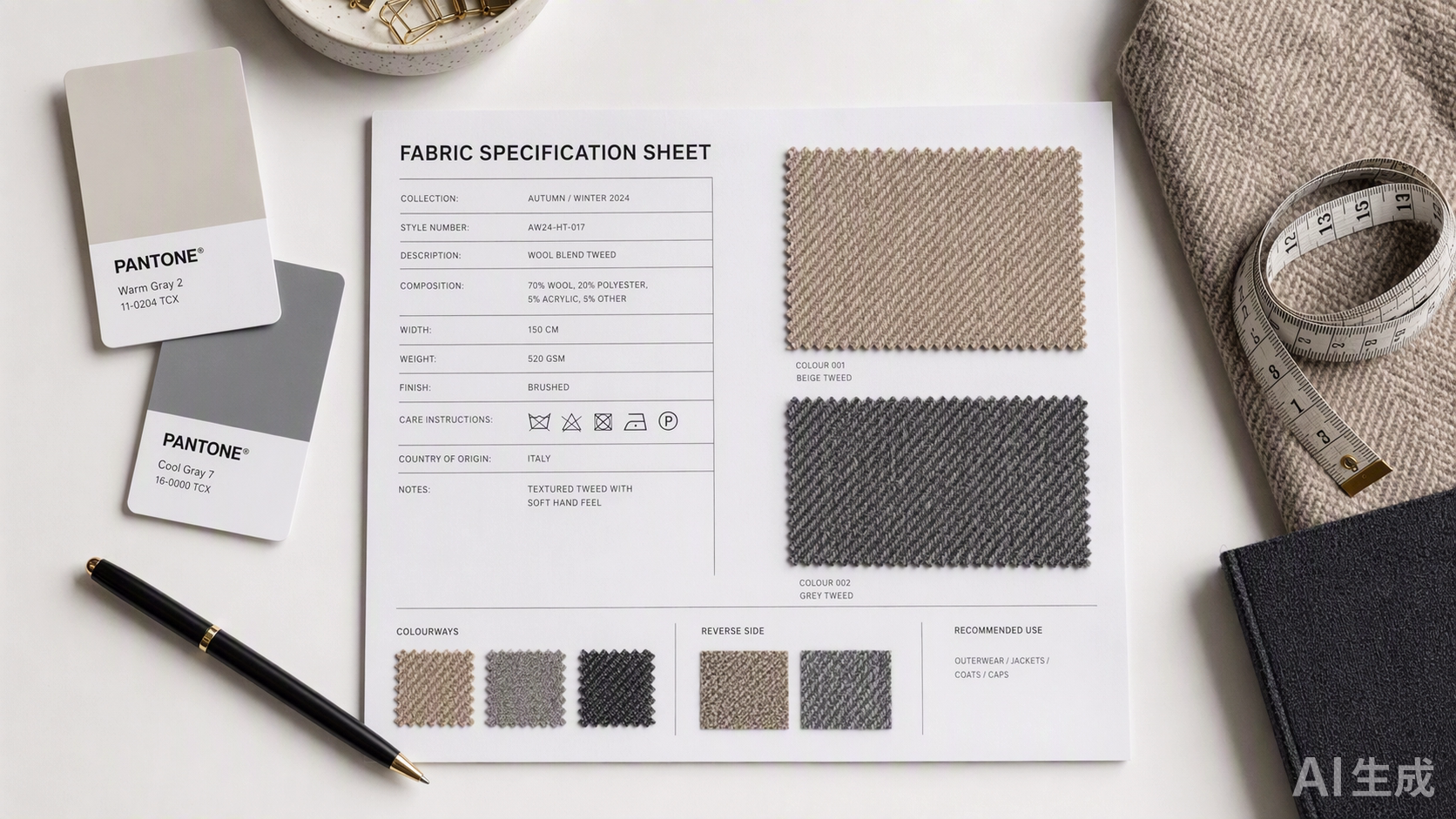
Quotes are only comparable when they answer the same brief. Lock three anchors before soliciting prices: a written spec (composition, weight in gsm, width, construction), a delivery basis from the ICC Incoterms rules (FOB and EXW give the cleanest factory-level comparison), and one acceptance test with a threshold, such as pilling at grade 3 to 4 on the ISO scale. A quote that arrives without a gsm figure or a test commitment is not a price; it is an opening position.
Weight deserves special suspicion. “Heavy tweed” means nothing; 480 gsm versus 520 gsm is a 8 percent fiber cost difference that explains most quote spreads on its own. Our breakdown of knit fabric price drivers lists the cost components in the order mills actually build them.
The Six Line Items Where Quotes Quietly Differ
Sampling cost and credit. One mill charges sampling and deducts it from bulk; one charges it and keeps it; one samples free on stock and charges on custom. On a 300-metre custom order the differences are small, but sampling behavior predicts how the mill treats disputes later.
MOQ and price breaks. Compare the price at your real quantity, not the headline minimum. A 500-meter price at a higher rate can beat a 1,000-meter minimum if your program needs 600 meters, because unused meters are 100 percent waste.
Lead time and its start date. Ask when the clock starts: at deposit, at artwork approval, or at lab dip confirmation. Two mills quoting “30 days” can be 15 days apart once the start rule is clear.
Testing inclusion. Which tests ship with the order (pilling, composition, shrinkage) and which cost extra? A quote that looks 5 percent cheaper while excluding the shrinkage test you require is more expensive.
Payment structure. Deposit percentage and balance timing shift your working capital. The trade-offs between common structures are covered in our guide to payment terms with Chinese mills.
Freight basis. FOB quotes shift ocean cost and risk to you; EXW adds inland legs on top. Compare at the same Incoterm or convert explicitly, then pair the freight plan with the container logic in our LCL versus full container guide.
The Two Questions That Expose an Unusable Quote
Ask every mill the same two questions and read the replies like a spec sheet. First: “At what weight, width and composition is this price quoted?” A precise reply means the mill read the brief; a vague one predicts disputes. Second: “What test result ships with the order, and who pays if the bulk fails it?” The answer separates mills with an outgoing quality gate (a bench, a protocol, a re-run commitment) from mills with a shipment schedule. Our fabric quality benchmarks checklist gives the thresholds to attach to the second question.
Price the two replies on total landed cost, not per-meter price: quote price plus freight basis plus testing plus the working-capital cost of the payment structure. On a three-mill comparison this arithmetic usually collapses a 30 percent headline spread into a single-digit true difference, occasionally reversing the ranking.

Frequently Asked Questions
Why do quotes for the same fabric differ so much?
Spec ambiguity (weight, composition, width), different Incoterms, excluded testing, and payment structure. Normalize these and the spread shrinks to single digits.
Should I compare at the quoted MOQ or my real quantity?
Your real quantity. Price breaks matter, but meters you do not need are total waste; compare the price at the program’s actual volume.
Which Incoterm is best for comparing mills?
FOB for ocean programs and EXW for buyer-arranged freight both give clean factory-level comparisons when applied consistently.
What single question reveals the most about a mill?
“What test result ships with the order, and who pays if bulk fails?” The answer separates quality-gated mills from schedule-driven ones.
Send one spec sheet to three mills and run the six-line comparison. If you want a second reference point, Fursone quotes written specs with test commitments included: info@fursone.com or WhatsApp +86 134 5607 1339, with the full product range on the wholesaler program page.

Related Insights

CNY Capacity Planning: Booking a Fabric Mill Around Chinese New Year
Every year, fabric buyers lose the same three weeks to the same event: Chinese New...

Second-Source Strategy: How Brands Qualify a Second Tweed Mill
Single-sourcing a signature fabric feels efficient right up to the season it fails: the mill’s...
AQL Sampling for Fabric Rolls: What Buyers Should Know
AQL Sampling for Fabric Rolls: What Buyers Should Know AQL stands for acceptable quality limit,...