
A buyer opens a fabric swatch, runs a thumb across the surface, and feels those distinctive raised nubs that signal boucle. Those loops are not a weaving effect. They are engineered into the yarn itself before a single pick crosses the loom. Understanding how boucle loops are made means understanding fancy yarn construction, a three-component spinning process where one yarn is deliberately overfed to create excess length that forms loops around a tension-controlled core. For the dye method that preserves boucle structure, see this hank dyeing vs package dyeing comparison.
For production teams at Fursone, boucle yarn engineering is daily work. The Wenzhou facility runs 300+ looms producing Chanel-style tweed that depends on boucle weft for its signature texture. When a buyer specifies a particular loop size or density, the yarn specification travels upstream to the spinning frame, where overfeed ratios, twist levels, and binder tension are adjusted before the yarn ever reaches the creel. Getting the loop right at the yarn stage prevents a class of fabric defects that no amount of finishing can fix.

Anatomy of Boucle Yarn
The Core Component
Every boucle yarn starts with a core, a relatively strong, smooth yarn that runs straight through the center of the structure. The core carries the tensile load during weaving, taking the tension that the loom applies without breaking. Cotton, nylon, or polyester are common core materials because they combine strength with consistent diameter. A weak core means yarn breaks at the creel, and every break costs loom uptime.
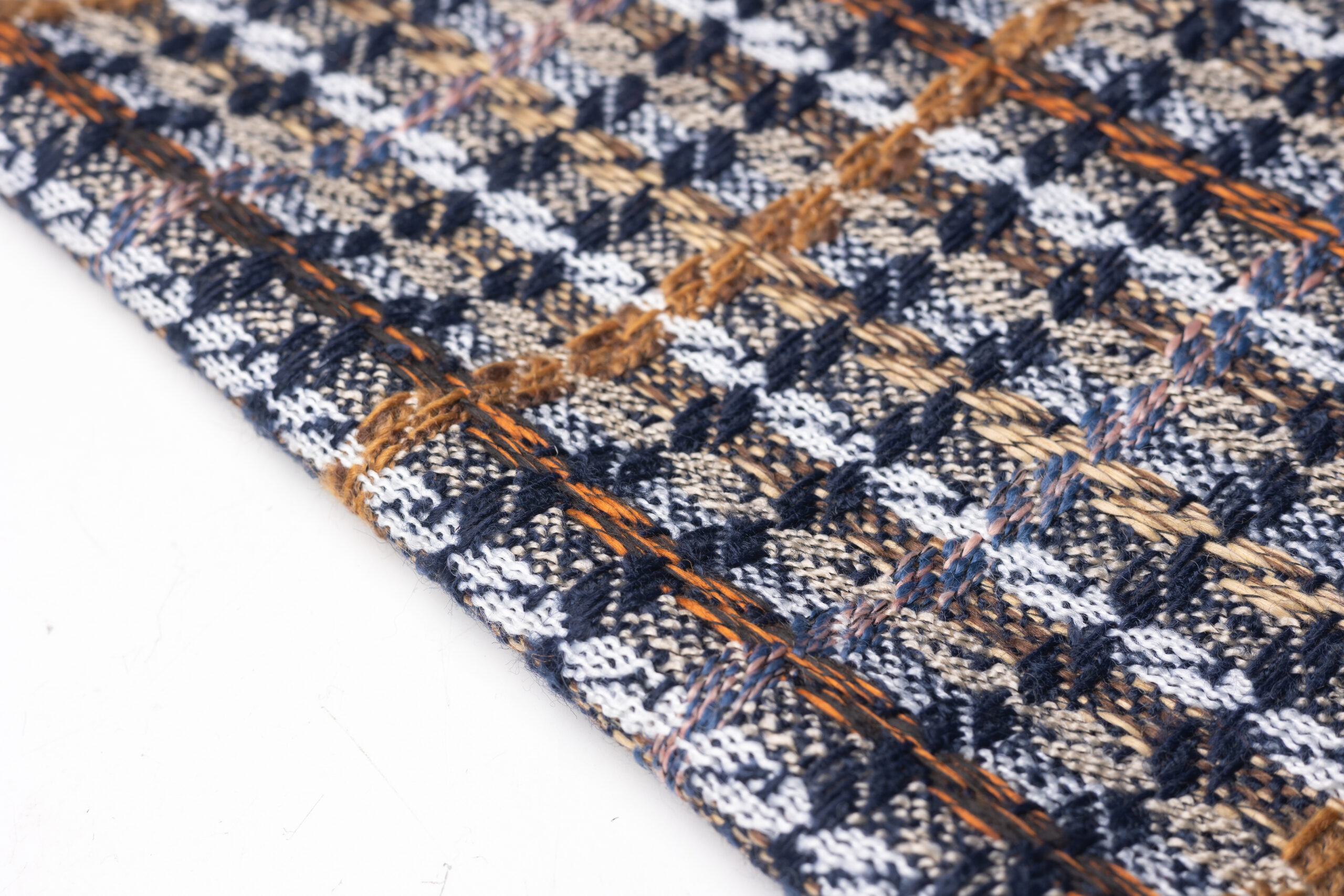
The core does not need to be visible in the finished fabric. Its job is structural. When a buyer specifies a boucle yarn for a particular GSM target, the core diameter directly affects how many picks per centimeter the loom can insert without crowding the fabric structure.
The Effect Yarn how metallic yarns are woven into tweed on power looms and Loop Formation
The effect yarn is where the visible texture comes from. Wool, mohair, acrylic, or cotton blends serve as effect yarns depending on the desired hand feel and price point. The effect yarn is delivered to the twisting point at a higher linear speed than the core. This speed differential, called the overfeed ratio, forces the effect yarn to buckle and loop around the core because it has more length than the space it occupies. The yarn count guide covering Ne, Nm, and Tex covers the Tex and Nm ranges used in boucle constructions.
A higher overfeed ratio produces larger, more frequent loops. A lower ratio produces smaller, tighter loops that read as a nubby texture rather than distinct circles. The overfeed ratio is the primary variable that mills adjust when a buyer requests a specific loop character. Too high, and the loops become so large they snag during weaving and finishing. Too low, and the fabric reads as a plain textured yarn rather than true boucle.
The Binder Yarn
Without a binder, the effect yarn loops slide along the core during subsequent processing, migrating toward the yarn’s high-tension points and leaving bare sections. The binder yarn, typically a fine nylon or polyester thread, wraps around the core at intervals, trapping the effect yarn loops between wraps. The binder does not eliminate loop movement entirely, but it reduces migration enough that the yarn survives winding, warping, and weaving without losing its loop distribution.
In some boucle yarn constructions, the binder is omitted for cost reasons. The trade-off is less uniform loop distribution in the finished fabric, which can read as patchy texture. For premium applications like Chanel-style tweed, the binder is standard practice.
Twist Direction and Loop Stability
Z-Twist and S-Twist Combination
Yarn twist direction affects how loops behave. When singles are spun with Z-twist (clockwise when viewed from the spinner’s position) and then plied with S-twist (counter-clockwise), the resulting torque balance creates loops that resist unwinding. If both components share the same twist direction, the yarn has residual torque that causes it to curl back on itself, distorting loop shape and creating fabric skew.
Boucle yarn for weaving typically uses opposing twist directions in the singles and plying stages. The core and effect yarn are twisted together in one direction, and the binder wraps in the opposite direction. This opposing-twist construction is what allows the yarn to sit flat in the warp or weft without kinking, which is essential for consistent pick density across 300+ loom configurations.
Twist Level and Loop Locking
Beyond direction, the number of turns per meter, the twist level, determines how tightly the binder locks the effect yarn loops. Higher twist levels produce smaller, more tightly held loops that resist abrasion but feel harder to the hand. Lower twist levels produce softer, looser loops that feel luxurious but pill more readily under friction. The balance between loop softness and abrasion resistance is what ISO pilling grade 3-4 testing measures. Yarns engineered to hit grade 3-4 in fabric form typically use medium-high twist levels that lock loops firmly enough to survive Martindale abrasion cycles without significant loop loss.
Fursone produces boucle tweed on 300+ power looms with ISO-certified quality control. Specify your loop size, yarn composition, and GSM. 100m stock rolls ship in days; 300m custom MOQ with 7-day sampling.
From Yarn to Fabric on the Loom
Once the boucle yarn reaches the loom, the weaving process presents a different set of challenges. Boucle weft yarns are bulkier than standard yarns, which means the shed, the opening through which the weft passes, must open wider to prevent the loops from catching on warp ends. A narrow shed causes loop stripping, where the reed physically pulls loops off the yarn surface as it beats up the weft.
Tension control on the weft is equally critical. Boucle yarn’s irregular surface means tension builds unevenly as the yarn feeds from the cop or cone. Intermittent tension spikes stretch the core and elongate loops, producing fabric sections where the boucle texture disappears. Let-off brakes on modern looms compensate for this, but older looms or poorly maintained tensioners create visible texture variation across the fabric width.
The relationship between boucle and other fancy yarns like chenille becomes relevant at this stage. Chenille yarn, which uses a pile construction rather than loops, behaves differently under loom tension. A buyer who has experience with chenille weaving cannot assume the same tension settings work for boucle. The production team at Fursone adjusts creel tension, shed timing, and reed pressure for each fancy yarn type, drawing on our Wenzhou partner mills’ production experience across its’s 300+ loom configurations.
Controlling Loop Size and Distribution
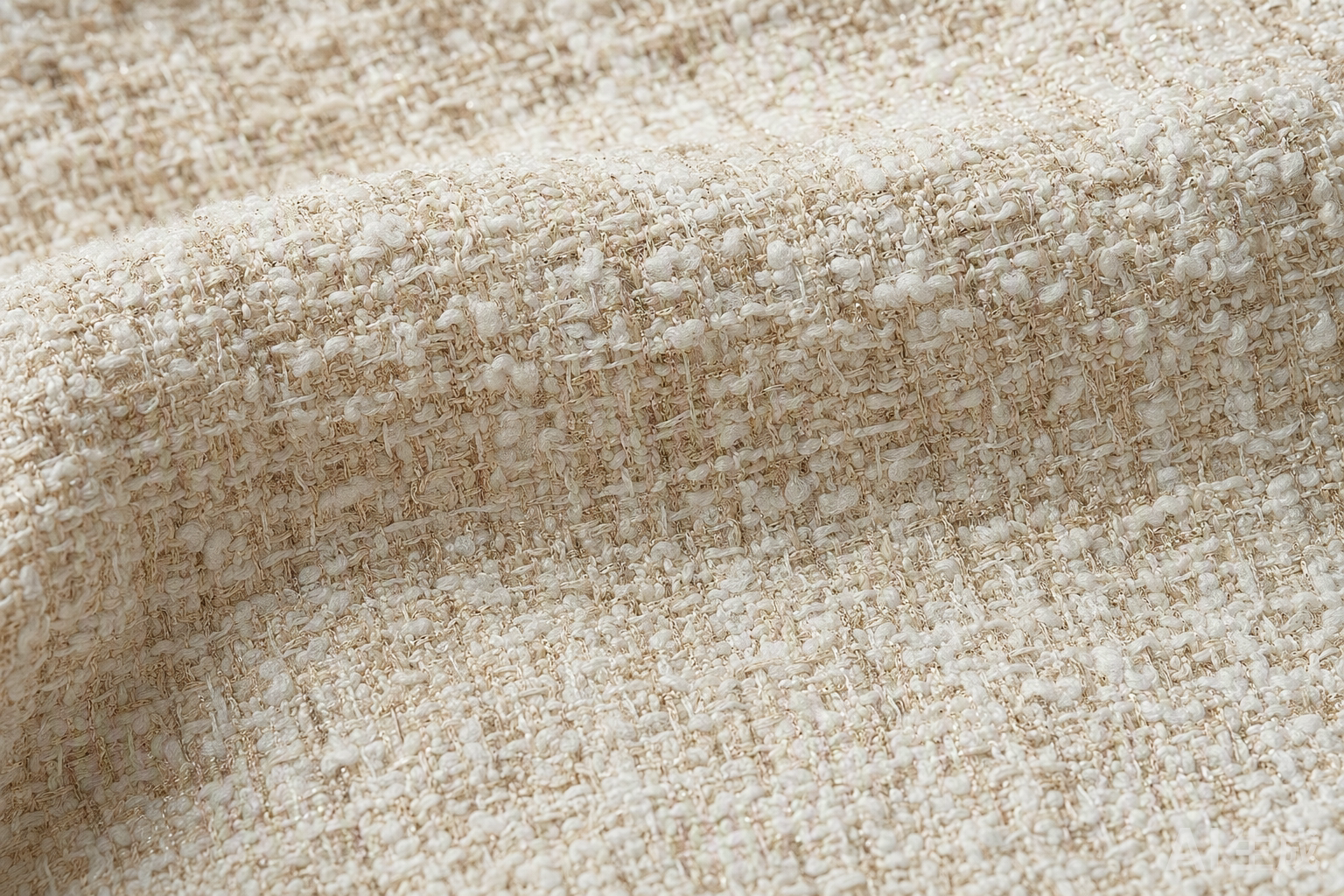
Loop size and distribution are the two parameters that most directly affect how boucle fabric looks and feels. Buyers who specify boucle tweed should understand what variables the mill can adjust.
| Parameter | What It Controls | Effect on Fabric |
|---|---|---|
| Overfeed ratio | Loop size | Higher ratio = larger, looser loops |
| Binder twist level | Loop security | More twist = tighter, more abrasion-resistant |
| Effect yarn count | Loop frequency | Finer effect yarn = more loops per meter |
| Core tension | Loop uniformity | Consistent tension = even loop distribution |
When a buyer sends a target fabric swatch to Fursone for matching, the production team reverse-engineers these four parameters from the swatch. The overfeed ratio is estimated by measuring loop diameter under magnification. The binder twist level is assessed by counting wraps per centimeter visible in the yarn structure. This reverse-engineering process takes place during the 7-day sampling phase, which compresses what other mills spread across six weeks of back-and-forth communication.
Common Boucle Yarn Defects and Their Causes
Three defects account for most quality rejections in boucle fabric production. Understanding them helps buyers communicate with mills when quality issues arise.
Missing loops appear as bare, smooth sections in an otherwise textured fabric. The cause is usually inconsistent overfeed during spinning, where the effect yarn delivery speed drops momentarily. The result is a yarn section where the effect yarn runs parallel to the core without looping. This defect is visible in fabric inspection under angled lighting and cannot be repaired in finishing.
Loop migration shows as concentrated clusters of loops alternating with sparse sections along the fabric length. This occurs when the binder yarn fails to lock loops effectively, allowing the effect yarn to slide along the core during weaving tension. Increasing binder twist or adding a second binder wrap addresses the root cause, but the fabric already woven with the defective yarn must be downgraded.
Loop stripping produces a fabric that looks sheared or flattened in sections, as if someone has brushed the loops flat. The cause is mechanical, the shed was too narrow or the reed pressure too high during weaving, physically pulling loops off the yarn surface. This defect points to a loom setup issue rather than a yarn quality issue, and it is more common when a loom is switched from flat yarn to boucle without adjusting shed geometry.
Sourcing Boucle Yarn for Production
When sourcing boucle fabric, buyers should specify yarn-level parameters in addition to fabric-level ones. The minimum specification set for a boucle tweed order includes: core yarn material and count, effect yarn material and count, overfeed ratio (or target loop diameter), binder type and twist level, twist direction (Z/S combination), fabric GSM, and pick density. Without these specifications, the mill selects default parameters that may not match the buyer’s target texture.
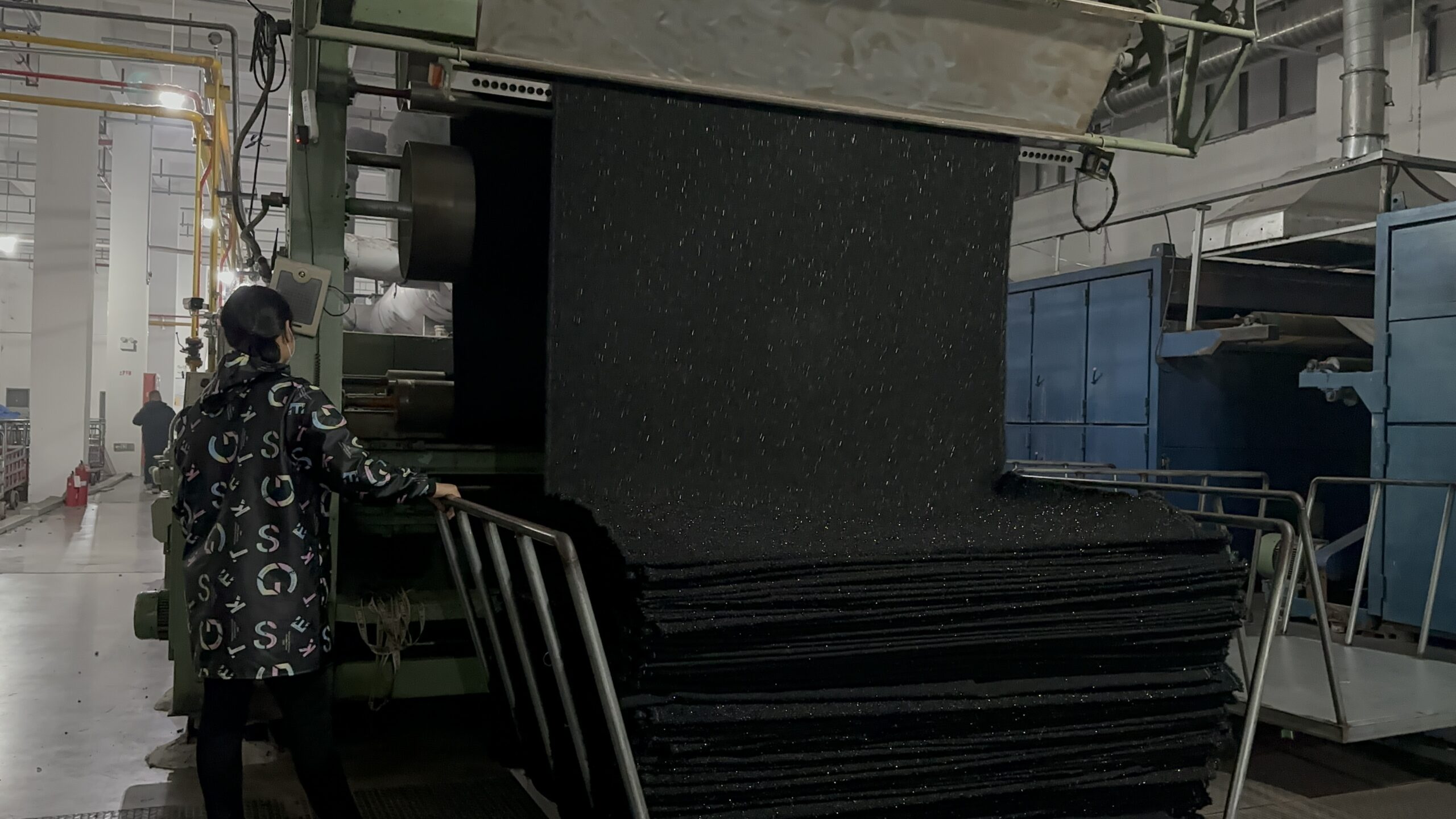
Fursone’s Chanel-style tweed production offers boucle fabric in both stock and custom configurations. The 100-meter ready stock program lets buyers evaluate loop character and hand feel before committing to bulk. Custom orders at the 300-metre MOQ allow specification of every yarn parameter listed above. The 7-day sampling turnaround means buyers can iterate on loop size and distribution within a single product development cycle, compared to the industry-standard 6-week process. Production follows ISO-certified quality protocols, and each shipment includes pilling test results verifying grade 3-4 performance. For buyers exploring the full production workflow, the factory operations guide details how yarn specifications translate to loom configurations.
Frequently Asked Questions
How are boucle loops made?
Boucle loops are made during yarn spinning, not weaving. An effect yarn is overfed, delivered faster than a core yarn, so it has excess length that buckles into circles around the core. A binder yarn wraps around the structure at intervals to lock the loops in place and prevent migration during weaving.
What is the overfeed ratio in boucle yarn?
The overfeed ratio is the speed difference between the effect yarn delivery and the core yarn delivery. A higher ratio produces larger, looser loops. The ratio is the primary variable mills adjust when a buyer requests a specific loop size or texture character.
Why does boucle yarn need a binder?
Without a binder, the effect yarn loops slide along the core during weaving, creating uneven texture distribution. The binder yarn wraps around the core at intervals, trapping loops between wraps and preventing migration. Premium boucle tweed always uses a binder.
What causes missing loops in boucle fabric?
Missing loops are caused by inconsistent overfeed during spinning, where the effect yarn delivery speed drops momentarily. The result is yarn sections where the effect yarn runs parallel to the core without looping. This defect is visible in fabric inspection and cannot be repaired in finishing.
What twist direction is used for boucle yarn?
Boucle yarn typically uses Z-twist for the singles and S-twist for the plying, or vice versa. Opposing twist directions create torque balance that keeps loops stable and prevents the yarn from curling back on itself during weaving.
Conclusion
Boucle loops are an engineered feature, not a weaving accident. The three-component yarn structure (core, effect, binder) with controlled overfeed and opposing twist directions produces the texture that defines Chanel-style tweed and related fabrics. Each parameter affects the final fabric character, and each can be specified by buyers who understand the yarn engineering behind the loop.
When sourcing boucle fabric, specify yarn parameters alongside fabric parameters. Test loop character with stock rolls before committing to custom production. Verify ISO pilling grade on every shipment. These steps prevent the three most common boucle defects: missing loops, loop migration, and loop stripping, all of which originate at the yarn or loom setup stage and cannot be corrected in finishing.

Related Insights

Color Approval Without Surprises: Lab Dips, Loom State and the Light Booth
Color is the most common reason a tweed bulk run disappoints. Not because mills cannot...

Fulling and Finishing: The Mill Steps That Change Tweed’s Hand Feel
Two tweeds can leave the loom with identical yarn, identical weave and identical weight, and...

Garment Dyeing vs Piece Dyeing: Cost, Color Control and When Each Wins
Garment dyeing, dyeing the finished garment instead of the fabric roll, has quietly become a...