

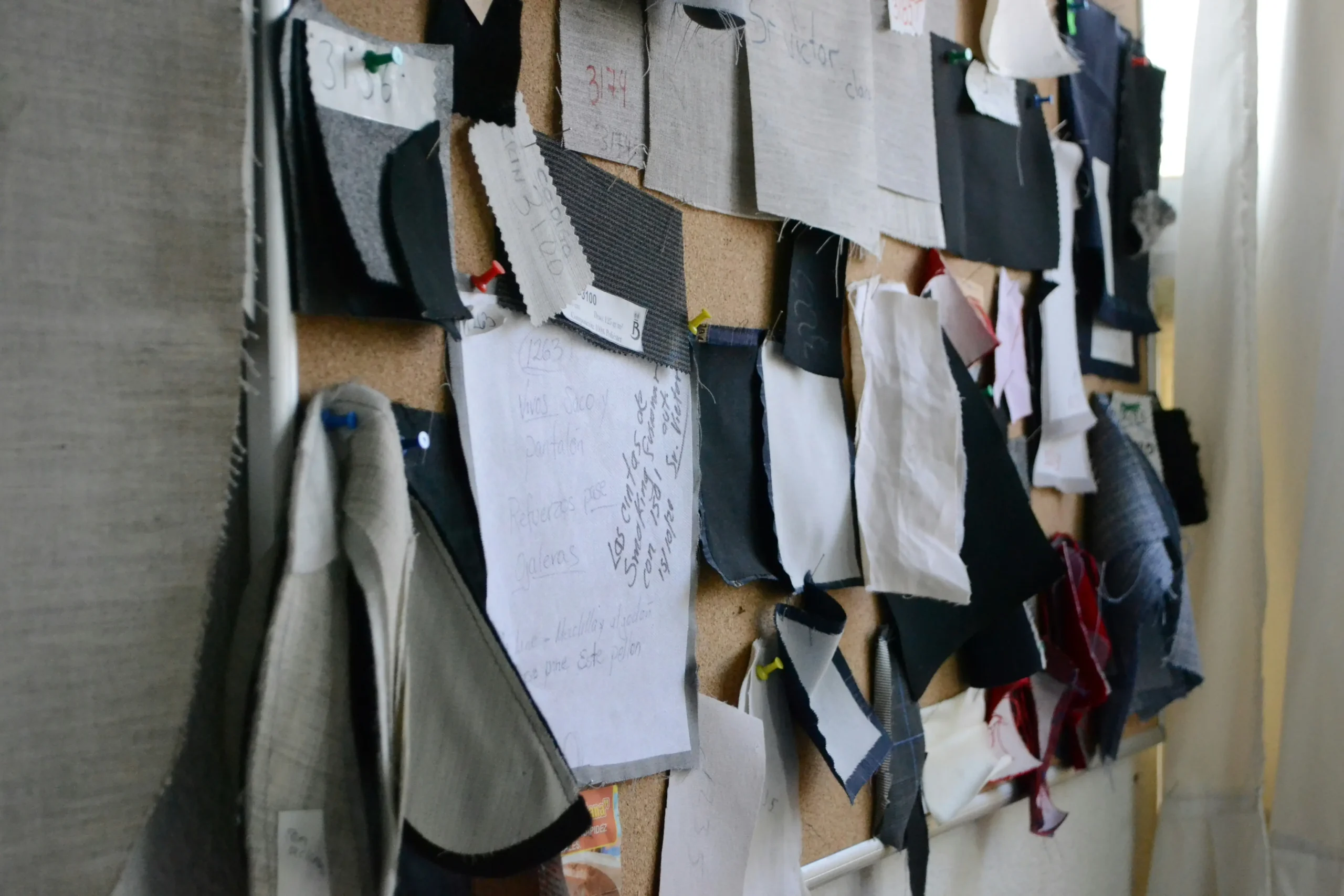
tweed supplier small batch is the first checkpoint buyers should lock before they approve a supplier, budget, or production slot. Finding the right tweed supplier for small-batch suits isn’t a desk exercise—it’s the exact moment you unbox a substantial order and realize the bulk fabric doesn’t match the pre-production sample you approved eight weeks earlier. The weight feels off, the dye lot has shifted, and suddenly that sample approval process you rushed through looks expensive. I’ve run supplier audits across multiple countries, and the most expensive conversation always starts with “but the swatch looked perfect.” For emerging designers, the margin for error on small batch tweed for suits doesn’t exist. You need a partner who understands that 100 meters of in-stock fabric isn’t a trial order—it’s your entire capsule collection.
What changes the game is how you use sampling speed and stock programs to de-risk your buy. A mill that offers 7-day tweed fabric sampling gives you a decisive lead over anyone still waiting four to six weeks. That fast turnaround lets you test 100m of a stock texture, gauge buyer reaction, and only then commit to a custom tweed development 300m program once demand is proven. It transforms your relationship from a one-off gamble to a structured supply line. My benchmark for any designer sourcing affordable luxury tweed mills: insist on a 100m starter quantity that ships within a week, a clear FOB pricing sheet that separates yarn cost from finishing charges, and a written quality tolerance—especially around weight variance and dye lot consistency. If a supplier can’t give you those three things on the first call, you’re not dealing with a real small-batch partner. You’re just another single order in their pipe.
Understanding Small-Batch Tweed Sourcing Requirements
Stop asking for the lowest MOQ.
The first mistake emerging designers make is chasing the lowest possible Minimum Order Quantity (MOQ). This is a trap. The real question isn’t how low you can go, but what that specific quantity unlocks. In professional sourcing, we look at MOQs in two distinct categories: strategic testing and proprietary development.
For a capsule collection or a market test, you need an in-stock program. This is where a supplier offers finished fabric, ready to ship. A Chinese tweed mill MOQ of 100m is the gold standard here. It lets you produce a small batch of suits, gauge customer reaction, and prove your concept without tying up tens of thousands in dead inventory if the color or style doesn’t hit.
Once you have a winner, you shift to custom development. This is where higher MOQs, typically starting around 300m, come into play. A custom tweed development of 300m allows you to create an exclusive fabric—your specific yarn blend, your unique color melange, your signature weave. This is how you build a defensible brand asset that fast-fashion players can’t easily replicate.
Now, let’s talk weight. For suiting, you’re typically looking in the 350–500 g/m² range. But this number on a spec sheet is almost useless without context. Any mill can make a heavy fabric. The challenge is achieving that weight while maintaining a sophisticated drape and hand-feel, which comes from the quality of the yarn, not just its thickness.
- The Red Flag: A supplier agrees to your target weight without asking about the intended garment, desired drape, or yarn composition. They’re likely a trader or will use cheap, coarse yarns to hit the number, resulting in a stiff, board-like fabric.
- The Green Light: A potential partner asks follow-up questions. ‘For a 450 g/m² jacket, have you considered your tweed suit lining matching weight? A heavier lining might be needed to support the structure.’ This shows they understand garment construction, not just weaving.
You also need to discuss quality tolerance for weight. An acceptable variance is typically +/- 5%. If a supplier’s tolerance is wider, say 10% or more, you could receive fabric that’s noticeably different from your approved sample, compromising the consistency of your collection. This is a non-negotiable technical point to clarify before any FOB pricing is finalized.

Evaluating Tweed Suppliers for Low-MOQ Suiting
Use 100m in-stock tweeds to market-test demand before committing to custom 300m runs.
When vetting low MOQ tweed fabric suppliers for small-batch suits, start by asking about in-stock programs. A Chinese tweed mill that keeps 100m ready-to-ship lets you test colorways with minimal outlay—order Monday, receive by Friday. This stock model reduces risk for your first capsule; sell through, then move to a 300m custom tweed development run for exclusivity. Verify the mill spins its own yarn, not just generic market stock. Proprietary slub or bouclé yarns block knockoffs.
The 7-day tweed fabric sampling cycle is your timing weapon against a traditional 4-6 week wait. Demand the swatch arrives pinned to a spec sheet: yarn breakdown, weave density, and ISO colorfastness grade. This data lets you benchmark against European mills instantly. Overlooked tip: match heavyweight tweed (350-500 g/m²) with a breathable lining—a silk-cotton bemberg avoids the steam room effect of cheap acetate. How to test tweed fabric quality? Check the selvage for wandering, and back-light the knit for pinholes.
An affordable luxury tweed mill will show you raw material trails: request origin proof for Australian Merino or Japanese lurex, not a vague ‘imported’ claim. For dye lot consistency, get swatches from three separate production batches and view under D65 light. GRS-certified tweed in small quantities demands a transaction certificate, not just a hangtag. Inspect weave precision across the roll—skipped ends in a suit front ruin the cut.
Navigating Commercial Terms with Small-Batch Mills
Pricing at 100m is not just a smaller 300m order—it’s a different negotiation entirely.
Most mills quote a 100m order with a steep surcharge because the fixed costs of warping the loom and dyeing a batch don’t scale down linearly. You are paying for the mill’s downtime risk. A 100m run of a custom tweed from our partner mills in Wenzhou might carry a 35–45% premium per meter over the same fabric at 300m. The raw material cost barely changes; the margin difference is entirely about machine setup and labor allocation.
Your leverage at 100m comes from being fast and flexible. Don’t haggle on per-meter price directly—ask for the setup charge to be waived if you commit to a repeat order within 90 days. Or request that the first 100m be priced at the 500m break if you provide a deposit for the next batch. Mills value forward visibility more than a few extra dollars on a tiny run.
- Ask for the FOB breakdown: Separate the base fabric cost from the surcharge line items. If the surcharge includes ‘yarn dyeing minimum’ and you are using an in-stock color, strike it out. Insist on FOB pricing so you control freight and customs—middlemen hide margin in CIF quotes.
- Lock down sample approval terms: Insist on a written clause that mass production must match the pre-production sample in hand feel, weight, and color. If the bulk shipment deviates beyond an agreed quality tolerance—typically ±5% on weight and a Delta E of ≤1.5 on color—you have grounds for a discount or rejection.
- Define the reorder window: At 100m, you are testing a market. Negotiate a fixed price validity of 6 months for a 300m reorder. This protects you from raw material price swings when your capsule sells out and you need to scale fast.
Certifications are not wallpaper. OEKO-TEX Standard 100 is the bare minimum for any fabric touching skin—it guarantees no harmful substances. For a small brand, it is your legal shield if a customer asks, ‘Is this safe?’ GRS (Global Recycled Standard) goes further: it traces recycled content from source to finished roll. If your marketing claims ‘sustainable tweed,’ you need a valid GRS transaction certificate for that specific batch. Ask for the certificate number and verify it on the issuing body’s online database before paying the deposit.
A mill that cannot produce a current OEKO-TEX certificate within 24 hours is not one you want to wire money to. The same applies to colorfastness and tensile strength reports. For a Chanel-style bouclé, request the Martindale abrasion test result. If the fabric pills below 20,000 cycles, your jacket will look tired before the first dry clean. Establish the expectation early: ‘We need your lab report from an AATCC-accredited facility, not an in-house printout.’ It costs the mill nothing to provide it if they are legitimate, and it tells you everything about their quality culture.

Logistics and After-Sales for Small-Tweed Orders
Don’t let a crushed bolt of tweed sink your launch.
I’ve seen a substantial order of metallic-thread tweed arrive with permanent crease lines because the mill shipped it folded in a poly bag. For small-batch tweed—100 meters of a bouclé or fancy yarn blend—transit damage is the most avoidable way to burn your budget. Always mandate heavy-duty packaging: fabric rolled on a 3-inch core, wrapped in moisture-barrier film, and boxed with impact-resistant end caps. If you’re sourcing from a Chinese tweed mill with MOQ 100m, specify FOB pricing on the proforma invoice. That way the mill loads the container, but you control the freight forwarder and don’t get hit with surprise destination charges.
- Packaging specification: Demand anti-crush cardboard tubes, not folded cuts. For designer suiting tweeds with metallic yarns, add a soft interleaving paper to prevent snagging during vibration.
- Freight terms: Use FOB port (mill loads, you arrange shipping) for transparency. If you lack a forwarder, negotiate CIF to your nearest port so the mill handles the freight quote.
- Duties and insurance: Wool-blend tweeds often attract 8–12% duty into Western markets under classification code 5112 or 5515. Insure for full invoice value plus 10% to cover ancillary loss—courier shipments need all-risk coverage, not standard liability.
- Sample lock for reorders: Request a sealed, dated sample with both QC signatures on the selvedge. All repeat runs must pass a physical side-by-side comparison before they ship.
- Quality tolerance & defect protocol: Agree an AQL of 2.5 for major defects (snags, stitch breaks, color streaks) and 4.0 for minor. On a 100m order, even 1% defect can wreck a capsule, so negotiate a credit note process before P/O issuance.
- Reorder turnaround: In-stock materials ship in 3–7 days, but add a day for QC validation. For custom reorders using the approved sample, skip full new sampling—just confirm yarn lot consistency and push production.
Once the first shipment is safely in your studio, the after-sales process decides whether you can scale the design or get stuck with a one-off batch. A repeatable reorder starts with a pre-production sample that you keep as the quality tolerance baseline. The emerging designer behind that a substantial amount loss had no sealed swatch—only phone photos of the original lot. Now, for every order, we require the mill to send a signed, 1-meter sample that matches the bulk fabric exactly. That physical reference becomes the approval standard. If any reorder deviates, you reject against the swatch, not a memory.
Conclusion
Vetting a new mill partner for small-batch tweed comes down to clarity and commitment. Before you move from swatches to a purchase order, use this three-point checklist to qualify their process for your collection.
First, ask if the bulk production will precisely match the approved sample and what their documented quality tolerance is for any variations. Next, confirm if you can place a small, in-stock order to test the market before committing to a larger custom run. Finally, require a full technical data sheet with all specifications before the final sample approval stage is locked.
The answers will reveal a supplier’s true capabilities. Use this framework to evaluate your options and review the technical specifications for fabrics that align with your brand’s standards.
Frequently Asked Questions
What’s the actual MOQ for small-batch tweed?
You can start with 100m stock tweed. Custom development programs have a 300m minimum order quantity. Choose 100m stock to validate demand before scaling.
How fast can I get custom tweed samples?
Our development team delivers physical swatches within 7 days. That turnaround helps you compare hand-feel and color before you commit to bulk. Request swatches early to lock in your collection timeline.
Is factory-direct tweed really cheaper?
Yes, you typically save 30–50% versus premium European mills. The price advantage comes from partner-mill spinning and lower production overhead. Compare landed costs, not just per-meter price.
How do I avoid bulk fabric not matching samples?
Verify that the mill uses lab-dip and colorfastness standards before production. Request a batch approval swatch from the bulk dye lot. Always approve a bulk-lot swatch before cutting.
Can I mix stock and custom tweed in one order?
Yes, you can combine 100m stock pieces with a custom program of 300m or more. Stock items ship in 3–7 days, while custom runs follow development lead times. Blend stock and custom to balance speed and exclusivity.
Authoritative References

Related Insights

How to Compare Fabric Quotes from Three Mills: A Side-by-Side Method
Three mills return three quotes for the same fabric brief, and the spread between them...

CNY Capacity Planning: Booking a Fabric Mill Around Chinese New Year
Every year, fabric buyers lose the same three weeks to the same event: Chinese New...

Second-Source Strategy: How Brands Qualify a Second Tweed Mill
Single-sourcing a signature fabric feels efficient right up to the season it fails: the mill’s...